On 11th November I attended the Scotland Malawi Partnership Annual Gathering and AGM. At that meeting, Hazel Darwin-Clements spoke about an audio series called People to People Podcasts. In these podcasts, Hazel is joined by Chimzy Dorey and together they chat informally with guests about partnerships that exist between people in Malawi and Scotland. Hazel intimated that she and Chimzy were keen to identify partnerships in which colleagues would be willing to participate in a People to People Podcast.
It struck me that the MalDent Project would perhaps fit the bill and I spoke to Hazel after the meeting about the possibility. Hazel was very positive and in turn I contacted my colleagues Dr Mwapatsa Mipando and Dr Peter Chimimba at Kamuzu University of Health Sciences, both of whom agreed it was a good idea.
On the day of the recorded conversation Peter was unfortunately unable to participate, but Mwapatsa and I had a very enjoyable conversation with Hazel and Chimzy. Thanks to Hazel and her team the podcast has now been edited and published. You can listen to it here:
This is a guest post written by Lisa Taylor, with input from all the colleagues named in the narrative who participated in this national Child Oral Health Survey, undertaken in Malawi in October 2023.
Following the successful launch in April 2022 of the National Oral Health Policy for Malawi, attention has now turned to implementation. Prevention of dental caries in children is one of the key aims, so the next logical step was to carry out an epidemiological dental survey to determine the current oral health status of the child population. Armed with this knowledge, an assessment could be made in the future about the impact of any oral health interventions.
The survey was in the planning phase for a significant period. The delay was in part due to COVID, but it also took a considerable time to gain permissions from the Malawi Ministries of Health and Education, and ethical approval from the National Health Sciences Research Committee. Grateful thanks are due to Peter Chimimba and Lorna Macpherson for their efforts in this regard. Finally the survey was ready to proceed in October 2023. This blog aims to give an insight into the process of delivering the survey in Malawi.
Initially, a team from the UK and from Malawi was brought together under the leadership of Jeremy Bagg. This comprised Martha Chipanda, at that time the Oral Health Coordinator in the Malawi Government Ministry of Health, Peter Chimimba, the Lead for the MalDent Project at Kamuzu University of Health Sciences, Lorna Macpherson and David Conway, both Professors in Dental Public Health from Glasgow Dental School, Alex McMahon who is a statistician / epidemiologist at Glasgow Dental School, the Smileawi team (Nigel and Vicky Milne) who had previously undertaken a pilot child oral health survey in Malawi, and me as a dentist with previous experience as a VSO dentist in Malawi and UK experience of BASCD (British Association for the Study of Community Dentistry) surveys and of the National Child Oral Health Survey.
Meetings were held over zoom and the project grew over several such discussions. The protocol was developed and followed the WHO Pathfinder format for oral health surveys. It was decided to examine 6 year olds and 12 year olds, as these children are still in primary school in Malawi, making them more accessible. Alongside the clinical examination, two written questionnaires were also developed in conjunction with our Malawian colleagues to enable other social contributors to oral health to be explored. One was for the headteacher of each school and one for each child examined.
The Glasgow Dental School Dental Public Health and Epidemiology team working with colleagues from Malawi determined the number and location of schools to ensure a representative sample. Decisions were made with regard to the training and calibration programme and detailed documents written. These were sent to Malawi to assist in the preparation of their dental teams who would be undertaking the survey, together with preliminary training material for them to work through in advance of the face-to-face training. In addition, Martha Chipanda identified the dental therapists and dentists who would be involved in the project and the team administrators contacted the school that would be involved in the training and calibration exercise.
In October 2023, Nigel, Vicky, myself and my husband, Chris, flew to Malawi to carry out the training and calibration exercise.
Wood carvings at Kamuzu International Airport (Lilongwe) baggage collectionA roadside scene on our journey from the airport into Lilongwe
The pilot study carried out by Nigel and Vicky had confirmed the importance of having a survey administrator. Chris’s role was to capture the training and calibration data and to transmit this live for statistical analysis by the Glasgow team. They in turn gave live feedback to the trainer, who could use this to best support the training.
Initial meetings with the Malawi team prior to starting the face-to-face training enabled any challenges to be identified and solutions planned.
Meeting with Martha Chipanda, Ministry of Health Oral Health Coordinator, prior to training
Meeting with Martha and Peter Chimimba
The Malawian dental team members were given face-to-face training in adapted BASCD criteria for undertaking surveys.
Formal training in the adapted BASCD criteria
Interactive training and discussions were also undertaken to enable the Malawian team to plan how they would carry out the survey and to consider any potential difficulties they might face during the survey – not that we could prepare them for everything!
Interactive training in survey administration
Working through potential problems
Group discussions
Following the theoretical teaching a training exercise was undertaken, working with 6 year olds and 12 year olds.
Training session underway
The children seemed to enjoy the exercise:
Feedback was given following the training to help prepare the dental team for the all-important calibration exercise the following day.
Delivering feedback following the training exercise
The calibration exercise was undertaken with both 6 year old and 12 year old children.
12 year olds6 year olds
Oral examination data were carefully collected from the children participating in the calibration course, who were examined separately by each of the examination teams. The data were sent electronically by Chris to the Glasgow Dental School team who assessed the results for inter-examiner agreement. Fortunately, all examiner teams passed the calibration and so were able to take part in the formal survey.
Celebrating the successful calibration experience!
The team members were now trained, calibrated and ready to go.
Let’s get started!
On the first day of the survey it became clear that the examining teams needed to be larger due to the time required to work through the questionnaire with each child. A meeting was held with the whole group to plan how best to proceed. The Malawian team members were very flexible and the idea was evolved to divide the group into two larger teams, rather than the three smaller teams initially planned. This proved to be very successful on the second day and was continued throughout the survey.
We were always given a warm welcome at the schools we attended with great excitement from the children:
A warm welcome
The UK team continued the training of the Malawi team for the first couple of schools to ensure they were happy with how to apply all the dental survey criteria.
Ongoing training in the initial schools visited
Chris supported the administrative teams to keep track of all the survey forms and to ensure no child was missed from the examination.
Chris hard at work overseeing the critical administration of the survey
The teams proved to be very competent and confident in carrying out the survey. Following this additional ‘in school’ training, the UK team then acted as additional manpower to ensure as many children as possible were examined.
Assisting our now ‘survey-ready’ Malawian colleagues
There was a lot to do with completion of questionnaires and delivery of oral health advice, in addition to the examinations themselves. These activities took place in a variety of locations depending on the layout of the school and proved the flexibility of the survey team.
Questionnaire completion indoors
Questionnaire completion in the shade of a treeQuestionnaire completion under the roof canopyDelivering oral hygiene instruction
Following the initial excitement of our arrival, the children were generally very patient waiting for their dental examination, clutching their completed questionnaires
Waiting patiently …… for the……dental examination
The UK team really enjoyed supporting our Malawian colleagues, but time constraints meant that we had to leave them to complete the survey without us.
Our last day assisting in the schools
We knew they were ready to go it alone and they sent photos to prove it:
“We’ve got this now”
Continuing with the questionnaires
They even managed to overcome some unexpected challenges!
Stuck in the mud in the rainy season
In this way, 2994 children were included in the survey, one of the first of its kind in sub–Saharan Africa. The data have been securely transferred to Glasgow Dental School, where data entry and analysis are currently underway. A report will be written and disseminated in due course.
The experience of carrying out the survey was really satisfying. The Malawian team members were very enthusiastic in their approach which contributed to the success of the survey. They seemed to enjoy being part of Malawi’s first oral health survey of these age groups. I’m sure they will now have the confidence to undertake a future survey when required … and if they have any questions, they can always call on their friends!
You always work best with colleagues who become friends
Acknowledgements
Grateful thanks are due to the teachers and pupils in the schools visited, whose willing engagement made the survey possible. In addition to the dentists and dental therapists performing the study, the organisational and administrative support provided by colleagues from the Kamuzu University of Health Sciences, working with Chris, is gratefully acknowledged.
Significant financial support was provided by The Borrow Foundation, and by Scottish Government International Development via the MalDent Project. We are very grateful to these two sponsors without whose support the study would not have been possible.
In early December 2023 I received an e-mail from Ruthie Markus, who is the CEO of a charity called The AMECA Trust. Ruthie founded the Trust in memory of her son, Alex, a British Army doctor who died in 2006. Since 2008 The AMECA Trust has been undertaking many projects in Malawi, largely in liaison with the Blantyre District Health Office, to implement sustainable initiatives in healthcare. The Trust also sponsors many medical students at Kamuzu University of Health Sciences to support them through their studies. The website of The AMECA Trust provides a comprehensive overview of its activities and can be accessed here.
Ruthie wrote to me because at a recent visit she had made to Chilomoni Health Centre, just outside Blantyre, she had been approached by the resident dental therapist, Wisdom, who explained that a new dental chair had been provided to the health centre three years previously, but because of a lack of appropriate materials and engineering expertise it had never been installed. He wondered whether The AMECA Trust could help. By chance, Ruthie had just been reading our MalDent Project blog after it was cited in a recent Scotland Malawi Partnership newsletter, and contacted me to see whether we could help. To cut a long story short, after some follow up e-mail correspondence and a WhatsApp call I visited Ruthie in the UK whilst she was home for the festive season. We had lunch and a five hour conversation during which it became clear we had many common interests and could potentially work together on a variety of activities. It was agreed that when I reached Malawi at the end of January we would meet and look seriously at the possibilities.
As I mentioned in the previous post, Thursday 1st February and Friday 2nd February included visits, organised by Ruthie, that marked the start of our collaboration. I had explained to Peter Chimimba the possible benefits of joint working between The AMECA Trust and the MalDent Project, especially in relation to the enhancement of dental facilities outwith the central hospitals. Peter was fully in agreement and on Thursday 1st February we set off to visit the AMECA Clinic at Chilaweni, which was funded, designed and built by The AMECA Trust. By chance, Paul Thomas, a retired UK surgeon who is the Medical Director of AMECA, had also recently arrived in Blantyre and he travelled in Ruthie’s car whilst I went with Peter Chimimba in his vehicle. Unfortunately the most direct route is not currently available because the bridge over a river was destroyed by Cyclone Freddy. We therefore had to take a more circuitous route along a rough, non-metalled road, surrounded for the most part by maize fields. The following video clip will give you a feel for the terrain.
Along a bumpy road to Chilaweni
On arrival at the clinic it transpired that Ruthie and Peter had met previously at KUHeS. We were shown around the facilities which were truly remarkable. The building had been designed by a Malawian architect called Jan Jaap Sonke, who we would meet later in the morning. The facility was very well maintained and there were beautiful touches such as the murals painted on many of the walls.
Ruthie chatting with one of her team shortly after our arrival
The large number of patients present showed just how valuable this health centre is to the local community.
Patients waiting in the shade for their out-patient consultations
Great efforts have been made in the maternity wing to ensure that all the staff are well trained. The mothers are cared for in a dignified manner and the building design affords them appropriate privacy.
Beautiful paintings in the maternity wing
In addition to the health centre buildings themselves, there are also well-appointed boarding facilities for the healthcare workers employed there.
View towards outpatientsStaff residences
One structure of note was the very tall water tower, beneath which a deep bore hole provides a water source. The pump which brings the water to the surface is powered by a bank of solar panels arranged adjacent to the tower. This water tower supplies not only the health centre but also the nearby village, providing additional value to the community.
The water tower and solar panel array to power the pump
Following our tour of the clinic, Peter and I headed back into Blantyre to attend to other activities. On the journey we passed an Airtel and TNM station nestling among the maize fields…
… and once we were back on the main road passed both chickens and charcoal being transported into the city on motorcycles.
On Friday 2nd February we had an early morning meeting at the Blantyre District Health Office.
Entrance to the Blantyre District Health Office
Ruthie had arranged for me to meet with her colleague and friend Dr Gift Kawalazira, who is the District Health Officer for Blantyre. We had an excellent meeting. I was able to provide Dr Kawalazira with a summary of the MalDent Project’s activities to date but, more importantly, our ambitions for the future. With the prospect of Malawi graduating its first ever home-trained dentists in one year’s time, it is critical that we start to upgrade some of the dental facilities in the district hospitals and health centres so that the young dentists will have surgeries that are fit for purpose. Initially we would like to start by upgrading a clinic in Blantyre District that could act as an exemplar and set the standard for other health centres across the country. The plans described by Dr Kawalazira for the establishment of Community Hospitals in Blantyre District, operating in concert with health centres, could fit this model perfectly. We agreed to maintain contact and liaise on possibilities moving forward.
Peter and I with Ruthie, Gift and Paul in the DHO’s office
Following our meeting at the District Health Office, we headed off for Chilomoni Health Centre. Once again, Peter kindly gave me a lift. Like the road to Chilaweni, the surface was tricky…
The road to Chilomoni Health Centre
… but we finally arrived at our destination:
Once we were out of our cars, the team assembled. In addition to Ruthie, Paul, Peter and I, we were joined by Chikondi Chawinga, a dental equipment technician who had been invited by Peter, and Jan Jaap Sonke, the well-known Malawian architect mentioned earlier who is a friend of Ruthie’s and who had designed the AMECA Clinic. Shortly after our arrival, Wisdom appeared. I recognised him instantly as one of the dental therapists who had attended the symposium held in November 2022 to develop an action plan for the National Oral Health Policy.
L to R: Chikondi, Peter, Jan, Paul, Ruthie and Wisdom at Chilomoni Health Centre
Wisdom led us to the building where his clinic was situated. Even before entering the health centre building, the lack of maintenance of the fabric of the structure was evident.
Jan and Paul discuss the urgent requirement for roof maintenance
Once inside, we saw the new dental chair that had been supplied three years previously and to date had not been installed. It is a very good quality Belmont chair which could provide the centrepiece of an exemplar dental surgery within a health centre.
The brand new Belmont dental chair still awaiting installation three years after delivery
Sadly, the delay in installation of the dental chair was not the only problem. The roof above the room leaked and much of the ceiling had fallen down. There would be little point in moving ahead until the roof had been repaired.
Leaking roof and ceiling damage
Jan Sonke explained with a diagram how the problem with the roof related to the way in which the bolts were placed through overlapping metal sheets without using a fitment between the rafters and the undersurface of the metal. He told us that this was a common problem in Malawi, but that it would be relatively inexpensive to render the roof watertight.
Jan the architect explaining the reason for the roof leaks and how to deal with the problem
Wisdom then informed us that he had been offered an alternative, larger room to use as a dental surgery, if we could install the chair. This was a much better proposition…
More space for a dental surgery
… but this room also suffered from a leaking roof:
More roof leaks and damaged ceiling
We decided to develop a project plan to strip out, refurbish and decorate the larger room, repair the roof and ceiling, and install the dental chair. The MalDent Project and AMECA Trust teams will work with partners to identify the resources needed to provide this exemplar dental surgery at Chilomoni Health Centre. Once completed, the work would provide a blueprint for other health centres.
Very rough road surface leading into the health centre buildings
Following the visit to Chilomoni, Peter had work to attend to but Ruthie kindly invited me, together with Paul and Jan, to her house for coffee on the khonde. In addition to further reflections on the work to be done at Chilomoni, we had a very wide-ranging conversation. Jan, who is Dutch but has lived in Malawi for almost 50 years, trained as both an engineer and architect. He has also been involved in Malawian politics and was at one time the Finance Minister for Malawi. Unsurprisingly he had many fascinating stories to tell. There is a very interesting interview he gave in 2022 which is available on YouTube for interested readers.
Enjoying coffee and a chat on Ruthie’s khonde
Peter Chimimba, James Mchenga and I had a meeting with the Vice-Chancellor at KUHeS on the Friday afternoon, but that evening I joined Ruthie and Paul for dinner at the Bistro in Blantyre. It was an excellent opportunity to reflect on all that we had seen over the past two days and to continue to firm up our plans for the future.
Great dishes to choose from at the Bistro and a beautiful arrangement of fresh petals to admire
One of the hallmarks of the MalDent Project has been the massive benefit that has accrued from partnership working with organisations across multiple sectors. The link that has now been established with The AMECA Trust holds great promise as we move our attention to identifying clinical dental facilities in which both dental therapists and dentists can deliver high quality treatment. These facilities will act as oral health nodes within the community from which many of the ambitions reflected in the National Oral Health Policy can be realised. This, in turn, will contribute to the mission of The AMECA Trust to improve Malawian health care facilities in a sustainable way.
I was last in Malawi in November 2022, to participate in a Kamuzu University of Health Sciences (KUHeS) BDS curriculum workshop and a meeting to discuss implementation of Malawi’s National Oral Health Policy, which had been launched in April 2022. On 23rd January 2024 I set off from Glasgow to begin a visit lasting about one month, during which a wide range of activities would be undertaken. The next few posts will describe those activities and the progress being made on our MalDent Project journey.
The weather in the UK had been very stormy over the first part of the year and I was slightly concerned that Storms Isha and Jocelyn may impact on my flight to London. My concerns were heightened by a text message from British Airways early on 23rd January, warning of delays, but I need not have worried. We left Glasgow on time and my connecting flights to Addis Ababa and then to Blantyre were also on schedule. After a hassle-free journey, therefore, I was soon gazing out at a familiar Malawian landscape, as we made our approach into Blantyre’s Chileka Airport.
The familiar tapestry of Malawi’s countryside
I was met at the airport by my good friend and colleague Peter Chimimba and driven to the hotel, where I enjoyed a rest before meeting up in the bar with Peter and another good friend of mine, Nelson Nyoloka, who is a Lecturer in Pharmacy at KUHeS. We had a very enjoyable catch up and discussed some of the logistics around my visit. After dinner I retired early and slept very soundly after the 24 hour journey from Scotland.
Enjoying a ‘green’ with Peter and Nelson
The next day, Peter and I left with a University driver for Lilongwe. I have made this journey many times, but one change I noticed was the introduction of two sections of toll road.
Toll plaza ahead
The purpose of our visit was to review the state of the equipment, instruments and dental consumable supplies at the Kamuzu Central Hospital (KCH) Dental Department, in preparation for a week long Flying Faculty visit, starting on Monday 19th February, to be delivered by a team of clinical dental academics from Glasgow and Newcastle. The team had been asked by James Mchenga, Head of the BDS programme, to deliver an intensive week of advanced restorative dentistry training to the senior students (BDS 4 and 5).
Our inspection, supported by Mirriam Chipinga, one of the Assistant Lecturers on the BDS programme, revealed a number of issues that required action and we put in place appropriate measures to ensure that when the team arrived, they would have available the resources needed to deliver the teaching.
We returned to Blantyre on Saturday 27th January. In the evening I had a very enjoyable meal with a new friend of the MalDent Project, Ruthie Markus, about whom you will be hearing much more in the next post.
On the Sunday of that weekend, I met with Nelson for lunch. Nelson was sporting a Celtic football shirt which he had been given by my friend Frank Bonner and his family when Nelson was in Glasgow studying for his MSc in Clinical Pharmacology. After lunch we enjoyed a long walk, taking in Blantyre Sports Club where Nelson’s attire was very fitting! Whilst out and about, Nelson also organised a new SIM card for my Malawian phone, so that I could communicate easily with all my Malawian friends and colleagues.
Lunch …… then a walk
On the Monday morning, I had a long meeting with James Mchenga and Peter Chimimba about a variety of issues pertaining to the MalDent Project. We were joined towards the end of the morning by Mwapatsa Mipando, whose vision and guidance has been so critical to the MalDent Project.
Mwapatsa took me for lunch to Café Mandala in a beautiful building called La Caverna. The building was constructed in 1882 and is now commonly known as the Old Manager’s House. A number of businesses formerly operated out of this building, including the Nyasaland Branch of the Standard Bank of South Africa. The steel vault door for the bank was cast in Glasgow by William Paterson & Sons and is now incorporated as part of the existing building.
Entrance to La CavernaSteel vault door – made in Glasgow
On the Tuesday morning, James and I met with two of the Assistant Lecturers, Tasneem Chikwatu and Nathan Lungu. We covered a wide range of issues relating to BDS course management and quality assurance, Standard Operating Procedures, course manuals and dental student electives. After lunch, I spent time with Peter preparing a presentation for meetings due the following week when Peter Lee, from John McAslan & Partners, would be visiting – this will form the bulk of a future post.
On the morning of Wednesday 31st January, James, Peter and I had a long meeting with the Executive Dean of the School of Medicine and Oral Health, Dr Wakisa Katepela Mulwafu. Dr Mulwafu, an ENT surgeon by training, was fairly recently appointed, so we spent some time briefing him about the background and current status of the MalDent Project. We then discussed in detail the various issues around dental equipment, consumable supplies and staffing which make running BDS programmes so expensive.
(L to R) James, Dr Mulwafu, Peter and I, following our meeting.
After our meeting with the Executive Dean, I spent the rest of the morning with Tasneem and Nathan, delivering a seminar on Oral Medicine, a subject I taught and practised in Cardiff for eight years before moving to Glasgow. James would like Tasneem to undertake specialty training in Oral Medicine and Periodontology, whilst Nathan will be starting specialty training in Oral & Maxillofacial Surgery at Wits University in April this year. Oral Medicine is therefore a subject of interest to them both.
In the afternoon, James, Tasneem, Nathan and I visited the Dental Department at the Queen Elizabeth Hospital, where the dental students undertake some of their training. We were keen to identify whether there were any items of equipment that we could take to Lilongwe for the duration of the forthcoming Flying Faculty visit. We also met some the interns working there, prior to full registration with the Medical Council of Malawi.
James, Tasneem and Nathan with two interns at the QEH Dental Department
I had become concerned about the cost of my accommodation in a hotel, and after discussions with colleagues at KUHeS I moved to The Leslie, a beautiful lodge that is considerably less costly and within easy walking distance of the KUHeS Blantyre campus. I thoroughly recommend it to anyone visiting Blantyre.
My new ‘home’ in Blantyre
Much of my activity on Thursday 1st and Friday 2nd February was with the charity AMECA, and will be described fully in the next post. However, James, Peter and I had a very important meeting at 3pm on the Friday with Professor Macpherson Mallewa, Vice-Chancellor of KUHeS. Professor Mallewa met with us for over an hour and we had a very positive, fruitful exchange. The potential for Malawi to graduate its first ever home-trained dentists in one year’s time was part of the subject matter covered, including the need to be thinking ahead now to organising the internships for those new graduates and providing high quality facilities in which they can work once they have achieved full registration with the Medical Council of Malawi.
With the Vice Chancellor in his officeReceiving a memento of my visit
On the morning of Saturday 3rd February I spent time at The Leslie reading project outlines for four KUHeS MPH students who are working with the MalDent Project to undertake research projects that will provide valuable information as we work towards developing a child oral health programme for Malawi. At midday I joined a Zoom call with the Christian Dental Fellowship at which Mwapatsa delivered the devotion
Mwapatsa being introduced by CDF President Karen Paterson, before delivering his devotion
At about 2pm, Mwapatsa and his family arrived at The Leslie to pick me up for a trip to Mount Mulanje. It was a memorable outing. Initially we headed out through the suburbs of Blantyre…
A colourful wall of advertisements
… but soon we were driving through acres and acres of tea plantations. The scenery was beautiful.
Tea pickers busy in one of the many plantations we passed
After a wonderful drive we arrived at Mulanje, next to the famous Mulanje Mountain, the third highest peak (3002 m) in Africa. Our first stop was at a fruit market, where pineapples and other produce were piled high. I was fascinated watching Mwapatsa as he chose the fruit carefully and bartered over the prices.
BarteringTasting
Next we headed up into the foothills of the mountain and parked at the Kara O’Mula hotel.
The beautiful Kara O’Mula hotel
We ordered some food and while it was being prepared we took a walk up to a beautiful waterfall cascading down the mountain. It was a perfect spot for relaxation and for photography…
With Mwapatsa and his family at the waterfall
On the way back to the restaurant we were drawn to the sound of music from beside the swimming pool and stopped for a while to enjoy the performance.
The two musicians who entertained us for a while
We then enjoyed a splendid meal before the drive home to Blantyre. It had been a truly memorable trip.
On the Sunday morning I began to sort through the many photographs I had accumulated since my arrival. Later in the day I met again with Nelson for another interesting walk around Blantyre. This took in the Independence Arch:
Blantyre’s Independence Arch
… and the pharmacy where Nelson had worked immediately after he graduated.
Nelson at his former place of work
Towards the end of our walk we met two of Nelson’s friends from his childhood days in the social club at the Malawi University of Business and Science (MUBAS), formerly the Polytechnic. Both now work as academic staff at MUBAS and Nelson regularly plays pool with them
Relaxing in the MUBAS social club
It transpired that one of these friends, Alick, is Acting Head of the Department of Biomedical Engineering. We became engrossed in a discussion about the challenges of medical / dental equipment installation, maintenance and repair in Malawi. I explained to Alick the work we had done with Medical Aid International and we have agreed to meet for dinner and a longer conversation on possible collaborations before I return to Scotland.
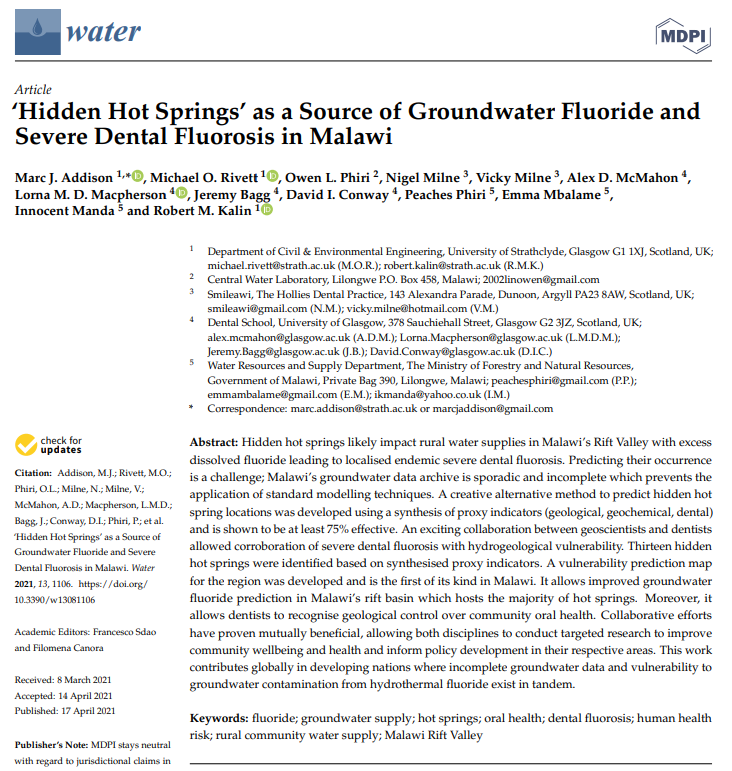
That evening, at dinner, I met four staff from the University of Stirling who had recently arrived for meetings related to a project they are engaged upon with the Malawi Police relating to road traffic accidents. Edward Duncan (Professor of Applied Health Research), Liam Dillon (Research Fellow), Jen Dickie (Senior Lecturer in Environmental Geography) and Greg Mannion (Professor of Education), together with Malawian colleagues, have geo-spatially mapped literally tens of thousands of RTA’s, which is allowing hot-spots to be identified and subsequently the design of mitigations. I had already heard Edward give a summary of the work at the Scotland Malawi Partnership Annual General Meeting in November 2023 and it was a pleasure and privilege to meet the team. Our discussions moved on to the work completed by the MalDent team with colleagues at Strathclyde University in which data we had gathered on dental fluorosis complemented research by the hydrogeologists on hidden underground springs and fluoride in groundwater.
L to R: Liam, Greg, Jen, myself, and Edward in The Leslie sitting room
We agreed to meet in Scotland upon our return – there is some unfinished business here!
One of the main objectives of the MalDent Project was to establish a BDS degree programme at the University of Malawi College of Medicine – now Kamuzu University of Health Sciences (KUHeS). The curriculum was approved in 2019 and the first students entered the degree course in the Summer of that year. Since then, there has been a new intake each year and the course currently has the following number of students:
Class
Females
Males
Total
BDS 4
2
8
10
BDS 3
3
11
14
BDS 2
11
12
23
BDS 1
12
10
22
BDS 0 (Foundation)
14
10
24
Total BDS students
42
51
93
Current student numbers in each year of the new BDS programme
In February 2024, the new academic year will begin and a new intake of 20 Foundation Year students will enter the programme, bringing the total student number to 113. Furthermore, for the first time there will be students in BDS 5, the final year of the course, with the prospect of Malawi graduating its first ever home-trained dentists to join the healthcare workforce as interns.
In 2018, Glasgow hosted a visit by a number of senior colleagues from the University of Malawi College of Medicine, to discuss the establishment of what became the MalDent Project and to draft the programme grant application for Scottish Government, which was subsequently funded. This follow-up visit, from 26th November 2023 – 2nd December 2023 was aimed not so much at discussing curriculum content but focused on the logistics of delivering a Bachelor of Dental Surgery degree programme and the associated policies and procedures.
The KUHeS team arrived on time at Glasgow Airport and were whisked off in taxis to the Novotel in Pitt Street, very close to the Dental School – their base for the next week.
The team members arrive at Glasgow Airport following their long journey from Blantyre, Malawi. (L to R: Annie Mwapasa, Jessie Mlotha-Namarika, Mwapatsa Mipando, Blessings Tembo, Peter Chimimba)
With help from Frank Bonner, the Dental School Manager and Yvette Hollywood, the Dental School Office Coordinator, we had put together a very full timetable for our visitors, which began on the Monday morning with a series of sessions led by colleagues in the Community Oral Health Section. Al Ross, until recently a Senior Lecturer at Glasgow Dental School but now an Associate Professor in Human Factors at Staffordshire University, joined David Conway, Professor of Dental Public Health, to provide an excellent presentation on Dental Public Health and Human Factors in the context of undergraduate teaching. This was followed by a session led by Lorna Macpherson, Emeritus Professor at Glasgow Dental School, on Malawi’s National Oral Health Policy and Implementation Programme. Lorna has played, and continues to play, a massive role in the MalDent Project, and I am especially grateful to her for covering so many roles when I was unable to engage with the MalDent Project over recent months on account of family illness.
The KUHeS team with David, Al and Lorna
The importance of Human Factors teaching in the education of healthcare workers is now well recognised and this first presentation provided many ideas for the BDS course in Malawi.
Viv Binnie next delivered a short presentation on teaching of communication skills, followed by an in-depth discussion. The teaching of many softer skills, such as communication, is now a key requirement of the General Dental Council in the UK and is equally relevant to the new BDS degree programme at KUHeS.
Staged communication skills teaching through the Glasgow BDS programme
Immediately after lunch, Lorna and Peter gave an update on the recently completed National Child Oral Health Survey in Malawi. The data are still to be analysed and will be the subject of a future blog post.
Jessie is responsible for the teaching of periodontology to the BDS students at KUHeS and we were delighted that Shauna Culshaw, Professor of Periodontology and Immunology at Glasgow Dental School, was able to join by video-link for a session on both periodontology teaching and research possibilities. The latter could also link nicely with another large KUHeS / University of Glasgow partnership funded by Scottish Government: the Blantyre-Blantyre Project.
Shauna Culshaw joins online for a discussion on periodontology teaching and research possibilities
Students at Glasgow Dental School have to complete an elective project between Years 3 and 4 of the degree programme. Some students travel overseas and we would like to establish an exchange programme between Glasgow and KUHeS. Vivien Monteith, Clinical University Teacher in Orthodontics, leads the elective project programme at Glasgow Dental School and delivered a presentation with Andrew Paterson, who is already a key member of the MalDent Project team and a Trustee of Bridge2Aid. One of the challenges is ensuring that such exercises are equitable, with opportunity for students from Malawi to visit Glasgow as well as Glasgow students heading to Malawi.
Vivien and Andrew discussing the elective project programme at Glasgow and exploring opportunities for collaboration with KUHeS
Following the electives presentation, Neil Henderson, Clinical Senior Lecturer in Dental & Maxillofacial Radiology, gave an excellent talk on radiology teaching for dental students. Malawi is very short of trained radiologists and has none trained in dental and maxillofacial radiology. We will no doubt be returning to Neil for further support in the future.
Vivien, Andrew and Neil with the KUHeS team
Neil provided a clear overview of the sequencing of teaching in radiology for the Glasgow BDS students and also recommended up to date sources of information that would be of value to the students at KUHeS:
Useful guidance on dental radiology teaching
On the Monday evening we visited a restaurant that specialises in Vietnamese food. All agreed it was beautifully cooked and very tasty but we were very disappointed that the deep-fried ice cream that was offered on the menu was unavailable that night!
Dinner Vietnamese style
Tuesday kicked off with a session on University Teaching Quality Assurance procedures, led by Niall Rogerson, a core MalDent Team member, and Craig Mather, Clinical Senior Lecturer in Oral Surgery, who is the Quality Assurance Lead for the Glasgow BDS programme. Many of the processes followed by the University of Glasgow are potentially applicable to the new BDS degree at KUHeS.
Craig in full flight describing UofG teaching quality assurance procedures
Sadly, James Mchenga, the Academic Head of the KUHeS BDS degree had been unable to travel to Glasgow with his colleagues, because he had not gained a visa in time. However, thanks to the wonders of Zoom he was able to join us on-line for a discussion on the current status of the KUHeS BDS degree. This in-depth session informed the creation of an action list, which was augmented as the week progressed .
James Mchenga on the line from Blantyre, Malawi
Immediately after lunch, Frank Bonner the Dental School Manager and his Deputy, Leigh-Ann Dragsnes, who is the Dental School Learning & Teaching Manager, gave an overview of Dental School administrative processes. The volume of administrative activity involved in running a complex clinical course such as a BDS programme is massive and if students are to have a good learning experience then a strong administrative backbone is essential. Over the years Glasgow Dental School has developed a very efficient and well-oiled administrative machine and there is much that is generalisable and applicable to the new course at KUHeS, particularly as the volume of students increases.
I then gave a demonstration of the Scottish Dental Clinical Effectiveness Programme resources that are freely available to dental professionals and students worldwide, including in Malawi. This was followed by an excellent session and demonstration on Scottish Dental Education Online (SDEO) resources by Ziad Al-Ani, Senior Lecturer in Oral Biology / Glasgow Academic Lead for SDEO and Adam Wyroslawski, E-learning systems developer for SDEO. Ziad and Adam showed our visitors how these excellent resources for both staff and students could be accessed in Malawi.
Ziad and Adam with KUHeS team members following their presentation on SDEO teaching and learning resources
Following this second very full day of activity, we relaxed in the evening at an Italian restaurant close to the hotel before retiring for the night.
Enjoying Italian cuisine
On Wednesday morning we took a taxi up to the main University of Glasgow campus at Gilmorehil in the West End of the city. We were met by Professor Bill Cushley, who is Professor of Molecular Biosciences and Assistant Vice-Principal International. Bill has a great level of knowledge about the campus and its history which he generously shared with our visitors. During the visit they saw elements of the older parts of the University…
Following the campus visit, we headed back to the Dental School for a working lunch with Nigel and Vicky Milne of Smileawi. The MalDent Project and Smileawi have been working very closely together for a long time and Nigel and Vicky had both played major roles in the recently completed National Child Oral Health Survey in Malawi. There was a very useful exchange of views on which parts of the survey had gone well and areas which could be improved in any future surveys. Peter, Jessie, Annie and Blessings had all participated in different ways in the survey and it was a great opportunity for them to meet again.
Nigel and Vicky Milne with the KUHeS team
Following lunch, Peter, Jessie and I had another online meeting with James Mchenga to discuss the priorities for the Flying Faculty visits planned for the first quarter of 2024. Whilst we were having that meeting, Blessings and Annie spent time with Deirdre Kelliher, our MalDent Project Finance Administrator. Like Lorna Macpherson, Deirdre has done a significant amount of extra work to cover my recent relative absence and I am very grateful to her for that.
The afternoon finished with a Q&A session with myself and the current Head of the Dental School, Aileen Bell, followed by a discussion on internal and external curriculum review, including the role of professional regulators such as the General Dental Council in the UK and the Medical Council of Malawi.
We were delighted that on the evening of the Wednesday, Aileen was able to join us for dinner. We are very grateful for the support that Aileen, the Dental School staff and the University of Glasgow itself provide so willingly for the MalDent Project.
Dinner with the Head of Glasgow Dental School
On Thursday we all took the train to Edinburgh for some meetings with key stakeholders, including the Scotland Malawi Partnership. We were grateful to Stuart Brown, Chad Morse, Dorothea Nelson and Natasha Maluza who welcomed us to the Mandela Room at Edinburgh City Chambers for coffee and a very fruitful discussion about the MalDent Project:
In the evening, Mwapatsa and I met with Paul Garside and John Briggs, both semi-retired professors at the University of Glasgow, for discussions about a project of the Saint Andrews Clinics for Children (STACC) charity in Malawi. John is Chair of the Board of Directors of STACC and Paul is a Board member.
Meeting to discuss a STACC project in Malawi
By chance, on the Friday morning the Dental School was holding a training session for staff involved in delivering outreach teaching for Glasgow BDS 5 students. Outreach teaching is led by James Donn, Clinical Senior University Teacher in Restorative Dentistry, and he kindly invited our colleagues from KUHeS to join in for part of the full day event. This not only provided some useful information but also demonstrated the importance of staff training to ensure consistency of teaching and assessment.
James Donn leading the Outreach training day
After lunch, we had a very useful discussion with Christine Goodall, the Lead for Dental School Admissions and Susan Johnston, Dental School Admissions Assistant. There is a fundamental difference between our two organisations in that the KUHeS BDS students are selected centrally whereas in Glasgow the Dental School runs its own admissions process. The importance of considering a wide range of attributes, not just academic ability, was stressed.
Christine and Susan with the KUHeS team
The formal sessions finished with a discussion led by Alun Scott, Clinical Senior University Teacher in Restorative Dentistry, about Graduate Attributes and Special Study Modules, followed by a meeting with Frank Bonner and three BDS Course Secretaries, Jessica Brewster, Claire Rodgers and Ashley Mcmillan, about course administration.
A final wrap-up session, reviewing the material covered over the five day meeting, began the creation of an action list to be followed by both the KUHeS and Glasgow teams in the forthcoming weeks.
In the evening, some of the KUHeS team met with UK relatives who had travelled to Glasgow, while others joined a meal at a restaurant in the West End of Glasgow, organised by our great friend and colleague Alex Mackay. That gathering also included Professor Geoffrey Kwenda from the University of Zambia, who is closely involved in the Lusaka Blantyre Blantyre Laboratory (@LUSAKABB) Project with KUHeS and the University of Glasgow.
Replete and ready for home after a very enjoyable evening – “thank you” Alex!
We all awoke on the morning of Saturday 2nd December to the sight of overnight snowfall. Whilst this did cause some delays to the team’s respective flights home, all are now safely back in Malawi.
A snowy Glasgow Airport – photo courtesy of Blessings Tembo
This was a very intensive visit which resulted in some very valuable learning and improved understanding for both the Glasgow and KUHeS teams. A significant amount of activity is planned for January and February 2024 in support of students and staff at KUHeS as they enter their new academic year. Some of the processes and procedures we have developed in Glasgow may be directly applicable in Malawi, but others will be less relevant at this stage of development of the course. We should be mindful of this and reflect upon a well known quote from Mao Zedong:
Now, there are two different attitudes towards learning from others. One is the dogmatic attitude of transplanting everything, whether or not it is suited to our conditions. This is no good. The other attitude is to use our heads and learn those things that suit our conditions, that is, to absorb whatever experience is useful to us. That is the attitude we should adopt.
The annual College of General Dentistry Study Day, held on the first Friday in December at Glasgow Science Centre, is always a very stimulating and enjoyable event. It brings together a large number of dental professionals from across Scotland, including all the Vocational Trainees. It is a great opportunity to catch up with colleagues and also to hear from recent graduates as they start out on their professional journeys.
This year, the MalDent Project team was invited to deliver the Caldwell Memorial Lecture. Robert Craig Caldwell was born in the United States but raised in Millport. He graduated from the University of Glasgow in 1950 and embarked on a career in dentistry that saw him return to America as Dean of the School of Dentistry, University of California, Los Angeles (UCLA).
While there, he introduced the comprehensive patient care programme and encouraged the recruitment of minority and female students so that all segments of the population could be represented in the student body. He also encouraged students to seek advanced training and considered students to be his junior colleagues. After just three years in post Bob died, at the age of 46, of chronic myelogenous leukaemia. His classmates at the University of Glasgow established the Caldwell Memorial Lecture in his memory and it is delivered every year as the final session at the Study Day.
This was a tremendous honour for us. A small group was assembled to present an update on the MalDent Project’s progress and to demonstrate the benefit that collaborations and partnerships are playing in the venture.
Welcoming board at Glasgow Science Centre
We are very grateful to Robbie and Patricia Thomson, key players in the organisation of the Study Day, who had invited our participation. Following highly successful and influential careers in general practice, both are now Clinical Teaching Fellows at Glasgow Dental School, providing students with the benefit of their many years of experience in the profession.
Robbie and Patricia at the lectern during the course of the Study Day
The team comprised Stuart Bassham from Dentaid, Nigel and Vicky Milne from Smileawi, Andrew Paterson representing Bridge2Aid, and myself representing the broader MalDent Project. Stuart had to fly up from near Southampton that morning, but for the rest of us the venue was close to home.
Message from Stuart: “Good morning – the journey begins”!
The lectures at the Study Day are delivered in the iMax Theatre at Glasgow Science Centre. This is a large capacity venue, easily capable of holding the 350 delegates at the meeting:
Professor Justin Durham, Dean of Newcastle Dental School, the first speaker of the day
There is always a trade show running in parallel with the rest of the event and we were grateful to the Study Day organisers for providing us with a ‘volunteering’ stand free of charge:
The Dentaid and Smileawi banners displaying prominently at the trade show
This was a great opportunity for Nigel, Vicky and I to discuss some of the joint projects we’re involved with in Malawi and which we would be talking about during the lecture that afternoon. Later, we were also joined by Andrew.
Making good use of the face-to-face time together
Stuart arrived from Southampton just in time to enjoy lunch with us, which was a very civilised sit-down meal…
… before we headed off to the iMax Theatre to check through our slides and then back to the trade show ahead of the afternoon lectures:
Stuart speaking with one of the delegates about the many facets of Dentaid’s work
Gillian Lennox presenting Martin Laird with his award
The Caldwell Memorial Lecture was introduced by Conor O’Malley. Conor played a pivotal leadership role over many years in developing and building up the Study Day in its original guise as the FGDP Scottish Day, before the FGDP itself was replaced by the College of General Dentistry. Conor has also been a great friend to the Glasgow Dental Alumnus Association, helping to raise large sums of money over the years. It was, therefore, a particular pleasure that he had been chosen to introduce us.
Conor O’Malley introducing the Caldwell Memorial Lecture
I opened the lecture by describing the background to the MalDent Project. The two initial principal partners were the University of Glasgow and the University of Malawi College of Medicine (now Kamuzu University of Health Sciences) who, in 2018, were jointly awarded a Scottish Government International Development grant of £1.3m over 4.5 years. The principal objectives were to establish a BDS degree programme, the first in Malawi, and to develop an Oral Health Strategy for Malawi through close working with the Ministry of Health and other key stakeholders, including the World Health Organisation.
Describing the first meeting between Ian Nicol (Scottish Government), Mwapatsa Mipando (University of Malawi College of Medicine) and Jeremy Bagg (University of Glasgow) in Malawi and the subsequent pump-priming award that heralded the start of the MalDent Project
From the outset there were multiple partners across the academic, healthcare, charitable and commercial sectors:
The many collaborators who are supporting the MalDent Project
This presentation focused on the role played by three UK charities, Bridge2Aid, Dentaid and Smileawi and the dental supply company Henry Schein, working in collaboration with the two university partners.
The first of these partners to speak was Stuart Bassham, Dentaid’s Workshop Manager:
Stuart Bassham describing the role played by Dentaid and Henry Schein in the MalDent Project
Dentaid covers multiple functions, both national and overseas, in its portfolio of activities. One of these is the servicing and installation of donated dental equipment and it was this particular skill that it has brought to bear on the MalDent Project. Stuart described to delegates the work that he and his team had done to replace 22 dental chairs and install 12 A-Dec phantom head units in the Dental Department at Kamuzu Central Hospital. During both installation visits to Malawi, Henry Schein had provided an engineer, free of charge – Jonathan Langley in 2018 and Chris Cox in 2022. The result of all this work was a transformation of the Dental Department with upgraded equipment, providing a suitable clinical teaching environment for the BDS students, improved working conditions for staff and an enhanced patient experience.
Following Stuart’s talk I spoke briefly about the work that had been undertaken to develop a National Oral Health Policy for Malawi. This took place between February 2020, when an Oral Health Policy Task-force was established, and the launch of the policy on 14th April 2022. Twenty-two meetings were held on-line and there were a small number of face-to-face meetings of the Malawian Task-force members. Attention has now turned to implementation of the policy, and the Study Day provided a wonderful opportunity for Nigel and Vicky Milne, the founders of the charity Smileawi, to tell the audience about the variety of activities their organisation undertakes in Malawi which support the implementation of the new policy:
As a small Scottish charity whose main aim is to help improve oral health services in Malawi, much of the work Smileawi has carried out aligns very closely to the seven pillars of the Oral Health Policy. Key to their operation is providing very important support for the existing dental therapists and by funding many of the student therapists at the Malawi College of Health Sciences. This vital sector of the dental workforce will grow in strength and confidence and be equipped to play a major role in the Oral Health Policy implementation. The joint work of Smileawi with Bridge2Aid, described by the next speaker, provided another example of engagement with dental therapists to strengthen oral disease prevention, a key policy objective.
Nigel and Vicky Milne describing how their activities in Malawi map onto the new National Oral Health Policy
Bridge2Aid is another key charity partner of the MalDent Project. Andrew Paterson, one of the charity’s trustees, has been involved as a clinician with the successful emergency dentistry task-shifting programme that Bridge2Aid has delivered in Tanzania for over 15 years, and a similar model is planned in Malawi. However, Bridge2Aid, together with Smileawi and other UK and Malawian partners, has also embarked on a programme of community Oral Health Promoter training in Northern Malawi, which again maps onto the Oral Health Policy implementation plan, as Andrew described:
Andrew Paterson, representing Bridge2Aid, describing the Oral Health Promoter training underway in Northern Malawi
Phase one was a modular course delivered to Northern Malawi dental therapists remotely using the ProDental CPD platform, to upskill their oral health knowledge and to give them teaching skills to cascade key oral health messages to remote and rural areas and to disadvantaged groups. Working with the Malawian Ministry of Health and the Dental Association of Malawi ensured messages were culturally appropriate and community led. Phase two empowered the therapists to use newly acquired teaching skills to cascade train rural Oral Health Promoter volunteers who are now actively engaged in promoting oral health in schools, churches, and other community settings rurally. The course will be run in Central Malawi in 2023 and thereafter Southern Malawi to create a national network of rural Oral Health Promoters.
Oral Health Promoters at work in a variety of locations in Malawi
The presentation finished with my summarising three further ongoing work streams. These were the design and construction of a new dental clinical teaching facility on the Blantyre campus of Kamuzu University of Health Sciences, the development of a Malawian version of the Scottish Childsmile programme that would be applicable to the local environment, and a National Child Oral Health Survey planned for 2023:
In closing, I stressed again how important the multi-sectoral collaborations had been to the progress made by the overall project and, finally, thanked the audience for their attention.
Before we all left for the drinks reception, Conor presented the conference secretariat, Andrew Miller and Patricia de Vries, with gifts to thank them for yet another brilliantly organised event. Andrew has been involved with the Study Day for many years and is a great friend to many of us, myself included, so it was very sad to hear that he is retiring from his activities in organising dental meetings to focus on work at his family farm. Andrew will be greatly missed by all in the Scottish dental community and we are grateful for his many years of service.
Conor delivering his vote of thanks to Patricia and Andrew
As is the custom, the event finished with a drinks reception. Nigel is captured here catching up with his friend from University of Glasgow days, Dr Ian Mills, former Dean of the Faculty of General Dental Practice …
… and I had opportunity to meet some of the current final year students at Glasgow, who told me how much they were enjoying their outreach dental teaching and looking forward to their turn in VT next year:
It had been an excellent event for all of us. We were very grateful to the organisers of the Study Day for the opportunity to speak to such a large audience about the MalDent Project and welcome any who may be interested in joining us to get in touch.
Acknowledgement
Many of the photographs in this post were taken by Jason Kimmings, the official photographer for the event. Thanks are due to Jason for kindly granting permission to reproduce his images.
The final day of the week was spent with the BDS 3 students, delivering face-to-face teaching. It was a very uplifting experience.
As had become normal practice during the week, the Scottish and Zambian team members met early for breakfast, which allowed time for some relaxed informal discussion and preparation for the day ahead. At dinner on the previous evening there had been some discussion between Niall and Dr Sayela about ties. As it happened, I had a University of Glasgow tie with me which I was delighted to present to Dr Sayela as a memento of a highly collaborative week which we hope will lead to further partnership working.
Dr Sayela receiving his University of Glasgow tie
En route to Kamuzu Central Hospital we had an opportunity to visit the adjacent Lilongwe Campus of Kamuzu University of Health Sciences. The blossoms on the flowering trees were beautiful:
Views of the Lilongwe Campus of Kamuzu University of Health Sciences
Whilst on the campus we took the opportunity for a quick photograph at the entrance into the main building:
All smiles from UofG, CBU and LMMU at KUHeS!
Following the very short drive from the university campus to the Dental Department at Kamuzu Central Hospital we met with the BDS 3 students who had attended the curriculum workshop held the previous day.
The teaching commenced with a case-based discussion focusing on a 14 year old teenager who had presented with a fractured upper incisor tooth. Every aspect of the patient’s management from history taking and examination through gaining consent and determining a treatment plan were covered.
Next on the agenda was an introduction to dental veneers. This was in preparation for the next stage of the morning which would be spent in the pre-clinical skills simulation facility.
Andrew leading the case-based discussion
The engagement of the students was superb and their eagerness to learn was demonstrated by their willingness to participate in the discussions and their recording of copious notes.
Close attention being paid as the case-based discussion develops
The level of knowledge displayed by the students was outstanding for their stage on the course, especially considering that their first two years and a significant part of Year 3 had focused on biomedical and medical subjects. We congratulated them on their achievements to date, which were truly impressive.
Following this initial session, the students moved to the pre-clinical skills facility to participate in a practical session that entailed preparing an anterior tooth to receive a veneer. Niall and Andrew demonstrated the method of preparation ….
Niall demonstrating to his group of students the do’s and don’ts of preparing a tooth for a veneer, watched by Yusuf, one of the Assistant Lecturers
….before the students took up their own dental handpieces to practise the skill:
Niall providing further guidance as the students get started
… and this was a great opportunity for Lorna and I to have some informal conversations with the students:
One issue we identified was that the compressor which drives the twelve simulation units overheats quickly when all are being used simultaneously. We plan to overcome this problem in the New Year by the installation of two new compressors which will have the additional power needed for simultaneous use of all the simulators.
Outside the pre-clinical skills facility was the poster that had been printed and displayed for the visit by Ben Macpherson MSP in 2018. At that stage none of the A-dec simulators or the new cabinetry were in place. Seeing the equipment in use by the students was a wonderful experience and put into perspective the critical importance of the progress made by the MalDent Project in collaboration with Dentaid and Henry Schein in May 2019 and March 2022.
The ‘historical’ poster
Whilst Niall and Andrew continued to work with the students, Lorna and I spent some time in the office of Dr Jessie Mlotha-Namarika, the Dental Surgeon in charge of the KCH facility, who also coordinates the BDS 3 programme. Lorna and I were working our way through the spreadsheet of actions that had been drafted by Wisdom and Brian following the National Oral Health Policy implementation workshop earlier in the week. It was extremely useful having Jessie close by when we had questions to ask about local issues or needed explanations of acronyms that are commonly used in the Malawian healthcare system.
Jessie at her desk
At about 2.30pm we were joined by Niall and Andrew. In addition to their time with the students Andrew had also delivered some CPD for the Assistant Lecturers.
The Flying Faculty activities continued in the afternoon, with teaching delivered by our Zambian colleagues. This was a good example of the type of South-South collaboration that could be mutually beneficial for all of the dental schools moving forward.
Dr Majambo delivering teaching on management of medical emergencies in dentistry
There had already been a number of instances throughout the week where the inter-relationship between the National Oral Health Policy and the BDS course was evident. Another example was the polo shirts that have been designed for the students to publicise the policy. One of the students, Felix Nandolo, wore the shirt to the teaching session and it was too good an opportunity to miss a photo shoot!
Felix in his oral health promoting polo shirt
Once the teaching was concluded, we returned to the hotel, where Andrew and I had one final task to complete. We are both Trustees of the charity Bridge2Aid, which has been one of the partners with Smileawi, ProDental CPD, the Dental Association of Malawi, and the Malawi Government Ministry of Health in the ongoing project to train Oral Health Promoters in rural Malawi. One of the main areas of feedback from the Oral Health Promoters is that they would be able to share their new knowledge far more widely if they had bicycles to transport them between villages. In seeking a way forward, we had come across the charity World Bicycle Relief, which includes Malawi in its sphere of operation.
Following initial enquiries by the Bridge2Aid staff team, it was agreed that Anthony Kinnaird, the Malawi Country Director for World Bicycle Relief, would be able to meet Andrew and I that Friday evening in Lilongwe. It was a great chance for the three of us to share in detail the activities of the organisations involved and to discuss possibilities for a partnership project. We had an excellent conversation and the outcome is that a Zoom meeting with Anthony and the CEO of World Bicycle Relief, Allison Dufosee, will be scheduled for early 2023.
Andrew providing Anthony with a detailed description of the Oral Health Promoter project
On this last evening in Lilongwe, we all shared a very enjoyable meal and mulled over the events of the past week. It had been busy and intense, but much had been achieved and we had established a strong working relationship between the four universities represented. The foundations for collaboration have been firmly established and it is now up to us as the partners to ensure the good work continues.
Enjoying dinner before heading home the next day
Andrew, Lorna, Niall and I had a relatively relaxed start to Saturday, as our flight from Lilongwe was not scheduled until early afternoon. At the allotted time our bus arrived to take us on the short journey to Kamuzu International Airport.
Heading to the airport to start our 26 hour journey home
Our passage through security and passport control was very efficient and our plane arrived on time, allowing punctual boarding and departure.
Boarding the Airbus A350 at Kamuzu International Airport
Our routing to Addis Ababa was via Lubumbashi in the Democratic Republic of Congo…
Leg 1Leg 2
… where we spent an hour on the tarmac while some passengers disembarked, others joined and the plane took on fuel.
Re-fuelling in Lubumbashi
As a result, our trip back from Lilongwe to Addis Ababa took considerably longer than it had on the direct outward journey a week earlier.
We had some time to kill in Addis Ababa but again boarded on time for the flight to Frankfurt, where we arrived very early on Sunday morning. Weary from the overnight flight, we found a lovely restaurant called Goethe which rustled up a wonderful breakfast that soon had us feeling human again:
Scrambled eggs and coffee that hit the spot!
The final short flight from Frankfurt to Glasgow passed swiftly and we were soon back home in Scotland.
I commented in the previous post about the dedication and commitment of the staff in both Malawi and Zambia, who were delivering the best educational experience they could for the dental students in their charge. What the Flying Faculty activities on the Friday had confirmed for me was that the BDS 3 students at KUHeS are also exceptional. Despite the challenges that have been faced over the past year, including delays in access to textbooks and consumable materials for use in the pre-clinical skills teaching, the knowledge they displayed was remarkable. Furthermore, their mature, professional approach on both the Thursday afternoon and Friday was a credit to themselves, to their teachers and to KUHeS. With this combination of staff and students there is every reason to be very optimistic for the future.
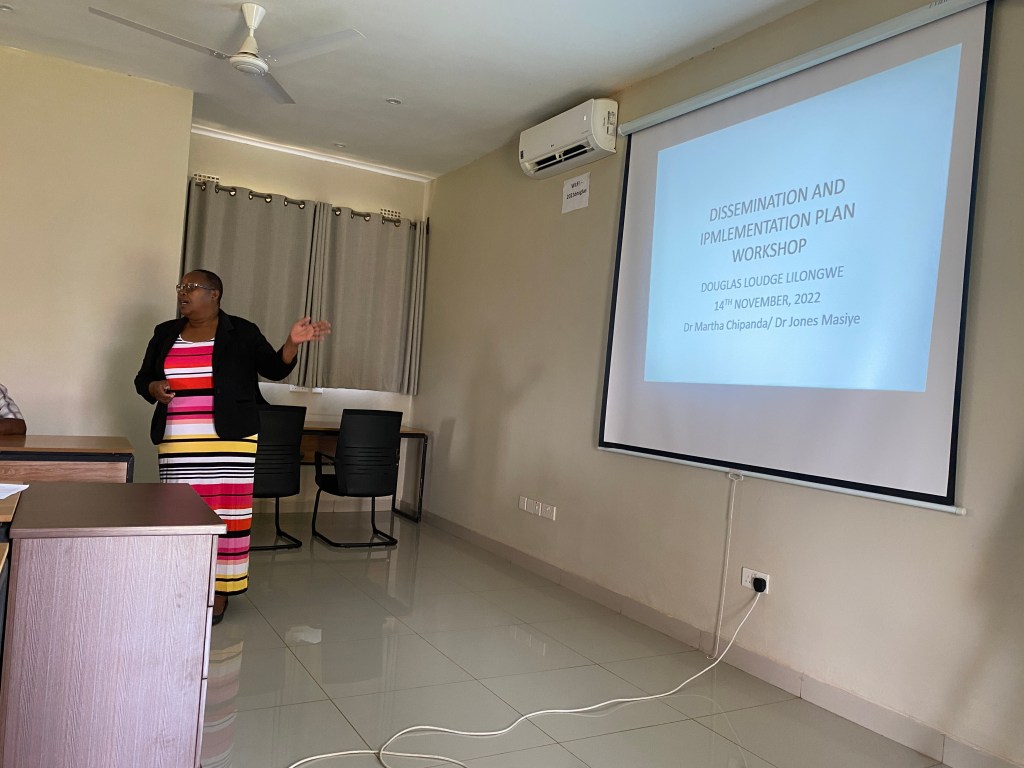
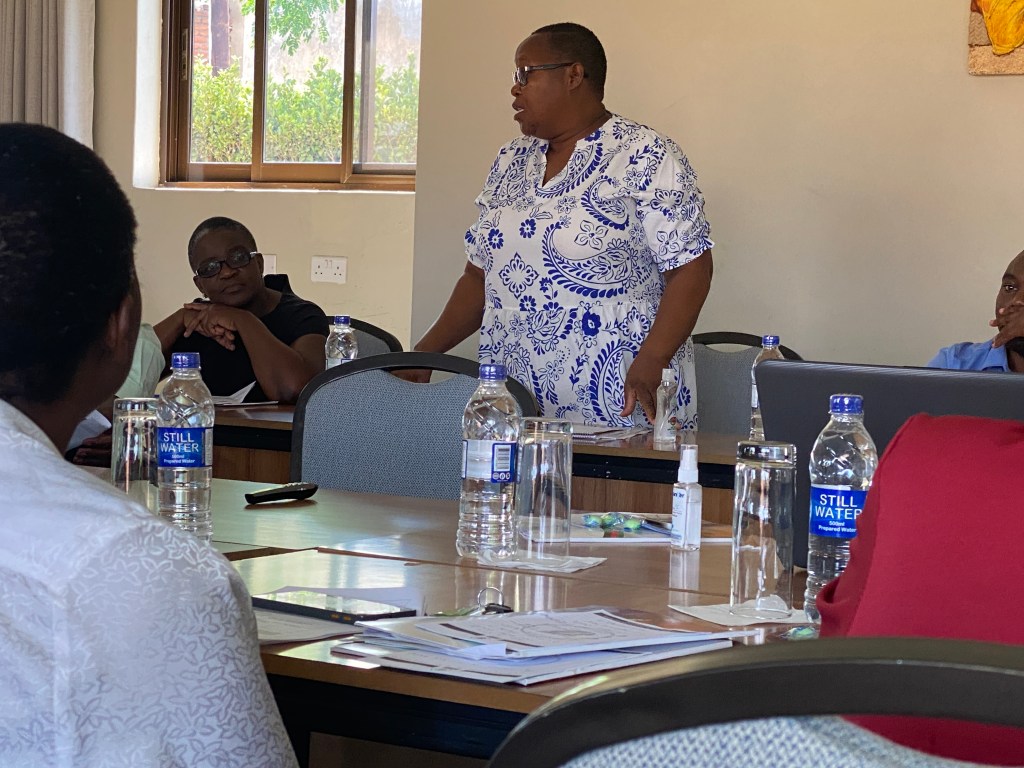
Following the National Oral Health Policy Dissemination and Implementation Workshop on 14th and 15th November, the MalDent Project team convened a two-day BDS Curriculum Workshop on 16th and 17th November that included representation from Kamuzu University of Health Sciences (KUHeS), the Copperbelt University (CBU), Zambia, Levy Mwanawasa Medical University (LMMU), Zambia and the University of Glasgow (UofG). As the KUHeS BDS programme, launched in 2019, prepares for its pioneer cohort of students to enter BDS 4 in early 2023, it is time to begin reviewing curriculum content and structure. The CBU is currently undertaking a review of its own programme and LMMU will be accepting its first students into the clinical part of the programme (BDS 3) in 2023. There are many opportunities for joint learning and collaboration between these three organisations, with potential for links with UofG and other international dental education providers.
The first session was chaired by Dr Peter Chimimba, the MalDent Project Lead at KUHeS. After introductory comments, he invited Drs Mchenga, Majambo and Sayela to provide summary overviews of the existing BDS curricula at KUHeS, CBU and LMMU respectively.
Dr Mchenga gave a very full account of the admissions process, the course structure, and the teaching and assessment methods that were employed at KUHeS, together with a summary of the various challenges that the fledgling programme was facing.
Dr James Mchenga providing an overview of the KUHeS BDS curriculum
Dr Majambo followed, and delivered a similarly comprehensive presentation. The BDS course at CBU was the first in Zambia and launched in 2011, graduating its first dentists in 2016. To date, the course has delivered more than 120 dental graduates. The course runs for six years, excluding internship, and the students do not begin their formal dental teaching until the Fourth Year. Dr Majambo also highlighted some of the challenges in course delivery, revealing a number of parallels to those identified by Dr Mchenga
Dr Majambo presenting on behalf of the Copperbelt University
We next heard from Dr Sayela about the new BDS programme at LMMU. Construction of the LMMU building began in 2016, funded by the Zambian Government, with an ambition to resolve the deficit of 50,000 members of the healthcare workforce in the country. The university has five schools (Institute of Basic & Biomedical Sciences, School of Nursing, School of Health Sciences, School of Medicine & Clinical Sciences, and School of Public Health & Environmental Science). The six-year BDS degree programme sits within the School of Medicine & Clinical Sciences and its curriculum was developed in 2020. Formal dental teaching starts in BDS 4 with an average of 30 students per year. However, there is some integration and introduction of dental topics in the earlier years. The first intake of clinical students is due in 2023. As reported in the two earlier presentations, there were challenges in relation to equipment, staffing and costs of dental materials.
Dr Sayela describing the BDS programme at Levy Mwanawasa Medical University
Whilst there were some significant differences between the three BDS curricula, there were also obvious synergies, suggesting that joint working could potentially help to ease some of the challenges being faced individually. These would be examined and discussed in detail the next day.
We had been joined for this session by Dr Emma Thomson, who has been a great friend to the KUHeS BDS programme since its inception. In her previous role as Director of the College of Medicine Education and Training Office, Emma was involved in the first and second BDS curriculum conferences, when the course was being created, and has since provided much behind-the-scenes support. In the new KUHeS structure, Emma is Acting Director of the Teaching and Learning Development Centre and she had kindly agreed to deliver a session on Clinical Assessment.
Dr Thomson introducing her topic for the day
Emma’s talk provided an excellent grounding in assessment across all of the learning domains – knowledge (cognitive), skills (psychomotor) and attitudes (affective) – including specific advice on chair side assessment. The value of feedback, delivered in a constructive and positive manner, was stressed as a way of helping students to be the best they can.
Dr Thomson provided the theoretical basis for the practical advice offered
It had been a very full morning, with much food for thought, and following Emma’s lecture we were able to continue our discussions over lunch:
Emma relaxing at lunchtime with members of the MalDent Project team
Before Emma departed to join an on-line meeting in her schedule for that afternoon, we had a group photo.
Replete after lunch and ready for the afternoon session
The afternoon session, chaired by Dr James Mchenga, was devoted to a workshop on Restorative Dentistry teaching in the context of Malawi and Zambia, led by Andrew Paterson and Niall Rogerson from UofG. Despite the infrastructural challenges in Malawi for delivery of dental care, as described during the Oral Health Policy Workshop earlier in the week, the ambition is to train dentists who are ‘globally competent and locally relevant’. Ensuring that curriculum content is appropriate to this aim is very important and Restorative Dentistry is perhaps the clinical discipline which makes such decisions most difficult.
Andrew kicking off the afternoon workshop on Restorative Dentistry teaching
Andrew delivered an excellent presentation which covered all aspects of teaching in Restorative Dentistry, including biodental sciences, pre-clinical skills, laboratory skills, clinical skills and integrated care.
Andrew delivering his presentation on Restorative Dentistry teaching
Following the presentation, we enjoyed an informal discussion session:
Andrew facilitating discussions following his lecture
One of the most valuable elements of this workshop was the interaction that took place during refreshment breaks. With colleagues attending from multiple universities, disciplines and career stages, there were rich opportunities for joint learning and establishment of academic links.
Reflections and informal discussions over tea
By close of play on the first day of the workshop we had all absorbed a lot of information and were ready to return to the hotel for a rest before dinner. As I came out to our trusty bus I caught a cameo view of Niall already seated and ready to go:
Niall in classic ‘Our Man in Havana’ pose!
One of the joys of this week of activities in Malawi was the opportunity to meet four of the six Assistant Lecturers who were able to join us. In order to thank them for their excellent input to the workshops and to acquaint ourselves better, we had invited them to join us for dinner that evening.
Dinner is served in Vincent’s Restaurant – bon appétit!
The food was obviously a highlight of the event …
Crocodile tail and chipsA well-supported kebab!
… but there was also an opportunity to establish some informal mentoring for the Assistant Lecturers. Don, who is specialising in Dental Public Health, sat next to Lorna whilst Yusuf, who is specialising in Prosthodontics, sat with Andrew. As a result, both Lorna and Andrew have agreed to become external mentors for the period of Don’s and Yusuf’s specialist training. Similar external mentoring arrangements will be set up for the remaining Assistant Lecturers.
Mentors in action!
The next morning, while we were waiting for the bus, Niall spotted that one of the events scheduled in the hotel for later that day was a ‘Coca-Cola Malawi Meeting’. Lorna Macpherson, one of the UofG team, was due to deliver a lecture on the importance of preventive dentistry as a component of the BDS curriculum during our workshop, so this was an excellent photo-opportunity in real-time!
Coca-Cola and oral health – an unhappy alliance!
On arrival at Duncan’s Lodge, we launched into the morning session, which was chaired by Dr Majambo. I had agreed to lead a workshop on identifying collaborations between the parties present that could help to overcome some of the challenges in BDS course delivery identified on the previous day.
Facilitating discussions on opportunities for collaboration in BDS curriculum delivery between the schools
We structured the conversation around five initial themes, but by the end of the session that list had grown to seven:
In all of the areas listed above it was possible to identify practical, feasible and often relatively inexpensive ways in which we could all support each other to develop and deliver the three respective BDS curricula.
The morning finished with an excellent lecture by Lorna exploring the relationship and tensions between the need for teaching of preventive dentistry against a traditional historic emphasis in dental schools on operative procedures (curative dentistry).
Lorna introducing the subject matter of her lecture
Lorna describing the need for integration of preventive and curative approaches in the curriculum
Upstream and downstream interventions, the concepts of Universal Health Coverage, the Basic Package of Oral Care, and the Common Risk Factor approach to prevention of Non Communicable Diseases (including common oral diseases) were all covered.
Lorna outlining upstream, midstream and downstream interventions
Lorna’s final slide tied the whole subject of the BDS curriculum back to the content of the National Oral Health Policy, since it would be the young dental graduates who would be playing a major role in policy implementation. Prevention of oral and dental disease is a corner-stone of the recently launched policy, hence its importance in the undergraduate programme.
Linking undergraduate dental education with Oral Health Policy implementation
Following Lorna’s talk we broke for lunch, when we were joined by the BDS 3 students from KUHeS. They enjoyed eating with us before attending the afternoon session.
The BDS 3 students sharing lunch with us
The afternoon proceedings were chaired by Dr Sayela, who welcomed the BDS students before introducing Andrew and myself to lead the first session.
Dr Sayela welcoming everyone to the afternoon session
The purpose of this first session was to consider innovative ways in which the capacity to deliver oral and dental care in Malawi could be augmented in the short- to medium-term and how undergraduate dental education could prepare students for playing a leadership role upon graduation.
Andrew beginning the session on integrated workforce possibilities
In his presentation, Andrew described the task shifting model that has been used in Tanzania for many years by the charity Bridge2Aid, through which Clinical Officers in very rural environments are taught to deliver emergency dentistry, including uncomplicated dental extractions. Plans are underway to pilot this model in Malawi to train Medical Assistants in a similar fashion. The task shifting approach is approved by the WHO as a mechanism to improve access to care in situations where there are severe shortages of trained workforce, a condition that is certainly fulfilled currently in relation to delivery of emergency dental care in rural Malawi. However, the concept triggered a vigorous discussion, as it had earlier in the week during the Oral Health Policy workshop, and the outcome of the pilot programme will be important to the acceptance and possible adoption of the model in Malawi.
Andrew describing the ‘task shifting’ model
The final event of the workshop was entitled ‘The Student’s Voice’ and was an open discussion with the BDS 3 students about their experience of the course. It was hosted by Dr James Mchenga in his role as Head of the BDS degree course at KUHeS:
James spoke of the importance of the students as the future dental workforce in Malawi and how critical it was that they were equipped to take forward the activities required to implement the National Oral Health Policy:
However, he also made the point that the staff team cares passionately about the welfare of the students – something that was very evident just from watching the minute-to-minute interactions between James and this pioneer group of students under his tutelage.
The open discussion provided some valuable feedback…
Questions and comments from the BDS 3 students to the staff
… and the Student President, Patrick Moses, concluded the session with a very well delivered short speech.
Patrick Moses, the President of the Dental Student Society, addressing the delegates
The workshop concluded with a summary of the activities of the past two days and a note of thanks to all involved. Once again, Annie Mwapasa and Madalitso Kaphamtengo had organised everything perfectly.
We also told the students how much we were looking forward to spending time with them on the following day at the Dental Department in Kamuzu Central Hospital, for delivery of some teaching as part of the MalDent Project Flying Faculty programme. That story will be told in the next post.
On reflection, the overwhelming memory of this two day workshop is of the passion and dedication of those entrusted with teaching the future young dentists of Malawi and Zambia. Dental education is an expensive enterprise, requiring clinical staff, complex equipment and a ready supply of dental materials, all of which are challenging to deliver reliably in low resource environments. Nevertheless, there was a palpable determination to provide the best possible opportunities for the students and to care for their welfare, particularly at this time as the cost of living crisis is impacting so significantly. It is well summed up in the following quote:
One looks back with appreciation to the brilliant teachers, but with gratitude to those who touched our human feelings. The curriculum is so much necessary raw material, but warmth is the vital element for the growing plant and for the soul of the child.
The National Oral Health Policy launch on 14th April 2022
This was a milestone event for the MalDent Project but, as everyone knows, the true value of a policy lies not in its creation but in its successful implementation. Accordingly, the next step in the process took place on 14th and 15th November 2022 at Duncan Lodge, Lilongwe, where an Oral Health Policy Dissemination and Implementation Workshop was held. The meeting was organised jointly by the Ministry of Health and Kamuzu University of Health Sciences (KUHeS), with input from the University of Glasgow (UofG).
Over 40 delegates attended, including dentists and dental therapists from across all sectors of the profession in Malawi, Lorna Macpherson, Andrew Paterson, Niall Rogerson and myself from the University of Glasgow, Dr Mudhihiri Majambo from the Copperbelt University Dental School in Zambia and Dr Nalumino Sayela from the Levy Mwanawasa Medical University in Lusaka.
Delegates assembled on Day 1 of the workshop
The chairperson for Day 1, Brian Nyasulu from Kasungu District Hospital, opened the proceedings.
Brian Nyasulu, session chair, opened the workshop
The meeting started with a prayer, before delegates introduced themselves briefly.
Brian then asked Dr Martha Chipanda, Oral Health Coordinator at the Ministry of Health, to say a few words. Martha referred to the policy launch in April and stressed the importance of implementation, which had triggered this workshop of managers and other dental professionals from across Malawi. She spoke to the importance of the dental profession ‘owning’ the policy and working together to overcome the many challenges that were faced by oral healthcare in Malawi.
Martha makes her opening comments at the workshop
The context for oral health improvement at a global level was set out by Professor Lorna Macpherson, who is a member of The Lancet Commission on Oral Health team. Lorna was a co-author of a two-part Series of papers in The Lancet that highlighted the huge global health burden of oral diseases and the difficulties caused in tackling the problem because of isolation of oral health from other branches of healthcare. Lorna was able to lay out at first hand the key findings from The Lancet Series, identifying many principles that were directly relevant to implementation of Malawi’s new Oral Health Policy. For those who are interested, the two papers in The Lancet Series can be found here.
Lorna beginning her talk about The Lancet Series on Oral Health
Following Lorna’s excellent presentation on the high-level principles for achieving oral health improvement, Martha took the delegates through the seven key pillars of Malawi’s Oral Health Policy. In her very authentic presentation it was striking that many of the points being made by Martha chimed perfectly with Lorna’s earlier comments. The Policy Task Force had certainly followed, as far as possible, WHO recommendations for the global response to oral health challenges, to ensure that the policy would be in line with current thinking.
Martha providing a summary of the main elements of the National Oral Health Policy
One of the main objectives of the workshop was to seek engagement of the delegates with the detail of the policy and, through discussion, to identify the activities that were required for its implementation. All delegates were provided with a copy of the policy, the summary document, paper, pen and water – we were expected to work, not just listen!
Martha laid out the rules of engagement. We were divided into three groups, each of which was allocated two or three of the policy pillars to discuss in detail, then to identify activities that would support progress with implementation. Each group was asked to identify a Leader and a Rapporteur.
Martha explaining the rules for the discussion groups
These were very energetic and spirited discussions which highlighted many challenges but also identified some novel approaches. It was an excellent learning experience for everyone.
Working hard to find solutions!
A tea-break was very welcome following the first session of group work …
… after which we returned to pick up the discussions both before and immediately after lunch.
Towards the end of the afternoon, Group 3 was ready to report on Pillar 3 (Clinical Dental Practice and Patient Access) and Pillar 4 (Human Resources for Oral Health). Their rapporteur was Dr Nathan Lungu, an Assistant Lecturer at KUHeS who is specialising in Oral & Maxillofacial Surgery.
Nathan Lungu reporting for Group 3
The feedback presentation, as would subsequently be the case for Groups 1 and 2, triggered lively discussion from the floor. The potential for introduction of a task-shifting initiative, through which Medical Assistants in rural areas would be up-skilled to deliver emergency dentistry, proved especially controversial.
There was good feedback from the floor after all the group presentations
Day 2 of the workshop commenced with introductory comments from Dr Martha Chipanda and from Dr Jessie Mlotha- Namarika, Head of the Dental Department at Kamuzu Central Hospital.
Dr Martha ChipandaDr Jessie Mlotha-Namarika
Following an opening prayer, the session commenced with a very informative talk by Emma Mathumula from Balaka District Hospital. Her talk was entitled Current Situation of Dental Clinics in Malawi. This excellent presentation highlighted many of the daily challenges in relation to equipment and consumables that are faced by dental staff in public healthcare facilities There is a focus on dental extractions rather than restorative dentistry, but even extractions can be challenging because of inadequate instruments and stock-outs of essential items such as lignocaine.
Emma Mathumula delivering her talk on the current situation in dental clinics
Subsequently there was a feedback presentation from Group 2, which had considered Pillar 2 (Dental Public Health) and Pillar 7 (Research, Data and Information Management). Very appropriately, the feedback was delivered by Dr Don Chiwaya, an Assistant Lecturers at KUHeS who has chosen to specialise in dental public health.
Don reporting back for Group 2
The morning session concluded with a joint presentation by Andrew Paterson and Martha Chipanda entitled Developing a Network of Oral Health Promoters in Rural Malawi. This ongoing work is a joint activity between the Ministry of Health and the two UK charities Smileawi and Bridge2Aid. The detail has already been described in an earlier post that was guest-edited by Andrew, and relates directly to Pillar 4 of the Policy (Human Resources for Oral Health).
Andrew describing Phase 1 of the project…… and Martha describing Phase 2Andrew and Martha delivering their joint presentation on Oral Health Promoter training
After such an intensive morning, we were all ready for lunch and continuing discussions outside the confines of the conference room:
Lunch al fresco
As lunch came to an end the clouds were beginning to gather and we decided to take a group photo before heading inside for the final session. Sure enough the rain started soon afterwards.
The delegates – all minds focused on implementation!
We still needed to hear from Group 1 following its deliberations about Pillar 1 (Leadership and Governance), Pillar 5 (Oral Health Financing) and Pillar 6 (Infrastructure and Equipment). This was the group in which I had participated and we had worked really hard on these three subject areas. We would have benefitted from more time, but our rapporteur, Wisdom Mkandawire from Blantyre District Hospital, produced an excellent set of feedback slides which summarised clearly the outcomes of our discussions.
Wisdom delivering the outputs from the discussions of Group 1
Finally, Martha summed up the outcomes of the two-day workshop. A summary of the implementation activities suggested by delegates during the group work sessions would be created and circulated to all those present. In addition to local use by dental professionals in the field, it would also provide a valuable tool for discussions with the Ministry of Health and other key stakeholders identified in the Policy document. In fact, the first draft was produced the following day by Wisdom and Brian and passed to Martha for review, so no time has been wasted!
Wisdom and Brian busy drafting the workshop summary document under the watchful eye of Martha!
Martha thanked all present for their participation and the Scottish Government for supporting the workshop through the MalDent Project.
Massive thanks are due to Annie Mwapasa and Madalitso Kaphamtengo who organised the event and were a constant presence over the two days, ensuring that everything ran smoothly.
Big thanks to Annie and Madalitso – great job!
It had been a very busy two days but a great start on the journey of the dental profession towards ‘owning’ its new policy and improving oral health for the citizens of Malawi.
For those of us visiting from Scotland it was a wonderful opportunity to meet such a large number of dental team members from across Malawi and to learn so much about both the challenges and opportunities that exist for the profession and the population. The chance opportunities afforded by face-to-face events such as this cannot be over-stated. I met Tifley Thimba from Salima District Hospital who is not only a dental therapist, but also has a degree in biomedical engineering. Tifley has kindly agreed to work with Stuart Bassham (Dentaid), Chris Cox (Henry Schein) and I on the project we are undertaking to develop training materials on dental equipment maintenance and repair for therapists in the field with poor access to technical support.
Enjoying a fruitful discussion with Tifley – a new recruit to the MalDent Project team!
Lorna had the opportunity to meet with Fred Sambani, the Country Director of Teethsavers International, who will be a very important contact as our workstream on child caries prevention develops:
Fred and Lorna sharing experiences of child oral health improvement programmes
There is much work to do as the MalDent Project progresses, but what was very clear during this workshop was the abundance of talent and enthusiasm among the dental professionals present to take forward the policy implementation. It will require additional, focused investment to ensure that this willing team is able to achieve the ambitions outlined in the Policy, but if that can be provided then the future holds significant promise for success.
November 2022 was a very busy month for face-to-face interactions between University of Glasgow staff and their partners at Kamuzu University of Health Sciences. Following the restrictions that had prevented such activities during the COVID-19 pandemic, it was wonderful to be able once again to enjoy the fellowship and informal academic interactions that are so much more difficult through video-conferencing. The subsequent two posts will reflect some activities of the MalDent Project during the week beginning 14th November. However, this separate introductory post provides an important preface.
In early November, the University of Glasgow Principal and Vice-Chancellor, Professor Sir Anton Muscatelli, visited Malawi, accompanied by Miss Rachel Sandison, Deputy Vice-Chancellor – External Engagement & Vice Principal – External Relations. During the busy itinerary at Kamuzu University of Health Sciences, Sir Anton delivered a public lecture entitled: The role of universities as drivers of sustainable development within communities and on a global stage. The support of the senior leaders of both the University of Glasgow (UofG) and Kamuzu University of Health Sciences (KUHeS) for development of the strong academic partnership that has developed between the two organisations reflects, in a very tangible way, the subject matter of the public lecture.
That relationship between the two universities was further strengthened by the signing of a formal MOU during the visit:
Professor Macpherson Mallewa and Professor Sir Anton Muscatelli signing the MOU between the two universities
One of the main events during the visit was the official opening of the Blantyre-Blantyre Laboratory, the culmination of a joint UofG / KUHeS infrastructure project, which will deliver world-class biomedical laboratory facilities at KUHeS. This will support, in a sustainable way, future scientific collaborations with the University of Glasgow and other academic and industrial partners. The Blantyre-Blantyre project began just before the MalDent Project commenced, and the team has been extremely supportive to us, often helping us to problem-solve as we hit challenges that the Blantyre-Blantyre Project had already encountered and resolved! It is wonderful to see all their hard work coming to fruition and the joint official opening of the facility being shared by the Vice-Chancellors of both universities:
Ribbon cutting by the two Vice-Chancellors
Whilst at KUHeS, there were also opportunities for Sir Anton to hear and see at first hand some of the ongoing work of the MalDent Project. He was able to meet with Dr Peter Chimimba, our Malawi Project Lead and Dr James Mchenga, Academic Head of the BDS degree programme:
Peter (second from left) and James (second from right) with the main delegation
There was opportunity for discussion of UofG / KUHeS collaborations …
… and time was included for a visit to the Dental Department at the Queen Elizabeth Hospital, Blantyre ….
Arriving at the Dental Department
… where Peter and James were able to provide information on our MalDent Project activities and progress:
For those of us engaged in collaborative projects between the UofG and KUHeS, this visit was a very powerful symbol of the support that exists for our work at the highest levels of each organisation. That support is of immense value as we go about our day-to-day partnership working.
This post would not be complete without some important acknowledgements. On behalf of the MalDent Project team, I would like to congratulate all colleagues involved in the Blantyre-Blantyre Project on the successful completion and opening of the laboratory. We have seen the immense efforts you have put into this complex project and have been the beneficiaries of much of your hard-won learning along the way! Particular thanks are due to Alex Mackay, who has not only provided us with many words of wisdom and encouragement, but also supplied me with some of the photographs for this post.
Finally, there are two common threads to the Blantyre-Blantyre project and the MalDent Project. The first is Dr Mwapatsa Mipando, a true visionary whose drive, determination and strategic thinking have been central to both projects.
Mwapatsa on a recent visit to Scotland, discussing horticulture with MalDent team member Niall Rogerson
Secondly, we are immensely grateful for the generous funding from the Scottish Government, which has transformed both projects from dreams to reality. Moving forward we will work hard to ensure that the legacy of the financial support is sustainable and in keeping with the Scottish Government’s International Development Principles.