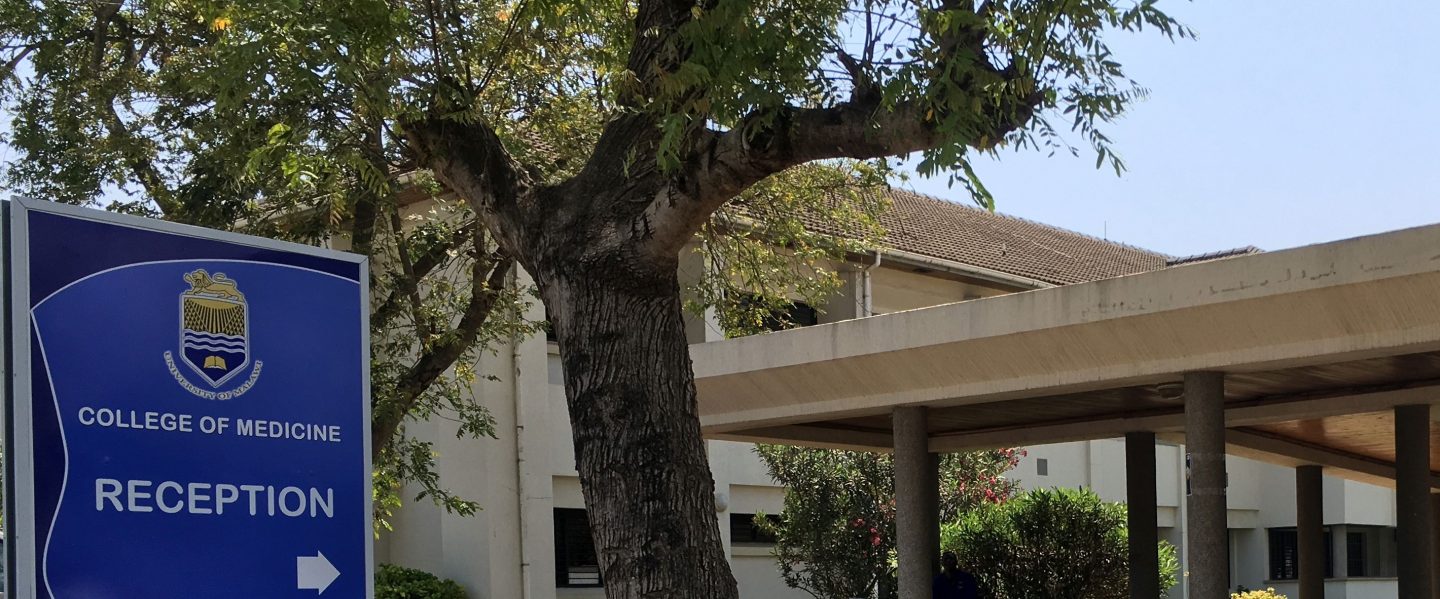
Many of the posts in this blog have related to the design and construction of the new Dental School / Integrated Teaching Facility on the Blantyre Campus of Kamuzu University of Health Sciences (KUHeS). They cover all the steps in the process from the initial site visit and workshop led by Professor Chris Platt (then Mackintosh Professor of Architecture at Glasgow School of Art) in September 2019, the award of the design contract to a consortium led by John McAslan + Partners (JMP) in June 2020, up to the current stage in construction.
All of the previous posts have been written from my own layman’s perspective. However, there is now a chance to hear reflections from a professional architectural perspective. Peter Lee, Associate Director at JMP and Lead of the JMP Edinburgh Studio, recently participated in a podcast with Cherise Lakeside of ARCAT.
Peter and Cherise on YouTube
Peter has been leading on the project since 2023, working in collaboration with fellow JMP architect Leon Grobbelaar, and a local team of architects, engineers and quantity surveyors based in Malawi. Peter travelled to Malawi in February 2024 and a description of his visit can be accessed here. During that trip, the contracts between JMP and KUHeS were signed, a key step in the journey towards commencement of construction.
A summary of the interview content and the full discussion on YouTube between Peter and Cherise are available here. For those interested in building design and construction they provide a very interesting take on the methods and challenges that underpin the ongoing work to deliver the Dental School / Integrated Teaching Facility at KUHeS.
Establishing an undergraduate Bachelor of Dental Surgery degree in the Department of Oral Health Sciences at Kamuzu University of Health Sciences (KUHeS) was a major focus of The MalDent Project at its inception. The first cohort of dental students graduated in April 2025 and the course now has 179 students enrolled across the programme.
However, the longer term ambition is for the Department of Oral Health Sciences to also develop its research capacity and, ultimately, to establish postgraduate programmes.
Recently, there have been some exciting green shoots demonstrating the stirrings of oral and dental research activity in the Department of Oral Health Sciences – both staff and student led.
Kamuzu University of Health Sciences 5th Research Dissemination Conference
At this year’s KUHeS Research Dissemination Conference three dental students, Wezzie Nkhata, Hopeson Mtaka and Joel Kudzu, presented research data that they had generated as part of their BDS studies.
L to R: Wezzie Nkhata, Hopeson Mtaka and Joel Kudzu
Wezzie Nkhata’s paper was entitled ‘Dental caries among patients with controlled Type 2 diabetes at Kamuzu Central Hospital‘. The research had been conducted by Wezzie in collaboration with fellow students Richard Longwe, Tadala Maida and Peace Kayira.
Hopeson Mataka’s paper was entitled ‘Exploring the use of traditional medicine for oral health among women in Ntchisi District’. This work had been completed with fellow students Gift Kampeni and Patrick Moses.
Joel Kudzu presented a poster entitled ‘MoyoWanga: a multi-language digital chronic disease support ecosystem for improving medication adherence in Malawi’.
Many congratulations to these three students and their supervisors for contributing to the RDC and for being such excellent ambassadors for the Department of Oral Health Sciences.
55th Scientific Meeting of the South African Branch of the International Association for Dental Research
Two of the Assistant Lecturers who were appointed to the Department of Oral Health Sciences at KUHeS in the early stages of The MalDent Project have been undertaking postgraduate clinical training at the University of Pretoria. Dr Don Chiwaya is training in Dental Public Health and Dr James Mdala in Head and Neck Pathology. Both Don and James have presented papers at the recent IADR South African Division meeting in Pretoria.
Don’s presentation was entitled ‘Prescription patterns of clinicians in selected oral health care facilities in Gauteng Province’. The study highlighted the impact of unnecessary prescriptions of both analgesics and antibiotics on the community in terms of antimicrobial resistance and the cost of prescriptions.
Dr Don Chiwaya delivering his paper
On the basis of this presentation, Don won the Colgate Community Competition for 2026:
Don with his certificate and prize
James’ presentation was entitled ‘Central intraosseous mucoepidermoid carcinoma of the mandible: a case report and literature review’.
Dr James Mdala presenting his paper
Many congratulations to Don and James on their success. We look forward to their return to Malawi, bringing with them their specialist skills following completion of training.
All these presentations mark a small but important step forward in developing research capacity within the Department of Oral Health Sciences, and build on presentations at last year’s KUHeS Research Dissemination Conference by Dr Nathan Lungu and Daniel Mark James.
A joint University of Glasgow / KUHeS grant application has recently been submitted to the International Association for Dental Research in a bid to win funding that will support research training for junior staff in the Department of Oral Health Sciences. If successful, this will be a further important advance as the Department of Oral Health Sciences develops its research potential.
Several previous blog posts have provided information on progress with the construction of the new Dental School / Integrated Teaching Facility on the Blantyre Campus of Kamuzu University of Health Sciences.
The building work continues and there has been a recent site visit by Leon Grobbelaar from John McAslan + Partners, who spent time working with the contractor, Mango Tree Construction Company, in collaboration with the local team of architects, engineers and surveyors. A number of issues around procurement and supplies have now been resolved.
There was also a visit to the construction site on 18th September by the Deputy Minister of Education, Science & Technology, Honourable Francis Folley MP, accompanied by the Secretary for Education, Science & Technology, the Director of Higher Education and the Skills for a Vibrant Economy (SAVE) Project Manager.
On the morning of Monday 21st September, shortly after my arrival back in Malawi, Dr James Mchenga, Dr Peter Chimimba and I took a tour of the construction site with the Executive Dean of the School of Medicine & Oral Health, Professor Wakisa Mulwafu. It was a very informative visit which engendered significant discussion about the next steps in establishing the building as a fully functioning, versatile and valuable resource for the KUHeS campus.
L to R: Dr James Mchenga, Prof Wakisa Mulwafu, Dr Peter Chimimba
The progress in construction of the building from May 2025 has been captured in a short video which can be viewed here.
We look forward to providing further updates as the construction continues towards completion.
During a recent meeting of the Malawi Cross Party Group at Holyrood, I met a Scotland Malawi Partnership (SMP) member who told me about a project called 48toInfinity, which is trying to amplify the presence of Malawian women on the internet. They have added over 100 women to Wikipedia and that’s a key resource for AI. They want to ensure that girls browsing the internet will find role models.
48toInfinity is a virtual organisation that is hosted at the Gender and Justice Unit in Lilongwe. One of its Scottish members lauded the SMP’s decision to change the licensing of their images (99.99% of all images cannot be freely used). Their decision has led to similar decisions by the Malawi Scotland Partnership and the Southern African Women’s Football Association (COSAFA). One of the SMP’s donated images is accessed 10,000 times every month.
The following image is from a recent front page of Wikipedia which was seen by millions and read by thousands. The five blue links lead to different articles written about Malawian women footballers by editors working together in Malawi, South Africa, England and Scotland:
Copyright is quite a legal complexity but I said that I would be pleased to support it and my next blog post would contain the following message:
“All of the media used in this blog (that we have taken) is freely licensed and anyone can use them as long as they are attributed. They have a Creative Commons 4.0 cc-by-sa license”.
I trust that this confirms our previous and continuing commitment to free licensing of our media.
This is a guest post written by Grace Masiku, Hopeson Mataka, Nellie Mnyalira, Patrick Ndimbwa, Wezzie Nkhata and Anna Smith. It provides some personal reflections following their involvement in establishing a supervised toothbrushing programme at a school in Chilomoni, that was described in the previous blog post by Anna Smith.
The full team
Over two weeks, Year 5 dental students from Kamuzu University of Health Sciences volunteered in a supervised toothbrushing intervention at a school and feeding centre run by Beehive Centre for Social Enterprise in Chilomoni, alongside Anna Smith.
The programme combined supervised toothbrushing with oral health education, games, music and interactive activities. For the students, it was an opportunity for community engagement in the field of preventive dentistry outside the traditional clinical setting and to build meaningful relationships with the children.
In this post, each of the five volunteers provides a brief reflection of their experience.
Patrick Ndimbwa
For Patrick, the experience provided an opportunity to learn beyond the dental school environment:
I learnt things that as a dental student I didn’t know or understand initially. It was a great experience interacting with everyone during the two week programme
Nellie Mnyalira
For Nellie, building trust with the children was essential:
It was an entirely new experience for me and definitely pushed me out of my comfort zone. Building a relationship with the children through conversation was essential; they needed to trust me in order to engage and learn effectively.
She also reflected on how quickly the children learnt:
The children we met were incredibly adaptable. Because they learn so quickly, it shows they can pick up both good and bad habits easily. This made correcting misinformation and teaching the proper techniques rewarding.
Nellie also highlighted the children’s creativity and enthusiasm:
With the children’s eagerness to learn, attentiveness and beautiful ideas when it came to creating songs they were easy to work with. Most of all, it was also fun.
She added:
The intervention went so well, the children remembered everything they had been taught in those two weeks. And I am glad to have had such wonderful and amazing colleagues, we made a great team.
Grace Masiku
The intervention went beyond traditional oral health education. Songs, games and dancing became important ways of engaging the children.
Gracereflected on the energy of the children:
They were attentive, fun, and highly energetic. I hadn’t danced like that in a while, and it reminded me how much I need to get back into it!
For Grace, the experience was ultimately about connection:
Overall, I had a wonderful time teaching, laughing, and connecting with them. I am entirely confident that they now feel assured in their brushing techniques and are knowledgeable enough to share what they learned with those around them.
Hopeson Mataka
For Hopeson, the programme reinforced the importance of preventive oral health education.
It was a privilege to be part of the volunteer team for the outreach program. It was a great experience to interact with the children while contributing something meaningful to their lives.
Drawing on his clinical experience, Hopeson noted the importance of improving oral health knowledge and habits among children:
Based on my observations and the patients I have encountered during my clinical work so far, it is clear that many people in Malawi, including children, have poor oral hygiene practices due to a lack of dental knowledge.
For Hopeson, seeing the children apply what they had learnt was particularly rewarding:
It brought me great joy to see the children brushing their teeth properly within the first two to three days. I hope they will continue practising what they learned and grow with this knowledge, which will help them maintain good oral health.
Wezzie Mary Nkhata
For Wezzie, connecting with the children through dance and games became one of the highlights of the intervention.
My favorite part was connecting with the children through dance and games. My teammates even gave me a nickname: ‘The Dancing Dentist’ 😄
She found that this connection helped make oral health education more effective:
That connection made it so much easier to share important oral health messages.
The team saw changes in brushing technique within just a few days.
Within just two days, we saw real progress in how they brushed their teeth. Making it fun helped keep them motivated every day, and that was so rewarding for our team.
Providing the children with their own toothbrushes and toothpaste was another important part of the intervention.
Distribution of toothpaste and toothbrushes to the children made it even better! And we could see how happy and grateful they were to have their own brushing kit.
Wezzie believes that expanding this type of programme could have a wider impact:
I truly believe that if we expand this kind of programme across Malawi, we can greatly reduce dental caries in school children.
She also identified time as a key challenge:
Our only challenge was time. With a longer period, we could have supervised them for longer and measured even greater impact.
Reflecting on what she gained from the experience, Wezzie added:
This has exposed me and enhanced my skills and knowledge in public health. The future in Dental Public Health is definitely bright!!
Final comments from Anna Smith
I initially travelled to Malawi independently to begin pilot testing for this intervention. However working alongside BDS 5 student volunteers became an invaluable part of the project. They went far beyond volunteering, helping to co-design activities, translate materials and engage with the children. Their contribution was critical to the success of the pilot, and I am incredibly grateful. What started as working with colleagues quickly grew into friendship.
The two-week intervention gave the students an opportunity to experience community-based prevention, while giving the children practical knowledge and skills to support their oral health.
Through toothbrushing, games, songs, dancing and conversation, the children were encouraged to take an active role in their oral health while the student volunteers gained valuable experience in communication, community engagement and dental public health.
Across the students’ reflections, a common theme emerged: prevention can be both educational and enjoyable.
This is a guest post by Anna Smith, who will be well known to regular readers of this blog.
In 2025, between Years 4 and 5 of her BDS course at the University of Birmingham, Anna spent a month in Blantyre undertaking an elective project. Her very positive experiences were recounted in an earlier post which you can view here. In addition, Anna made a documentary about her findings which can be watched via a link in this post. Finally, Anna and her friend Mutoni Bisetso, at the time a BDS student at Kamuzu University of Health Sciences (KUHeS), participated in the Student Leadership in Oral Health Class of 2026, run by the Alliance for Oral Health Across Borders in the USA, described in this further post.
This fourth post by Anna describes a recent return visit she has made to Malawi and her experiences establishing a supervised toothbrushing programme at the Beehive Centre for Social Enterprise at Chilomoni, just outside Blantyre City.
Introduction
Following my Community Engagement and Involvement (CEI) paediatric oral health needs assessment in Blantyre in 2025, I returned to Malawi in 2026 with a new focus: exploring supervised toothbrushing as a community-informed preventive intervention.
My previous work highlighted the extensive oral health needs among children, limited access to toothbrushes and toothpaste, and the need for accessible oral health information that supports prevention.
This year, with support from Prof Jeremy Bagg, Dr Vahid Ravaghi and Prof Lorna Macpherson, we began planning a follow-up co-designed feasibility pilot.
Project planning begins …… in Birmingham
The University of Birmingham and Dr Ravaghi kindly supported me with toothbrushes, toothpaste and my flight to Malawi, while family and friends helped me raise additional funds for stationery and incentives.
Ready for suitcase packing ahead of the trip
Just one week after graduating with my BDS from the University of Birmingham …
Graduation Day
… I was heading back to Malawi, this time with a suitcase full of toothbrushes, toothpaste and supplies!
Ethiopian Airways over AfricaThe unpacking begins
Starting with the community
Before beginning the main pilot, I visited one of the Joshua Early Childhood Development Centres in Chilaweni.
Chatting with Sue Cabon, Country Manager of Joshua Orphan and Community Care, before my visit
I met with children and caregivers, observed existing practices and explored supervised toothbrushing alongside their education and porridge-feeding programme:
Speaking with caregivers was particularly valuable in understanding what could make a future intervention practical and acceptable:
Valuable discussions with caregivers
I then visited Beehive Centre for Social Enterprise, where the main pilot would take place alongside their feeding programme. After meeting with the staff, many of whom I already knew from my visit in 2025, the next step was recruiting volunteers.
Working with the BDS 5 team
A group of BDS 5 students from Kamuzu University of Health Sciences, Grace, Hopeson, Nellie, Patrick and Wezzie, quickly became an essential part of the project.
L to R: Patrick, Hopeson, (me), Wezzie, Nellie and Grace
They did far more than volunteer. They helped co-design activities, translate and adapt ideas, engage with the children and bring so much energy and creativity to the sessions.
Establishing the supervised toothbrushing programme
Before starting, consent forms were kindly translated by Dr Benjamin Williams, a former KUHeS BDS 5 student:
Patrick then helped begin the sessions with oral health information and demonstrations:
Patrick in action
I had arrived with a plan, but co-design and flexibility were central to the pilot. The intervention needed to work for the community, not simply follow what had been planned on paper.
Making toothbrushing fun
Our first session began with introductions, games and dancing before splitting into smaller groups.
The children decorated their own cups for storage of their toothbrushes…
Great artistic endeavour
… while we introduced them to our lion with teeth, who was quickly named Miji:
The children enjoyed their time with Miji
We decorated our own cups too and demonstrated toothbrushing ourselves, helping to make the activity feel comfortable and fun:
Grace brushing as a demonstration for the children
Then it was time for the children to brush. Once the children began brushing, the room became very quiet, so we put some music on! The atmosphere completely changed.
By the end of the first session, caregivers were already helping to lead the intervention and give instructions:
Listening to the children
As the sessions continued, the children became increasingly confident asking questions about their oral health.
We talked about fluoride, toothpaste, brushing techniques and what they used to clean their teeth at home.
Some children told us they brushed with soda or salt, while others spoke about bleeding gums. These conversations gave us an opportunity to correct misinformation and create a space where children felt comfortable talking about their oral health.
One of the most important things I learnt was how much access influences behaviour.
Several children explained that they could not always brush because they did not have toothpaste at home, or had to ration what they had.
This reinforced why preventive interventions need to consider not only knowledge, but also whether children have the resources to act on that knowledge.
Lots of conversations …… and questions
Learning through play
A huge part of the intervention was dancing, games and creativity.
The children created songs about what they had learnt, shared poems and dances, and took part in activities throughout the sessions.
They were brilliant.
Games …… and songs
At the end, all 35 children completed anonymous feedback. It was amazing to see that every child had something to share.
We finished with a celebration of games, dancing and toothbrushing, alongside distributing stationery and school supplies.
Celebrating together
Listening beyond the children
The children’s voices were only one part of the pilot. I also held a focus group with caregivers and met again with mothers I had spoken to during my previous visit. Their perspectives helped me understand concerns around supervised toothbrushing and how it might fit within existing family practices.
Discussions with mothers
These conversations were a reminder that successful prevention needs to involve children, caregivers and the wider community.
Beyond the pilot
There was, of course, plenty of time to experience Malawi outside the project too! I visited the Beehive new porridge factory, explored Liwonde National Park and Mangochi with my good friend Mutoni Bisetso, visited Williams Falls in Zomba, and went hiking in Chikwawa with Jeremy and Nelson. There were also plenty of memorable meals and conversations with friends and colleagues along the way.
Dinner with Jeremy & Peter and Frider ChimimbaAt William’s Falls, Zomba
Looking ahead
There is so much more I could share about this trip, but overall, the pilot was an incredibly valuable and informative experience.
I arrived with a plan, but the intervention evolved through the voices of the children, caregivers, Beehive staff and student volunteers.
Most importantly, it showed me again that oral health interventions must represent the community that they are meant to serve and this requires listening and consulting with the people affected.
I am incredibly grateful to Professor Jeremy Bagg, Dr Vahid Ravaghi, Professor Lorna Macpherson, the University of Birmingham, Kamuzu University of Health Sciences, the Beehive team, Sue Cabon (Joshua), and Ruthie Markus (AMECA). Finally, very special thanks to Grace, Hopeson, Nellie, Patrick and Wezzie, the KUHeS BDS 5 students who made this pilot possible.
In the next MalDent Project blog post, the BDS 5 students will share their own experiences of volunteering in the intervention.
On 1st June this year, the Council of Malawi University of Science and Technology (MUST) announced the appointment of Associate Professor Mwapatsa Mipando as the next Vice-Chancellor of the university. The announcement can be read in full here.
Dr Mipando will be very familiar to readers of this blog. It was during a visit he made to the University of Glasgow in 2016, when Principal of the University of Malawi College of Medicine, that he and I had our very first conversation about the possibility of establishing a dental school in Malawi. That conversation over a cup of coffee was the very beginning of The MalDent Project and of an enduring partnership and friendship.
Now, ten years later, Dr Mipando would become Vice-Chancellor of MUST. The handover of the role took place at the 2026 Graduation Ceremony on Thursday 6th August. I was honoured and privileged to be invited to the event to represent the Scotland Malawi Partnership.
My invitation as Chair of the Scotland Malawi Partnership
It takes about an hour to drive from the centre of Blantyre to the MUST campus. The ceremony was due to commence at 08.30 and I arrived at 07.30, by which point the campus was already busy:
Early arrival at Malawi University of Science & Technology
The organisation of the event was superb. I was directed into a parking space and from there into the robing room. There were plenty of refreshments available and all the delegates, as they arrived, were very friendly and cheerful. At the allotted time we lined up for the academic procession and took our seats, waiting for the Vice-Chancellor’s procession and the beginning of the proceedings.
There was a very large cohort of students seated in the hall and waiting patiently. After the Vice-Chancellor, Professor Address Malata, entered with her distinguished colleagues and guests, the ceremony commenced. I have sat through many graduation ceremonies in the UK and never lost my sense of enjoyment at such events – the major milestone that has been reached by the new graduates, the happiness and pride of their families and friends, and the overall sense of occasion. That sense of occasion was heightened at this graduation by music from a brass band and a jazz band, together with the sheer exuberance of those involved:
A taste of the carnival atmosphere
There was a series of speeches, after which the students were presented to the Vice-Chancellor to receive their degrees. A very wide range of courses, both undergraduate and postgraduate, is available at MUST, as reflected in the multiple degree types being conferred. Many of these courses are in medical subjects, for example Medical Microbiology, Immunology, Medical Imaging and Biomedical Engineering, with relevance to Malawi’s developing oral and dental healthcare services. It was exciting that this graduation ceremony included the award of the first two PhD’s ever conferred by MUST – a very fitting achievement at the end of Professor Malata’s highly successful term of office as the founding Vice-Chancellor.
A large number of graduands receiving their degrees
The senior delegates were seated on the podium for the ceremony, including Dr Mipando who did not have an active role to play until the end of the event.
Senior delegates on the podium, including Dr Mwapatsa Mipando (second from the right)
At the appropriate stage in proceedings, Dr Mipando was invited to join Professor Address Malata at the centre of the podium …
… at which point the formal transition of the Vice-Chancellorship took place, with the handing over of a large symbolic key:
Handover of the Vice-Chancellorship
That piece of symbolism was extremely powerful, and with it now comes the massive responsibility that rests on the shoulders of all who accept such senior leadership roles.
Dr Mipando holds the key – officially now the new Vice-Chancellor of Malawi University of Science & Technology
The ceremony ended with a speech by The Honourable Bright Msaka SC, the Malawi Government Minister of Education, Science and Technology.
After we had processed out of the hall, I was able to greet Dr Mipando and offer my congratulations on his new role. I was ushered into a room which included members of the press and was honoured to be introduced to the Minister of Education, Science and Technology, together with other senior delegates. Following a few minutes of conversation and a group photograph,..
Photo credit: Ministry of Education
… I headed for my car. Outside was extremely busy with hordes of happy graduates, friends and families enjoying the sunny afternoon and relaxing together:
The grounds full of family members celebrating the success of the new graduates
This had been an extremely uplifting day for me. On behalf of myself and the Scotland Malawi Partnership I wish Dr Mipando all the very best for his term of office as Vice-Chancellor at MUST, and look forward to continuing collaboration into the future.
The Royal College of Physicians & Surgeons of Glasgow (RCPSG) has been a strong and highly valued supporter of The MalDent Project since its inception.
Dr James Mchenga, Acting Head of the Department of Oral Health Sciences at Kamuzu University of Health Sciences, visiting the RCPSG
In 2017, the Global Health Group of the RCPSG funded the flights for my initial scoping visit to Malawi, allowing me to see the existing dental clinics at the Queen Elizabeth Central Hospital (QECH) in Blantyre and Kamuzu Central Hospital (KCH) in Lilongwe. I was also able to participate in the first BDS Curriculum Conference that examined the feasibility of establishing a BDS degree programme at what was then the University of Malawi College of Medicine. That visit was the genesis of The MalDent Project, supported by £1.6m of core funding from Scottish Government International Development. The RCPSG was a named partner on the successful grant application to the Scottish Government.
More recently, The MalDent Project team was keen to establish an equitable bi-lateral student elective study programme between the KUHeS BDS degree course and the University of Glasgow Dental School. Thanks again to the RCPSG HOPE Foundation, a major step forward was made possible in 2024 through provision of financial support for two Final Year KUHeS BDS students, Esther Khomba and Chifundo Banda, to undertake an elective visit to Glasgow. Over three and a half weeks they enjoyed a transformative experience, all of which was captured in three blog posts which can be viewed here, here and here.
The MalDent Project journey to date and the graduation of Malawi’s first home-trained dentists has now been captured in an article published in the most recent edition of the RCPSG magazine – College Voice. It has been written by Kat Hannah, RCPSG Director of Communications and Marketing, who met Esther and Chifundo during their visit to Scotland.
The issue can be viewed here and the article about The MalDent Project is on pages 22-27.
The support of the RCPSG for The MalDent Project has been longstanding and of immense value to everyone concerned. Grateful thanks are due to all in the College who have supported the team on the journey to date. We look forward to continuing collaboration.
Regular readers of the blog will be familiar with the Flying Faculty programme that has been in operation since the Bachelor of Dental Surgery (BDS) course at Kamuzu University of Health Sciences (KUHeS) was launched in 2019. The visits, supported by Scottish Government, fund short periods of intensive teaching in key subject areas by academic specialists from outwith Malawi.
Restorative Dentistry is a core subject in all undergraduate dental programmes and requires in-person teaching, since the technical skills required cannot be readily taught on line. A very successful Restorative Dentistry Flying Faculty visit took place in 2024 and a further visit was planned and took place between 13th and 17th July 2026.
The team of six Flying Faculty members included four from the University of Glasgow (Drs Andrew Paterson, Abisola Asuni, Grant Mathieson and Prof Shauna Culshaw), one from the University of Liverpool (Dr Jumoke Adeyemi) and one from the University of Western Cape (Dr Ridhwaan Haffajee). Very conveniently, the team members from the UK and South Africa were scheduled to arrive at Kamuzu International Airport in Lilongwe at a similar time on Sunday 12th July, which greatly aided logistics.
The eagles have landed
Ridhwaan, whose plane had arrived first, was quickly through immigration and chatted with Drs Peter Chimimba and and James Mchenga …
Peter and Ridhwaan getting to know each other
… until the rest of the team arrived:
Welcome to Malawi!
We had been allocated a minibus to use by KUHeS and a fantastic driver called Mr Kingsley Gonani who rapidly became a key member of the team.
Peter with Kingsley, our driver for the week, who was a fantastic member of the team
We headed from the airport to Lifestyle Boutique Hotel, which would be the base for the team for the next few days. The significant volume of luggage included large amounts of donated dental teaching materials that had been brought by team members to support the week of intensive instruction that would follow.
Checking inCases full of dental training materials
After freshening up following their travel, the team members met for their first dinner together. It was a very enjoyable evening that included discussions in preparation for the week ahead. Andrew Paterson, who was the team leader for the visiting faculty, is a great fan of Nali sauce and began as he meant to go on with liberal lashings that would spice up his meals throughout the week. For anyone interested in learning more about the Nali sauce story, you can view an interesting 10 minute CNN Africa documentary here.
Andrew on his way to running the hotel dry of Nali sauce on our first evening!
After a good night’s sleep, the team left early on the Monday morning for the Dental Department at Kamuzu Central Hospital (KCH).
The obligatory team photograph on arrival for Day 1 (Back row L to R: Ridhwaan, myself, Andrew, Shauna; Front row L to R: Peter, Jumoke, Abisola (Bis) and Grant)
Once inside, there was a significant amount of preparation required before the teaching could begin. Unpacking and organising the large volume of dental consumables and teaching materials that the team had carried with them was one of the first tasks.
The unpacking begins
Both BDS 3 and BDS 4 students are studying in Lilongwe, so the logistics of how to split them into smaller groups of comparable experience was a major consideration. Thought needed to be given to the various venues available for teaching delivery within the Dental Department. Furthermore, the phantom head unit required a large amount of cleaning and minor maintenance before it was suitable for use. Andrew, who had led the previous Flying Faculty visit and who also has extensive experience of working in rural environments in Africa, was an inspiration to us all as he led the preparations.
The interaction with the students began with a welcome from Dr James Mchenga, Acting Head of the Department of Oral Health Sciences:
Welcome from Dr James Mchenga
Andrew then took to the floor and invited each of the Flying Faculty team members to introduce themselves. After an explanation to the students of how the week would be structured, the teaching began.
Andrew introducing the team members and the outline of the week to follow
Over the course of the week, teaching took place in a variety of formats and covering many facets of Restorative Dentistry. In addition to the Dental Department at KCH, we had access to a classroom in the recently completed Confucius Institute at KUHeS, about a 10 minute walk away.
The Confucius Institute
The teaching included classroom teaching …
Jumoke delivering theoretical teaching on periodontology
… as well as more practical pre-clinical skills instruction:
Pre-clinical prosthodontics with Ridhwaan
Subject areas included operative dentistry and prosthodontics …
Showing …… and doing
… endodontics…
Rapt attention as Bis provides training in endodontics
… and periodontology:
Shauna delivering training in periodontics
The team was provided with access to some of the dental units in the patient treatment area …
Prosthodontics teaching with Ridhwaan
… which was an ideal location to learn the practical art of impression taking:
Grant demonstrating impression taking
This was an exciting and interesting segment of the week for the students …
After the demonstration the students put learning into practice
… who are showing their post-impression enthusiasm in this photo with Grant:
Celebrating impression success!
The planning of this week of intensive activity was a major exercise in itself. Each evening, before dinner, Andrew would invite everyone to provide a debrief on their day of teaching before leading a discussion to plan the detailed timetable for the following day:
Timetabling at evening dinner …… staff schedule reminders on the way to work
In addition to his leadership and timetabling skills, Andrew also proved his abilities in preparation of the phantom head laboratory for the classes that took place there during the week:
A pristine phantom head laboratory after extensive adjustments and cleaning on Day 1, led by Andrew
In an effort to better organise the storage of instruments and layout of the practical classes, Jumoke kindly purchased a number of containers from a local shop:
A trolley load of containers
The boxes were subsequently filled with a variety of items and labelled to improve organisation in the store room at KCH. Plastic plates were used to lay out materials for a practical exercise in dental scaling.
Superb preparation for practical teaching in periodontics
Whilst the emphasis of the programme was on Restorative Dentistry, an overarching theme for all forms of dental treatment is professionalism, ethics and medical law. Andrew, who has a Masters degree in this subject area, provided multiple small group sessions dealing with the key principles.
Small group teaching in medical ethics and professionalism
A highlight of this Flying Faculty visit was the involvement of Dr Yusuf Maundala, one of the Assistant Lecturers appointed when the BDS Course was launched and who is completing specialist postgraduate training in prosthodontics in Nairobi, before returning to his post at KUHeS. In addition, the team was joined by Drs Chifundo Banda and Felix Nandolo, two of the first cohort of home-trained dentists, who have just completed their internships.
L to R; Grant, Chifundo and Yusuf in discussion
Under the supervision of the experienced Flying Faculty team, Chifundo and Felix both engaged enthusiastically in delivering teaching …
Another novel facet to this Flying Faculty week was a significant component that examined research possibilities, an important element of academic life that is still in its infancy in the Department of Oral Health Sciences at KUHeS. Later in this post you will read more about the research opportunities that arose from this week of meetings.
Shauna discussing oral health research possibilities with Felix and Chifundo
For me personally, the involvement of two of Malawi’s first home-trained dentists in delivering teaching for BDS students with the Flying Faculty team was a highly significant development. In the video documentary made by KUHeS following graduation of the first cohort, the then Director of Clinical and Rehabilitation Services in the Ministry of Health had commented on how some of these young dentists would become the teachers of the future:
A photo of Chifundo and Felix with the team of international teachers records this moment for posterity:
Felix and Chifundo with the visiting Flying Faculty team members
On the Tuesday, Peter and I visited Professor Mia Crampin and colleagues at the Malawi Epidemiology and Intervention Research Unit (MEIRU) based at the Community Health Sciences Unit in Area 3 of Lilongwe.
Peter at the MEIRU Offices in Area 3 of Lilongwe
The purpose of the visit was to build on a preliminary discussion in Glasgow in May this year between Prof Lorna Macpherson, myself and Dr Owen Nkoka, who works between the School of Health & Wellbeing at the University of Glasgow and MEIRU. Consideration is being given to the potential inclusion of oral health screening within future rounds of population cohort data collection by MEIRU in Karonga and urban Lilongwe. We had an interesting and positive conversation with Mia and her team on the feasibility of oral health screening and I have subsequently linked them with Prof Shauna Culshaw, who has significant research interests and experience in the impact of oral disease, particularly periodontitis, on systemic health.
On the Wednesday morning, Shauna and I were due to leave with Kingsley for Blantyre, but before we left there was time for a group photograph of the team with BDS 3 and BDS 4 outside the Dental Department:
BDS 3 and 4 students with the Flying Faculty team members before Shauna and I left for Blantyre
It is a long drive from Lilongwe to Blantyre and as usual we had a short break at Chikondi Stopover, which is famed for its goat meat.
Shauna with Kingsley at the famous Chikondi Stopover en route to Blantyre
We arrived in Blantyre in the afternoon and dropped Shauna at The Leslie, the lodge where she and the rest of the team would stay whilst in Blantyre. After a short rest, we headed to one of my favourite restaurants for some coffee and cake – La Caverna & Cafe Mandala. Mandala House is a very historic building and has strong Scottish connections which you can read about here.
Mandala HouseScotland and Malawi flags flying high
During our visit, we spotted a framed letter that had been delivered when Scotland’s First Minister, John Swinney MSP, visited Malawi in October 2025. A previous blog post reported on the visit by the First Minister to The MalDent Project during that same tour of Malawi. The framed letter was a reminder of the strong historic links between Scotland and Malawi and the fact that without the funding from the Scottish Government it would have been impossible for The MalDent Project to get off the ground.
A letter from Scotland’s First Minister, John Swinney MSP, following his visit last year
In the evening I had the pleasure of introducing Shauna to my good friend and colleague Nelson Nyoloka, Lecturer in Pharmacy at KUHeS. Nelson has been extremely helpful on many fronts to The MalDent Project and has played a key role in disbursement of monies raised through MalDent Student Aid to BDS students requiring financial support for day-to-day living expenses.
A pleasure to introduce Shauna to my friend and colleague Nelson Nyoloka, Lecturer in Pharmacy and a great supporter of The MalDent Project
The following morning, Shauna and I headed to the KUHeS Campus and met with Dr Nathan Lungu, Lecturer in Dental Surgery and Course Coordinator for the BDS 5 students.
Shauna enjoying a meeting with Dr Nathan Lungu, Lecturer in Dentistry and BDS 5 Course Coordinator
Nathan had arranged for Shauna to deliver some teaching in periodontology to the BDS 5 students, which filled the morning.
Shauna delivering periodontology teaching to BDS 5 students
After lunch, Shauna and I attended a discussion with colleagues in the Department of Public Health. This meeting had been instigated by Professor Peter Macpherson, Head of Public Health in the School of Health and Wellbeing at the University of Glasgow. Peter has worked extensively in Malawi and currently holds an NIHR Global Health Research Professorship. His colleague Hussein Twabi, who is a Lecturer in Epidemiology and Biostatistics at KUHeS and a Research Fellow at the Chichiri Centre for Health Research and Training (CCHRT), organised a superb set of presentations and discussions:
It rapidly became clear that multiple opportunities exist to develop strong research collaborations between the Departments of Public Health and Oral Health Sciences at KUHeS and their respective counterparts at the University of Glasgow. The discussions that Peter Chimimba and I had enjoyed with Prof Mia Crampin and colleagues at MEIRU earlier in the week also had a direct bearing on the possibilities for joint working. Some of these ideas would be re-visited the following day when Shauna and I visited the Blantyre Blantyre Laboratory.
Meeting KUHeS researchers in Public Health
In the evening we had arranged to meet with Dr George Kafera, another one of the first cohort of Malawian trained dentists to have graduated in April 2025 and now completed his internship. George is currently working as director of a private practice in Blantyre but his ambition is to become a dental academic. Regular readers of the blog will have seen posts he has guest written about scientific publication and his oral health Facebook page which now has more than 70,000 followers. Over dinner we discussed career options and possibilities, informed by a very insightful presentation that George had prepared previously.
Dinner with Dr George Kafera and a chat about academic careers in dentistry
On the Friday morning we had arranged a visit to the Blantyre – Blantyre Laboratory. This is another KUHeS / University of Glasgow collaboration funded by the Scottish Government. The meeting was hosted by Mr Youngson Ghambi, who is the Commercialisation Manager.
Meeting Mr Youngson Ghambi, Commercialisation Manager of the Blantyre Blantyre Laboratory
After introductions and initial discussions, Shauna was given a tour of the laboratory facility, which was quiet because the majority of the staff were attending a training day that was compulsory as part of the programme to gain accreditation for the facility. The laboratory looked very familiar to Shauna as it is fundamentally a copy of the Glasgow Biomedical Research Centre in which she has spent many hours at the bench. This replication of equipment, staffing and Standard Operating Procedures is an intentional feature to support very high quality joint working. The photo below of Shauna standing in the entrance to the ‘Paul Garside Room’ is particularly special, since in earlier times at the University of Glasgow Paul was one of Shauna’s research supervisors.
Viewing the labShauna outside the Paul Garside Room – University of Glasgow meets University of Glasgow in Malawi!
Following the tour of the laboratory we were joined by Dr Toney Nyirenda (Pathology) and Dr Wakisa Kipandula (Biomedical Sciences) to develop further our initial discussions. Once again, the potential for joint research that could incorporate oral health into ongoing areas of interest at KUHeS was very obvious.
During the time that Shauna and I had been spending in Blantyre, the other members of the Flying Faculty team had been continuing the intensive teaching of BDS 3 and BDS 4 in Lilongwe. Immediately after lunch on the Friday they hit the road to travel to Blantyre and join us at The Leslie.
The re-assembled team’s first meal at The Leslie
Before I had left Glasgow in early July to travel to Malawi, I had delivered four new laptop computers to Andrew. These had been purchased by the charity AMECA to be provided to four newly selected scholars on the KUHeS MB BS degree course, as part of AMECA’s student sponsorship programme. As laptops have to be carried in hand luggage, transporting them to Malawi in multiples is a challenge. Andrew, Bis, Shauna and Grant kindly carried one each on their outbound trip. This was a huge help to us at AMECA for which we are very grateful.
Laptops delivered safely for AMECA scholars – many thanks to Glasgow members of the Flying Faculty team
The laptops have now been handed over to the four medical student scholars and will be put to good use as they pursue their studies:
Dental students in Foundation Year and those in BDS 1, 2 and 5, all of which are based in Blantyre, were informed that the Flying Faculty team would be available to deliver some teaching on the Saturday. Since this was the weekend, attendance was voluntary.
In the morning, BDS 5 students were invited to attend for a session that focused on clinical dentistry cases and treatment planning. The Final Year of the BDS course is the point at which integration of all the knowledge gained in earlier years is required and the teaching was designed with this in mind.
After the morning session of teaching was completed, Nathan and I accompanied the team across to the construction site of the new Dental School building on the KUHeS campus.
The team, with Nathan, preparing to view the Dental School building currently undergoing construction
The brickwork on the facade of the building is now well underway:
The exterior …… and interior of the building
The hills in the distance provided a scenic backdrop for a photo on the roof of the building:
A view from on high
After lunch, we returned to Lecture Theatre 2 and met a group of students from Foundation Year and BDS 1 and 2, who had accepted our offer of a teaching session. Foundation Year is designed to bring all entrants to courses at KUHeS up to A-level standard in basic sciences before they join their chosen healthcare course. BDS 1 and 2 are taught core biomedical subjects jointly with MB BS 1 and 2 students. As a result, there is minimal dental content in the curriculum until BDS 3.
Andrew and the team decided that a suitable approach would be for each member to provide some background to their own specialties and career journeys. This turned out to be a master stroke and provided an extremely interesting afternoon with which the students fully engaged.
Following a group photograph …
Foundation Year, BDS 1 and 2 with the Flying Faculty team
… we invited the students to speak with us informally if they wished. These conversations lasted for about an hour and it was clear that the students had very much valued the opportunity to hear such a varied and detailed insight into the profession they had chosen for themselves.
As this session marked the end of the teaching delivery by the Flying Faculty team, we took a final photograph on the KUHeS campus:
Teaching over – time to chill!
After some time to relax back at The Leslie, we travelled to Ryalls Hotel for dinner with Dr Mwapatsa Mipando. Mwapatsa has recently been appointed as Vice-Chancellor of Malawi University of Science & Technology (MUST), but as those of you have followed the blog from its early days will know, he was formerly Principal of the University of Malawi College of Medicine and was the instigator, with a small team of us in Malawi and Scotland, of The MalDent Project. It was an excellent opportunity for the Flying Faculty team to meet and share their experiences with Mwapatsa. There was the added bonus that Jumoke is from the University of Liverpool where Mwapatsa was formerly a postgraduate student, so they had lots to share! It was a great evening
A wonderful dinner with Dr Mwapatsa Mipando, whose vision ignited The MalDent Project in 2017.
There are no flights from Blantyre to Addis Ababa on a Sunday, so the UK contingent could not depart for home until the Monday. However, there were Sunday Airlink flights to Johannesburg and onward to Cape Town, which Ridhwaan was scheduled to take as he had work commitments on the Monday. After a final group photo …
… I drove Ridhwaan to the airport to begin his journey home:
Heading back to Cape Town
Meanwhile, Kingsley took the rest of the team on a trip around Blantyre, taking in key spots including Independence Arch, Limbe Market and a Chipiku supermarket to stock up on Nali sauce.
Independence ArchChoosing fabricLimbe Market
We re-convened at The Leslie for a lunch based on local items purchased on the foray into Blantyre and, for Bis and Jumoke, a blast from their past in Nigeria:
Wisdom providing background information before entering the facility
The team were shown the two surgeries …
The surgery decorated to be child-friendly
… and the instrument decontamination facility:
The decontamination facility – available to all on site
The visit engendered much discussion about future possibilities once the Ministry of Health approves the appointment of a dentist to work with the dental therapist who is already employed there. Following the visit to the dental clinic, Wisdom also provided a tour of the other parts of the Health Centre that were refurbished and upgraded by AMECA – the Maternity Unit, Out Patient Department and Physiotherapy.
The end of the tour!
On the Monday morning there was just time to fit in a visit to the Dental Department at the Queen Elizabeth Central Hospital:
On the way back to The Leslie, there was a stopover at the KUHeS Memorabilia Shop to buy branded shirts and bags for use on suitable occasions back in the UK:
Time for the fashion parade!
Finally it was time for Kingsley to deliver the UK team to the airport after a tremendous week, packed with activity:
Happily, all members of the team are now safely home.
Ethiopian Airlines ‘ “The New Spirit of Africa”
As the sun sets on this Flying Faculty week …
… a few reflections from my perspective.
First, the BDS students are an amazing group of young people. Their thirst for knowledge is massive and they engaged extremely well with the visiting team. These students represent the future for improved oral health in Malawi and KUHeS should be very proud of them. The feedback forms that the students completed at the end of the visit are still to be analysed and a summary will be shared in a future post.
Secondly, my deepest gratitude is due to Andrew, Bis, Grant, Jumoke, Ridhwaan and Shauna for their tremendous contributions during the week. The teaching and clinical environments are very different from those in their home institutions but they rose to every challenge and delivered an educational experience of outstanding quality for the students. The enthusiasm and camaraderie within the team has resulted in a universal wish to return at a future date and continue the work that has been started.
Acknowledgements
Many thanks are due to the Scottish Government, whose support through the KUHeS Scottish Strategic Partnership Grant makes activities of this type possible and moves the BDS programme further towards independent sustainability.
Thanks to Annie Mwapasa, Administrator for the Scottish Strategic Partnership Grant, who made all the logistical arrangements for the week, and to Maldalitso Chabwera for her excellent organisational support in Lilongwe.
Several organisations provided dental teaching materials that were transported as hold baggage to Malawi by the team, and our thanks are due to those donors.
Many thanks to the British Society for Periodontology for sending by courier a large consignment of very valuable handouts for distribution to the students.
Our driver, Kingsley Gonani, was not only a very skilful driver but went out of his way to support the team – many thanks from us all.
Photo credits
The photographs in this post are taken from a bank of images created by all members of the Flying Faculty team during the visit.
Shortly before I left Scotland to return to Blantyre on 17th April 2026, Adam contacted me to explain that he would be in Lilongwe from 24th-30th April to speak at a meeting of the Malawi Veterinary Association, and wondered if we could meet. Adam kindly agreed to fly early to Blantyre on Saturday 25th April so that I could show him the ongoing dental developments and to allow time for some in-depth discussion about possible collaboration.
I collected Adam from Chileka Airport on the Saturday morning and we drove to one of my favourite restaurants in Blantyre, Caffe Grazia, for breakfast, multiple cups of coffee and a fascinating two hour discussion. We shared experiences from our respective professions and, in particular, considerations relating to employment of Malawi’s veterinary and dental graduates.
Our next stop was The Leslie, where Adam would stay overnight. I have stayed there several times and it was nice for me to catch up with the staff team again. If you are looking for a comfortable, friendly, good value lodge in Blantyre, The Leslie would be my recommendation.
The Leslie – Adam’s temporary home in Blantyre
Another advantage of The Leslie for visitors to Kamuzu University of Health Sciences (KUHeS) is that they are located very close to one another, and KUHeS was our next destination. We had a good walk around the campus …
Adam starts his tour of the KUHeS campus
… including a visit to the office I share with Dr Peter Chimimba. Adam enjoyed testing out Peter’s executive desk and chair!
Adam enjoying a seat in Peter’s office
We next headed down to the site where the new Dental School building is under construction.
Out on the site
Adam has himself been involved in building projects in Malawi and was a fount of knowledge on the various types of bricks available. Those he sampled for the Dental School building are made by the local company Terrastone and are kiln-fired using wood from a certificated sustainable source:
Adam displayed great knowledge of brick-making in Malawi
While Ruthie gave Adam a tour of the refurbished facilities I had a catch up with Wisdom, the dental therapist formerly based at Chilomoni Health Centre but now studying for his BDS degree at KUHeS. We then all convened at the dental clinic. This was of particular relevance to our discussions relating to employment prospects for new dental graduates, as there is an urgent need to create facilities like the one at Chilomoni if the Ministry of Health is to be able to offer facilities that support the full scope of practice of dentists.
Wisdom, Ruthie and Adam outside the dental clinic at Chilomoni Health Centre
Following our visit to Chilomoni, we headed back to Namiwawa to continue our discussions. Adam has extensive experience of the commercial aspects of running veterinary practices and much of our conversation focused on the possibility of establishing public-private financing models to allow mitigation of the costs of delivering dental care for those in Malawi who cannot afford to pay. Adam has a longstanding involvement with Lilongwe Society for the Protection and Care of Animals (LSPCA) and chairs the UK arm of the organisation. LSPCA runs a ‘Robin Hood’ funding mechanism, whereby those that can pay for veterinary services for their pets are charged a commercial rate and the profits are used to fund free services, for example rabies-vaccination programmes and spaying of dogs for the less well-off. The potential parallels with dental services are clear.
Adam and Ruthie in discussion on the khonde
We rounded off Adam’s visit with a very enjoyable meal at Zakky’s Restaurant. The owners of the restaurant are dog owners and they made good use of Adam’s professional knowledge for a pro bono chat about one of their pets!
Finishing the day with dinner at Zakky’s
It was a whirlwind visit for Adam but an extremely useful one. We discovered that we had experienced very similar ups and downs during the respective journeys to establish these two professional courses in Malawi, and have a shared passion for enabling employment opportunities for the enthusiastic and energetic young Malawian vets and dentists now graduating in country. There is no doubt that our discussions have only just begun and I look forward to continuing this valuable inter-professional collaboration both in Scotland and Malawi.
Acknowledgement
Many thanks to Stuart Brown, CEO of the Scotland Malawi Partnership (SMP), who introduced Adam and I to one another – the SMP delivering on its networking role!