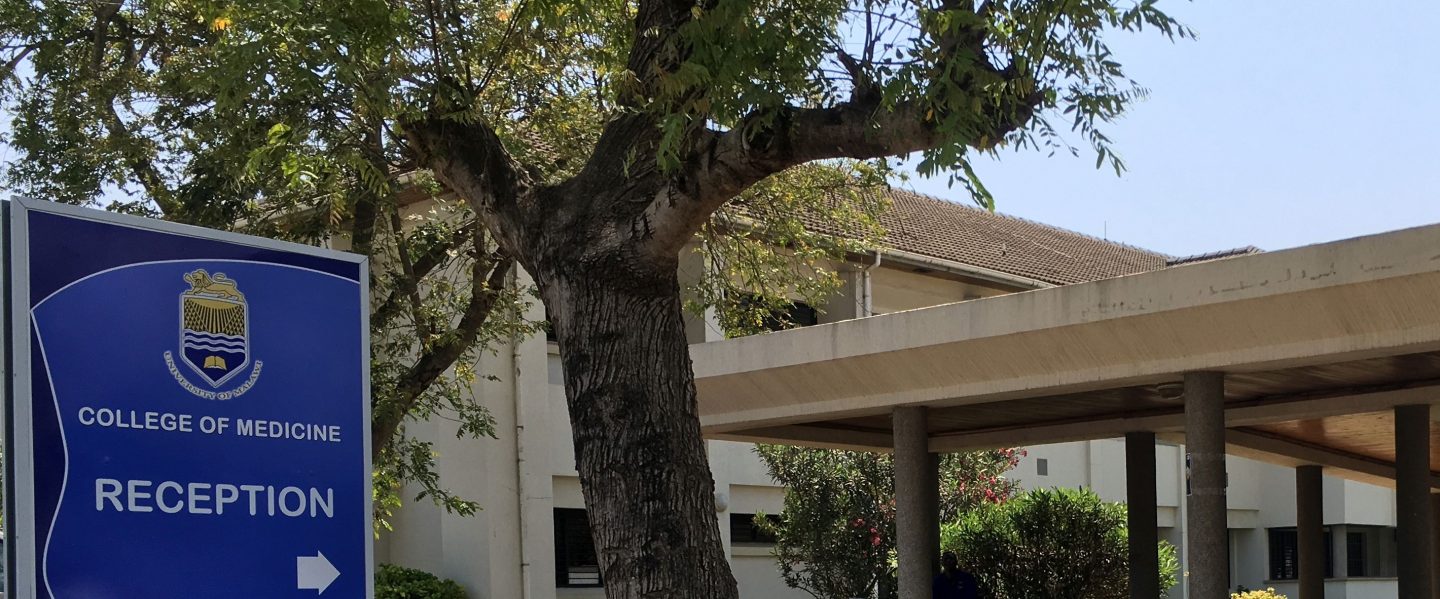
In a previous blog post, Lisa Taylor and colleagues described the fieldwork undertaken in 2023 to complete Malawi’s first National Child Oral Health Survey.
A discussion group underway at the workshop in Mponela
Subsequently, a task force was established to develop a Child Oral Health Improvement Programme for Malawi, and that work is still underway.
The survey was written up and submitted for peer-review to the journal Community Dental Health. The manuscript was accepted in October 2024. It has been a lengthy production process but the paper has now finally been published:
Regular readers will be familiar with the construction work undertaken earlier this year by the charity AMECA to establish a two-surgery dental clinic at Chilomoni Health Centre as part of the overall renovation of the healthcare complex. One of the strategic reasons for establishing a high quality dental clinic at health centre level was to provide a model primary care dental facility that could act as an exemplar for replication elsewhere in Malawi. Now that Malawi is graduating its own home-trained dentists, the requirement to provide functional clinics where they can work is a significant priority.
Two good quality dental chairs were available for the new clinic, but there was a long list of additional equipment that was still required to render the new dental clinic fully functional. Initially, AMECA and The MalDent Project launched an on-line appeal, which raised a small sum, but the major breakthrough came with a grant application to the Swiss organisation Fondation Eagle, which provided a grant of £21,900 to purchase the equipment that was required.
In May this year, Peter Chimimba and I travelled to Johannesburg to meet with the team at Henry Schein South Africa. We discussed the equipment requirements for the Chilomoni clinic, and also had valuable discussions relating to the dental chair requirements for the new Dental School building at Kamuzu University of Health Sciences (KUHeS). Andre Wessells, Team Leader at Henry Schein South Africa, was present for those discussions and has subsequently been an exceptionally efficient and valuable contact for both projects, as this post will attest.
The order for the dental equipment at Chilomoni Health Centre was placed by AMECA, the items shipped to Malawi, and installation was scheduled for the week beginning Monday 1st December. We were delighted that Andre would visit us to personally undertake the equipment installation, and he duly arrived on Sunday 30th November. He was able to stay in a guest room at the complex where both I and Ruthie Markus, CEO of AMECA, rent our apartments.
Andre being welcomed to his lodgings by Ruthie Markus
First stop: KUHeS – Dental School construction site
Although the primary purpose of Andre’s visit to Malawi was to install the equipment at Chilomoni Health Centre, in discussion with the architects (JMP) for the new Dental School building at KUHeS we arranged for him to visit the site on his first day and meet with Lloyd Ndau, the Building Services Engineer sub-contracted locally to the project.
Andre with Lloyd Ndau in the Mango Tree Construction Company Site Office
We are experiencing rains every day now and the skies were looking threatening as we headed towards the building, but the weather stayed dry for our walk around the site.
The construction site under a stormy sky on the morning of Andre’s visit
Once inside the structure, Andre and Lloyd entered into detailed discussions about the installation of the services for the 26 dental chairs on the clinical floor. The discussions were timely, including issues such as the order of installation of services and the gradient on drainage pipes.
Detailed discussions about installation of the services for the dental chairs
Andre also walked across the clinical floor with the team and checked the positions of all the service portals that had been cast into the concrete slab, checking carefully with a measuring tape that they mapped to the planned positions of the dental chairs.
The team at the end of the visit – the measuring tape had been put to good use checking the positions of the service portals
This would be the first of two visits that Andre would make to the KUHeS site, as he would return later in the week to meet with the plumber who would be installing the pipework.
Chilomoni Health Centre Dental Clinic: equipment installation
After our visit to KUHeS, attention turned to the main project of the week, the installation of the dental equipment at Chilomoni Health Centre. Malawi Revenue Authority clearance of the goods, and storage after their arrival, had been managed by Combine Cargo, whose truck was due to make the delivery at 1.00pm on Monday 1st December. Exactly on time the truck duly appeared, negotiating the rutted, un-metalled road to Chilomoni Health Centre.
The truck bearing the new dental equipment approaches Chilomoni Health Centre
Performing the tight reversing manoeuvre into the health centre required considerable skill on the part of the driver, but it was negotiated without incident. In all respects, the service we received from Combine Cargo was exemplary.
Preparing to reverse ……and welcomed by the local community
Once parked, there was no shortage of volunteers to help with unloading of the vehicle. Many of those involved were members of Dzuka Chilomoni Community Group (DCCG), a community-driven, non-profit organisation that was established in 2019 by Maliko Paul Chikaonga. It exists to uplift the most vulnerable populations in Chilomoni and surrounding areas through humanitarian support, youth empowerment, environmental protection, and community development. Thanks to the strong and meaningful relationship that has been built between Ruthie Markus of AMECA and DCCG, partnership working at this grass-roots level can achieve great things. Furthermore, a Health Centre Management Committee (HCMC) strengthens collaboration between the health facility and the community it serves.
Maliko led the charge with unloading the truck:
Unloading underway – lots of willing hands as Maliko hands down the boxes!
There were no mechanical aids to help with the unloading, so it was heavy work:
The heaviest box – strong arms needed!
Once the equipment had been offloaded, the volunteers and staff carried the items to the dental clinic:
From truck to clinic – the final stage of the journey
On arrival at the clinic, there was much unpacking to do. Here, Maliko is removing the suction motor from its container under the watchful eye of Andre:
Christmas comes early – lots of boxes to unpack!
The beautiful new Cattani compressor had been bolted to a pallet for safe transportation – this had been the heavy box coming off the truck!
Unbolting from the pallet …… and carrying to the plant room
Once the initial unpacking of the large items was complete, work began to arrange them in the appropriate rooms and commence installation. A significant amount of equipment had been purchased for the Decontamination Room, which had been purpose-designed as part of the construction work earlier in the year. Cleaning and sterilisation of dental instruments is a critical part of safe clinical practice and, as you will see as this post unfolds, the Decontamination Room will become a central feature of the entire health centre.
Andre placing the new vacuum autoclave in the instrument decontamination room
Much of the equipment was made in Italy and supplied with European plugs. In due course, we purchased and fitted UK style plugs to match the sockets that had been installed during the construction of the building.
Unpacking the autoclave instrument trays after assembling the instrument wrapper / sealer shown on the right
Thorough cleaning of medical, surgical and dental instruments after use is a key element of the decontamination cycle. Here, Andre is setting up the ultrasonic bath which will form part of the cleaning process:
Setting up the ultrasonic bath for dental instrument cleaning
A further innovation for the dental clinic at Chilomoni Health Centre is the availability of a mobile digital X-ray unit, which was assembled by Andre with help from Maliko and his team of volunteers.
Assembling the mobile digital X-ray equipmentFinal adjustments
The assembled unit, together with the laptop computer that has been configured with the appropriate software, will bring dental imaging to Chilomoni Health Centre for the first time.
The finished product, including laptop computer for viewing digital radiographic images
On Day 2 of the installation process, the main challenge was to identify the most appropriate way of installing the services that would connect the compressor and suction motor to the two dental chairs. Mr Jan Sonke, the architect and engineer who had overseen the Chilomoni Health Centre refurbishment, together with Chikondi Chawinga, the technician who had assisted with putting the chairs in place earlier in the year, were part of the discussions which identified the best way forward.
Mr Jan Sonke, the architect on the Chilomoni Health Centre refurbishment project, discussing with Andre the installation of the services for the two dental chairs
After identifying the connectors and tubing required …
Identifying the pipes, cables and connectors required to complete installation of the chairs, compressor and suction motor
… we headed into Blantyre and visited an amazing store called Toppers, which was stocked with every conceivable item of hardware you can imagine.
Andre enters Toppers ……an Aladdin’s cave of hardware
Andre explained our needs and we left with all the items required:
Andre is happy with his purchases!
One of the items on the shopping list was piping which would house the services travelling along the back wall of the dental clinic. As we needed long runs there was a reluctance to cut the pipes we purchased into smaller sections for transportation. Traffic regulations in Malawi permit a 1.5 metre overhang at the front and back of a vehicle, so we were able to lash the pipes to the roof bar on the passenger side of the Prado and transport them safely back to Chilomoni Health Centre.
Our Toyota Prado takes …… pipe carriage in its stride
Once back at the health centre, Chikondi very efficiently cut and assembled the piping with appropriate connectors to the architecture required. In due course the pipes and connectors were glued together.
Chikondi organising the pipes and cables at the back of the dental clinic
The final configuration of the exterior pipework containing the relevant components was very neat …
Completed pipeworkSilencer for the suction motor
… linking the two dental chairs to the suction motor and compressor that were now fully installed in the plant room:
The suction motor (L) and compressor (R) fully installed
Establishing a full dental treatment service at Chilomoni Health Centre is a step-wise process and we are on a journey. The first step was the construction work led by AMECA to establish the physical infrastructure, which has provided the perfect home for the equipment which we have now been able to purchase, as step 2, with the funding from Fondation Eagle. An important next step is provision of training for those who will use the equipment. On Day 3 of Andre’s visit, he began the process of providing training on use of the equipment in the Decontamination Room. Prince, the dental therapist at Chilomoni, was a recipient of the training, but we also invited two nurses from Maternity, Mary and Hannah, for reasons which will become clear soon.
Andre delivering training on use of the new instrument decontamination equipment to Prince, the dental therapist, and Mary and Hannah from Maternity
The autoclave and ultrasonic bath can only be operated using distilled water. One of the items of equipment we had purchased and which Andre had installed was a water distiller. Andre explained the operation of the distiller, before all had a practice opportunity.
Mary practises setting up the distiller…… then Hannah practises too
It is important that the reservoir in which the water is heated is cleaned regularly and de-scaled, using citric acid, a process explained by Andre.
Andre explaining the use of citric acid for keeping the distiller free of scale and mineral deposits
You will be wondering why Mary and Hannah from Maternity had been invited to the training. The reason is that Henry Schein UK had previously donated another autoclave for use at Chilomoni Health Centre. I had collected it from the depot at Gillingham in Kent, driven it back to Scotland and then arranged for it to be sent to Malawi by shipping container through the BananaBox Trust. This second autoclave had arrived in Malawi recently and we had agreed that it should be used by the Maternity Unit. It had been placed in the laundry room next to the Maternity ward and Andre instructed Mary and Hannah in its operation …
Andre demonstrating for Mary, Hannah and Ruthie how to operate the second donated autoclave, that will be used by Maternity
… following which they both practised the procedure.
Practising the operation of the autoclave
In discussion, Andre suggested that the maternity autoclave would be much better sited in the Decontamination Room at the dental clinic, an observation with which we all agreed immediately. The distiller would then be co-located with both autoclaves, each of which require distilled water for operation. In effect, the Decontamination Room could function as a Central Sterile Services Department (CSSD) for the health centre, including for instruments used in the Out Patient Department.
In a subsequent meeting on 11th December at Chilomoni with Dr Gift Kawalazira, the District Health Officer, and members of his team …
Discussing the centralisation of instrument decontamination services for Chilomoni Health Centre
… this recommendation was accepted and both autoclaves are now installed side by side in the Decontamination Room:
Two autoclaves now co-located in the Decontamination Room
This panoramic photograph shows how all the components together provide a small CSSD for the entire site:
Layout of the CSSD
As part of his training, Andre spent time with Prince to take him through a full decontamination cycle with a set of dental instruments.
Prince proudly displays the set of instruments he has just put through the decontamination cycle
The value of the ultrasonic bath was evident from the colour of the cleaning solution after use.
Beautifully clean, sterile instrumentsMurky cleaning fluid after first use of the ultrasonic bath
One of the challenges for healthcare generally in Malawi is the cost of consumable materials. As part of the consignment of goods from Henry Schein South Africa, a large stock of ultrasonic cleaning solution and sterilisation packing material was generously provided, which will allow a consistent and reliable supply for many months to come.
Large stock of ultrasonic cleaning solution…… and sterilisation packaging material
Standard Operating Procedures are being drafted for each item of equipment to ensure that manufacturer’s instructions are followed by trained staff at all times.
It had been a very busy but exceptionally successful three days, during which all the new equipment was installed, and we felt that a celebration was due! It is generally recognised that citizens from South Africa are very skilled at braai (barbecuing). At the end of Day 3 of Andre’s visit, we decided to capitalise on his native skill and hold a celebratory barbecue in the beautiful gardens where we have our apartments. Our landlord, Giorgio Losacco, joined us together with our friends Sue Cabon and Moses. Just as the braai-ing was coming to an end, a strong wind blew up and we rushed everything inside before a fierce storm arrived. The food was tremendous and the storm (and power cut!) added to the general excitement!
Andre and Moses on the braai……eaten indoors to avoid the storm
As mentioned previously, we arranged for Andre to have a further visit to the KUHeS construction site so that he could hold a detailed face-to-face discussion with the plumber who would be installing the pipework for the dental chairs. It is a complex procedure and we hope that the combination of the earlier walk round with Lloyd and this follow-up meeting with the plumber will ensure a good outcome.
Andre with Mango Tree Construction Company staff, including the plumber, describing in detail the installation of the services for the new dental chairs
All too soon it was time for Andre to return to Johannesburg:
Heading back to South Africa from Chileka Airport after an extremely successful week
Andre had been a complete star and achieved all the objectives of the visit. Working in a resource-poor environment like Malawi can be challenging and during the week we faced a number of unexpected obstacles – including rodents and scorpions! With experience, skill and amazingly good humour Andre dispatched every challenge, usually culminating in what became his catchphrase “It’s gonna be great” – and it was! In a recent post on LinkedIn, Stan Bergman, Chairman of the Board and CEO at Henry Schein, talked about ‘Team Schein’ spirit and sense of purpose – Andre exuded that spirit in bucket-loads.
Next steps
I wrote earlier of the journey we are on with Chilomoni Health Centre Dental Clinic. The facility is now set up and equipped to a high standard that will allow a dentist to perform the full range of clinical procedures for which he or she is trained, including restorative dentistry. The costs of running such a facility and maintaining a regular supply of consumables require careful consideration and a public / private funding model is being explored.
A case has been written and submitted to the District Health Officer to support the appointment of a dentist, who can work with a dental therapist in this two clinic facility. There are fantastic opportunities for interaction with the local community, already exemplified by the activities of Anna Smith that have been reported in an earlier post and which would be amplified by Beehive Centre for Social Enterprise and the Dzuka Chilomoni Community Group. Furthermore, Chilomoni is readily accessible from KUHeS and could be used as an outreach teaching facility, allowing senior BDS students to experience dentistry within the community. The availability of a dentist on-site will also provide an opportunity for inter-professional learning and patient management with staff from Maternity and the Out Patient Department, both of which encounter many patients with oral and dental problems.
In summary, the Chilomoni Dental Clinic can function as an oral health node within the health centre and community, providing both preventive and curative care
Malawi now has its own home-trained dentists
BDS Graduation: 30th April 2025
Chilomoni Dental Clinic would provide an excellent working environment for one of them!
Acknowledgements
The journey to this stage has been made possible by the engagement and generosity of many partners and organisations. Particular thanks are due to:
The Board of AMECA, for the insight and courage of the CEO and Directors to invest in the capital works required to establish a state-of-the art two surgery dental clinic at Chilomoni Health Centre.
Fondation Eagle for the generous grant that was awarded to fund the equipment needs of the dental facility.
Leigh Spamer, Andre Wessells and Robin Petersen at Henry Schein South Africa for their willing advice, support and provision of a free installation service for the equipment purchased.
College of General Dentistry Scotland for a donation towards purchase of hand instruments for the dental clinic.
Those who contributed to the online appeal earlier in the year.
Dr Peter Chimimba, for his tireless interest in the project and wise counsel.
This is a guest post from Dr George Kafera. George was one of the first group of home-trained dentists to graduate from Kamuzu University of Health Sciences in April 2025. Throughout his time as an undergraduate student, George showed a great enthusiasm for dental research, and very recently his hard work and dedication have been rewarded with the publication of his first lead author paper in the scientific literature. George tells us of his experience in this guest post.
Dr George Kafera BDS
As one of the initial cohort of Malawi-trained dental surgeons, I am happy to announce that together with my colleagues Dr Ruth Kalimbira, Dr Peter Chimimba, Dr James Mchenga, and Prof Jeremy Bagg, I have successfully published a manuscript, where I served as the first author and principal investigator. The paper, in the peer-reviewed journal Clinical, Cosmetic and Investigational Dentistry, represents a first for a Malawian trained dentist. This milestone is deeply humbling and marks an important step in the growth of oral health research in Malawi, reflecting my sincere passion for public health. I am writing to share my journey and express my deep gratitude for the opportunities I have been afforded.
Starting Small, Dreaming Big
This research journey began in 2022 when my colleague, Dr Ruth Kalimbira, and I collaborated on a study examining knowledge, attitudes and practices of primary school teachers towards oral health in Blantyre, as part of our Bachelor of Dental Surgery degree programme. This small-scale student project had methodological limitations and could not meet the requirements for publication in a peer-reviewed journal. However, it was a necessary step for us to graduate as dental surgeons from KUHeS and it became a foundation for growth.
Dr Ruth Kalimbira, my co-investigator
Trying Again —with Purpose and Guidance
In 2023I redesigned and conducted the study independently, with Dr Ruth as a co-author in appreciation of her early contributions.Before beginning again, I sought mentorship that shaped the success of the project:
Prof Jeremy Bagg had reviewed the earlier draft paper from our undergraduate project and gave honest feedback that it had major issues and would not withstand peer review. His insight encouraged a complete redesign, and his mentorship continues to guide me.
Dr Peter Chimimba, MalDent Project coordinator in Malawi, helped strengthen the Introduction to my research protocol by integrating WHO oral health documents relevant to Africa.
Dr James Mchenga, Head of the BDS Programme at KUHeS, continuously encouraged me to work hard and aim for publication.
These contributions were brief, specific, and invaluable. Determined to improve, I personally funded and carried out a more rigorous study in Mchinji District. I collected data, performed statistical analysis, and wrote the full manuscript.
A Milestone Achieved
The study involved months of fieldwork and analysis.
Paperwork, paperwork, paperwork …
After initial drafting and multiple revisions, I submitted the manuscript to Clinical, Cosmetic and Investigational Dentistry. The peer-review process was rigorous, but persistence paid off.
Today, I am honoured to share that the manuscript has been published:
A milestone achieved
This publication marks an important development for oral health research in Malawi and encourages me on my academic journey as an aspiring academician and public health scientist.
Another manuscript where I am the first author is currently going through the peer review process with the journal Advances in Medical Education and Practice. That paper is entitled “Knowledge, perspectives and interests of dental surgery students towards oral health policy in Malawi.”
These experiences reinforce my passion for research, mentorship, and advancing oral health knowledge in Malawi and beyond.
Looking Ahead
This recent publication has fuelled my desire to pursue postgraduate studies, mentor young researchers, and contribute further to public health and oral health promotion. My goal is to grow into an academic who not only teaches but also produces evidence that transforms practice and policy.
To Young Researchers
Every setback is a lesson. Every attempt is progress. Persistence is your greatest asset.
Gratitude and Future Collaboration
My sincere thanks to the Scottish Government for funding the Dental School programme in Malawi, otherwise my colleagues and I would not have been here today.
With my fellow pioneer Malawi-trained dentists
These are fruits of your love for Malawi and I hope more will come out from your efforts. The ongoing Dental School will be even more impactful once the new building is finished – we really appreciate that.
Many thanks also go to Dr Ruth Kalimbira, Dr Peter Chimimba, Dr James Mchenga and Prof Jeremy Bagg, whose guidance profoundly shaped this journey. I will continue to rely on your mentorship as I grow in research and academia.
Finally, I welcome collaborations, mentorship and partnerships from individuals or institutions interested in public health, oral health policy, and community-based research. You can find me on LinkedIn.
We have recently published a post providing an update on progress with the construction of the new Dental School / Integrated Teaching Facility on the Blantyre Campus of Kamuzu University of Health Sciences (KUHeS). However, shortly after that post was published, Peter Lee, the Head of the Edinburgh Studio of John McAslan + Partners, our lead architects, contacted me to ask whether it would be possible to capture some drone footage of the building.
After making some local enquiries, my good friend Nelson Nyoloka, Lecturer in Pharmacy at KUHeS, arranged for us to meet on site with Alick Chimzere, who provides a drone filming service and works with a number of organisations locally, including the Malawi Liverpool Wellcome Trust.
(L to R): Leonard Chipanda (Mango Tree Construction Company Health & Safety Officer), Alick Chimzere (and drone!), Peter Chimimba (MalDent Project Coordinator) and Nelson Nyoloka – on the site ahead of filming
Alick wandered around the building before selecting the best spot from which to operate the drone. He undertook final preparations …
Preparing for lift off
… then sent his drone skywards …
Up, up and away
Those of us with little experience of drones in operation watched with fascination as Alick deftly manoeuvred the small craft, which at times was no more than a tiny black speck high in the sky. There was also significant interest in the drone from the local crows, who were clearly unsettled by this strange whirring object invading their airspace.
The following day, Alick sent me a collection of aerial photographs together with an edited video, which we are sharing in this post.
This first photograph shows the construction site in relation to the rest of the campus. The student hostels and main library building are clearly visible in the background:
The building in the context of the wider campus
The ground currently enclosed by the blue perimeter fence surrounding the construction site will be landscaped once the building work is completed:
The landscaping plan, courtesy of John McAslan + Partners
This view of the west-facing elevation shows clearly how the building blends with the surrounding topography as the ground drops from north to south. The large number of men at work on the existing upper level is evidence of the push to add the final storey to the building before the rains become too heavy.
West facing elevation
This view shows both the west and south facing elevations …
West and south facing elevations
… and this view shows the east and south facing elevations …
East and south facing elevations
Finally, here’s a short video taken from the drone footage shot by Alick:
A drone flight around the new building
We hope you have enjoyed this novel perspective on progress of the construction project.
ACKNOWLEDGEMENT
Many thanks to Nelson Nyoloka for making the necessary arrangements and to Alick Chimzere for his expertise in providing the drone footage.
I returned to Malawi on 5th November for my next block of six weeks at Kamuzu University of Health Sciences (KUHeS).
Touchdown at Chileka Airport, Blantyre(photo courtesy of R. Markus)
One of my first ports of call, on Friday 7th November, was the building site on the KUHeS campus where the new dental teaching facility is being constructed. Earlier posts about the construction process can be viewed here and here. I visited with Peter Chimimba and was astonished at the pace of progress over the previous six weeks whilst I had been in Scotland.
The first floor has now been added and the structure has begun to assume the shape of the model I wrote about previously. Peering into the interior it was even possible to make out the lift shafts, stairs and the stepped structure of the central atrium.
The building heads skywards
The site was a hive of activity with men hammering, sawing and pouring concrete…
Moving concrete
The view from the basement level gave a very clear indication of the progress being made:
In one corner of the site, men were busy preparing the rebar for the reinforced concrete columns which will support the roof:
Preparing for the next level
On Monday 10th November, the third formal site meeting was held, chaired by Patrick Calisse of MOD Architects.
Huddling over the plans before the site meeting commenced
After the formal meeting was concluded, I went on a walk around the site with Patrick Calisse and Soobhas Sobnack, our structural engineer, which was both exciting and illuminating. They explained to me in detail the drainage system that would protect the building during heavy rains:
Gravel being shovelled into the drainage gulley that has been constructed behind the basement wall on the North elevation
We then ventured into the building’s interior. There was a dense network of scaffolding pipes providing support for the upper levels until the concrete has cured fully.
A forest of scaffolding. My hard hat saved my forehead from a hefty blow on several occasions!
I followed Patrick and Soobhas into the central part of the building which will form the atrium. Seeing the stepped structure, which will be used as either lecture theatre seating for formal events or a communal space at other times, gave me a first glimpse into how the completed building will provide a very flexible educational space.
Following Patrick and Soobhas to the summit
After climbing the steps, the view back towards the main campus demonstrated the scale of the project.
The view down into the atrium area
The view away from the main campus, towards the south, showed the extensive preparations underway for the construction of the next and final level of the building:
Preparing for the final push
The target is to complete this final level before the rainy season proper begins, which will allow work to continue inside the structure, regardless of the weather. This represents a very tight schedule. Furthermore, the impact of climate change has resulted in uncertainty each year about the transition between seasons, and already in the last few days we have had several thunderstorms and some heavy rain. Time will tell!
This is the third guest post from Anna Smith, a BDS 5 student at the University of Birmingham, UK.
Anna has previously submitted a guest post describing her four week elective visit to Blantyre earlier this year and a second post on the joint work in global oral health that she is continuing to pursue with Mutoni Bisetso, a BDS 5 student at Kamuzu University of Health Sciences, Malawi. This third post relates to a video documentary that Anna has made and which is now available on YouTube.
I am excited to announce the release of my documentary, “Community Engagement and Involvement: Exploring Children’s Oral Health, Blantyre, Malawi.”
The film shows my four-week elective in Malawi, focusing on community engagement and involvement (CEI) in paediatric oral health.
Through community engagement and involvement, I co-created resources with the local community, capturing the realities of paediatric oral health in Blantyre and guiding future pre-implementation strategies.
This documentary highlights the challenges children face, the efforts of healthcare providers, and the power of collaboration to improve preventive care
I hope this film helps to raise awareness of paediatric oral health in Malawi and inspires others to explore the role of community engagement in improving health outcomes.
Historical links between Scotland and Malawi have existed for more than 150 years. In 2005, a Cooperation Agreement was signed between the governments of Scotland and Malawi. Since then, there has been an enduring friendship and partnership between the two countries, with a very large number of respectful people to people interactions, often at small scale, grass roots level. Details of many of these are available from the Scotland Malawi Partnership website. The Scottish Government, via its International Development Unit, has played a critical role through a variety of funding streams which have supported multiple programmes in areas such as health, education and climate justice. The MalDent Project has been a fortunate beneficiary of Scottish Government funding since 2018.
We were, therefore, delighted to hear that Scotland’s First Minister, John Swinney MSP, would be visiting Zambia and Malawi between 14th and 20th October 2025 to celebrate the 20 year landmark since signing of the Cooperation Agreement, and to visit some of the projects that the Scottish Government has supported during that time. Excitement mounted further when we were informed that The MalDent Project would form part of the First Minister’s visit to Kamuzu University of Health Sciences (KUHeS) on Sunday 19th October. This blog post, written in collaboration with Dr Peter Chimimba who was present on the day, focuses solely on The MalDent Project component of the visit.
The University of Glasgow was represented by Professor Iain McInnes, Vice-Principal and Head of the College of Medical, Veterinary & Life Sciences. This was especially appropriate for The MalDent Project, because it was through a meeting organised by Iain in 2016 at the University of Glasgow that I first met Dr Mwapatsa Mipando, who was then the Principal of the University of Malawi College of Medicine, the predecessor of KUHeS. It was a follow up discussion between Mwapatsa and I over coffee at 8am the next morning that proved the genesis of The MalDent Project – the rest is history. Iain has been heavily involved over many years with collaborative projects at KUHeS, especially the Blantyre Blantyre Project, which has established a state of the art biomedical research laboratory situated next door to the site of the new Dental School building currently under construction.
The First Minister in discussion with Prof Iain McInnes, whilst Prof Mallewa and Dr Mipando look on
Until the new Dental School building is complete, the BDS students at KUHeS undertake their clinical training in the Ministry of Health Dental Departments at Kamuzu Central Hospital (KCH) in Lilongwe and the Queen Elizabeth Central Hospital (QECH) in Blantyre. This was an opportunity for the First Minister to visit the dental facility at QECH:
Dr Peter Chimimba introducing Dr James Mchenga, Acting Head of the Department of Oral Health Sciences, to the First Minister
Once inside the clinical area, discussions ensued which included recounting the challenges, achievements and milestones reached to date:
Time for some feedback
The First Minister and his hosts then moved to the Main Library building on the KUHeS Campus, where the first cohort of dental graduates was waiting expectantly.
Dr Peter Chimimba setting the scene as the First Minister is introduced to the new dental graduates
This was a wonderful opportunity for the First Minister to interact with these home-trained young dentists, whose career opportunity had been made possible by the Scottish Government’s support of the BDS degree programme at KUHeS. It was a very joyous exchange.
Even dentistry can raise a smile!
The phrase coined by Dr Mipando at the very beginning of The MalDent Project was proudly displayed on the backs of the new, Malawi-trained dentists’ T shirts – ‘Locally Relevant, Globally Competent’:
The T-shirts say it all!
After the discussions, there was opportunity for a group photograph, which celebrates beautifully the impact of the funding provided by the Scottish Government for oral and dental health improvement in Malawi.
A celebration of success!
During his visit to the KUHeS campus, the First Minister saw the building site where the new Dental School is being constructed, and some suitable computer generated images of the much anticipated finished structure were displayed in the Library:
A view to the future
In a previous blog post, I recounted the story about the model of the building, which had been damaged in transit from the UK, but subsequently repaired by colleagues in the Department of Architecture at MUBAS. The model provided a perfect focus for a discussion with the First Minister about this new facility that has the potential to transform dental education and research at KUHeS and beyond.
Dr Peter Chimimba and Prof Chisomo Msefula discussing aspects of the new building with the First Minister
This visit by the First Minister provided an opportunity for The MalDent Project team to thank him and the Scottish Government for its generous support. Moving forward, the continuing support through the Scottish Government Strategic Grant to KUHeS will ensure that the BDS degree programme reaches a point of long term independent sustainability. The Strategic Grant is also allowing KUHeS to strengthen its governance and management systems and enhancing the institutional capacity to monitor, evaluate and report on programmes. For The MalDent Project in particular, the work packages supported by the Strategic Grant will strengthen the capacity and inclusivity of dental education at KUHeS to produce highly skilled dental professionals who can improve oral health outcomes in the country.
It is these young dental graduates and the 124 dental students currently enrolled on the BDS programme at KUHeS who now take on the responsibility of advocating for improved oral health in Malawi and increased access to dental care. Some will also support dental education by joining the staff of the Department of Oral Health Sciences. It is a powerful demonstration of investing in education for a better future.
Newly qualified graduates and a new dental teaching and research facility – the future is bright
Ackowledgements
All the photographs were supplied by Dr Peter Chimimba, who had received some of them from Joanna Keating, Scottish Government International Development, who is duly gratefully acknowledged.
One of the objectives of The MalDent Project was to design a purpose-built clinical dental training facility and student teaching hub to be constructed on the Blantyre campus of Kamuzu University of Health Sciences.
I was very lucky in 2019 to have a chance encounter in Glasgow with Professor Chris Platt, who was then the Mackintosh Professor of Architecture at Glasgow School of Art. My initial conversation with Chris was one of those moments when you feel scales dropping off your eyes, as he succinctly laid out the steps we needed to take on this design journey. The first step would be to hold a design workshop on site with all the potential users of the facility. Chris enthusiastically agreed to lead such a workshop in Blantyre with the key players, and you can read all about that very successful event here.
In his characteristically collaborative fashion, Chris made contact with the Department of Architecture at the then University of Malawi Polytechnic (now Malawi University of Business and Applied Sciences – MUBAS). The Head of Department at the time was Ike Phiri, and together with some of his staff, Ike joined us and participated fully in the workshop.
Chris Platt and Ike Phiri (3rd and 4th from left) at the MUBAS Department of Architecture in 2019
Jumping forward to 2025, the new building has been designed, and is now under construction. As part of the ongoing project, John McAslan + Partners (JMP), the architects who led design of the building, have produced a scale model for use in feedback to donors and to support future fund-raising.
The model was delivered to me in Glasgow on 31st July this year by Peter Lee, the architect who leads the Edinburgh JMP studio. The model was a work of art:
External view of the model
The model can be dis-assembled level by level to demonstrate the interior:
Inside the model
The day after delivery of the model I was scheduled to return to Malawi for my next block of six weeks at KUHeS. The model would travel with me. Peter had delivered it in a bespoke, custom-made carrying box which supported the model firmly whilst in transit. Since it was too large to fit in my carry-on luggage, I packed the model, in its carrier, very tightly into my large suitcase. At 10am on 1st August the model and I set off from Glasgow for Blantyre.
Waiting for the taxi
This particular journey to Malawi was characterised by bad weather and delays at both Frankfurt and Addis Ababa. The boarding process at Addis for my final flight to Blantyre was chaotic, but finally we touched down at Chileka Airport. After passing through immigration I headed to the baggage carousel and sadly, for myself and a large number of other passengers, our cases had not arrived. I completed the necessary paperwork and was informed that as the following day was a Sunday, with no inbound flights from Addis, the earliest my luggage might arrive would be the Monday afternoon. My good friends Peter Chimimba and Nelson Nyoloka had kindly driven to the airport to collect me and took me straight to a watering hole for a beer and calming chat.
By early afternoon on the Monday I had not received any notification from the airport, so I jumped in the car and drove to Chileka. It was a huge relief when I was informed that my two cases had arrived, and I was soon driving home with the reclaimed luggage. I hastily unpacked, only to find that despite the custom carrying box and careful packing, parts of the model had come apart during the journey – the chaos was continuing, even after arrival!
After a WhatsApp call with Peter Lee at JMP, I took the model to Patrick Calisse at MOD Architects, for his advice. Patrick was able to assess the damage without removing the model from its container and suggested that I should contact the Architecture Department at MUBAS.
Patrick surveying the damaged model in MOD Architects’ Board Room
I followed up Patrick’s suggestion and identified that the Head of Department was now Dr Grace Tamanda Khumalo, who I duly contacted. Grace kindly invited me to their Department at MUBAS so that she and her team could inspect the damage and deliver a verdict. When I entered the room, I was delighted to see Ike Phiri, who had participated in the original design workshop in 2019.
After a thorough inspection, I was massively relieved to be informed that Grace and her team were confident they could effect the necessary repairs – what a relief!
Grace and her team assess the damage before announcing the prognosis
Everyone likes stories with happy endings and the smiles on the faces of Peter Chimimba and Chisomo Msefula say it all, as a member of Grace’s team hands over the beautifully restored model:
Job well done – many thanks!
We are exceptionally grateful to Grace and her staff for their skilled and cheerful support. Despite the stress engendered by the damage to the model, there is a very satisfying symmetry to this story, with the involvement of colleagues from the Architecture Department at MUBAS in both the very first design workshop for the new building and now at the end of the design process. It’s yet another example of collaboration that has been the hallmark of The MalDent Project from its inception.
Shortly after delivery of the refurbished model, it would be pressed into service as part of a visit by a VIP – but you will need to wait for the next blog post to hear about that exciting event.
This is a guest post by Anna Smith, a BDS 5 student at the University of Birmingham, UK, and Mutoni Bisetso, a BDS 5 student at Kamuzu University of Health Sciences in Malawi
Anna’s perspective
During my elective in Malawi, one of the most rewarding parts of the journey was connecting with fellow dental students at Kamuzu University of Health Sciences (KUHeS). Thanks to Benjamin Williams (BDS 5, KUHeS), I was introduced to Mutoni Bisetso, a fellow BDS 5 student.
Mutoni soon became an invaluable helper in my elective. Not only could she help with the logistics through driving, but she also brought support, cultural understanding and perspective that shaped the work we did together.
A visit to the Beehive feeding programme, where we did an oral health demonstration at St James Church, was our first joint activity. I had initially visited there alone, but having the added support made the experience better for myself and the children, as Mutoni was able to translate to Chichewa and apply her clinical knowledge:
At Mary Queen of Peace Catholic Campus, we held a mother oral hygiene teaching session alongside a discussion, Although a little nervous at first, Mutoni quickly stepped into the role of facilitator. She translated discussions, answered questions, and led the conversation with warmth and confidence. Watching her fall so naturally into this role was truly inspiring:
Of course, our time together was not only about work. We enjoyed dinner at Max & Sherry, one of Blantyre’s popular spots …
… and spent a memorable afternoon on a game drive at Game Haven safari drive, Blantyre:
I first met Anna at the Premed Welcoming Function, a colourful event where she was one of the guest speakers. From a distance I listened to her speak, and thought to myself, “What a brave girl”. Her story that night gave me hope for my own future, because I realised I wasn’t alone in feeling uncertain about which path to take in my career .
The next day, my classmate Benjamin Williams asked if I could drive Anna to Chilomoni. For me, this was a chance to get to know her more closely. From translating for her, to sharing my heart on oral health education with young mothers at Beehive, something opened inside me. Anna helped me see more clearly the path I might take in my career. With only a few days left before travelling back to Lilongwe, I chose to make the most of every moment with her.
Meeting Anna didn’t just bring inspiration and friendship it also came with opportunities. She shared with me the application for the AOHAB Student Leadership course, and by God’s grace, I was accepted. This was a turning point, and I remain deeply grateful to Anna for encouraging me.
Looking forward, I am excited to work alongside Anna again when she returns for her project next year, as I continue to grow in this career path and pursue my passion for public health.
Anna’s Reflection
This story is just one example of how connections between students can grow into opportunities for collaboration, learning, and shared impact. By supporting each other, we can open the door to new possibilities in oral health and beyond.
In a previous post I reported on the initial stages of construction of the new Dental School building on the Blantyre Campus of Kamuzu University of Health Sciences. Commencement of the construction works represented a major milestone for The MalDent Project and during my most recent period spent in Malawi, from the beginning of August to mid-September, it was very exciting to watch developments on an almost daily basis. This is a largely pictorial post to illustrate the progress that has been made since the previous blog post, using sequential illustrations.
By early August, the retaining walls for the basement were in place and work was underway to begin construction of the two lift shafts:
Concrete retaining walls in place
The building requires a complex drainage system and channels were dug in preparation for placement of piping in advance of the concrete base being poured:
Neatly dug drainage channels
The site offices, including toilets and other service facilities, had been completed …
Completed site offices – we hope they’ll be left in situ when the project is finished!
… and there was a decent-sized conference room to accommodate meetings.
James Mchenga and Peter Chimimba studying building plans in the site office
On 14th August the site was visited by a crew from Times TV who were making a documentary about the various further education and higher education buildings, like ours, that are being funded through the World Bank ‘Skills for a Vibrant Economy’ programme.
Peter Chimimba being interviewed by Times TV
A newspaper article followed the visit by Times TV and we await an update on the documentary.
Article in The Nation newspaper
By 21st August, the concrete floor of the basement was undergoing construction…
Flooring begins!
… which for some reason made the overall footprint of the structure appear much larger:
The excitement of seeing the building emerging is evident in our smiles on this visit to the site:
A happy MalDent Project team!
By 27th August, the rebar steel reinforcement was in place ahead of casting the basement floor plate…
An expanse of formed rebar
… and by 8th September, scaffolding had been erected in preparation for work on the next level of the building:
Preparing for the next level
Whilst James, Peter and I were visiting the site on 8th September, we met our local structural engineer, Soobhas Sobnack, who has been making very frequent visits to the project to check on progress and accuracy of construction. Soobhas has been involved with the building design from an early stage and is a very good friend of The MalDent Project.
L to R: James Mchenga, Soobhas Sobnack, Peter Chimimba and Zhiyong Liu (Mango Tree Construction Site Manager)
On 13th September there was a formal site meeting, involving the contractor, the local supervisory team, KUHeS and (on-line) John McAslan+ Partners. The meeting commenced with a walk around the site for those present in person …
Site inspection ahead of the formal meeting
… followed by a detailed site meeting that was chaired by Patrick Calisse of MOD Architects:
Lengthy site meeting underway
These site meetings will now take place on a monthly basis. One of the highlights was the news that Jess Bailey, a UK-trained architect based in Malawi, has been appointed as the Clerk of Works for the project. Leon Grobbelaar (JMP) and I had met Jess previously when she had provided very valuable local input, as described in an earlier blog post. We look forward to working with Jess over the coming months.
I am currently back in Scotland, but I was recently sent photos taken on 29th September – many thanks to Peter Chimimba and Gift Kayuni for these images. They show significant progress with construction of the next level of the building, which will be the clinical teaching floor. This photo shows a close up view…
… whilst this image is taken from a distance:
The next two images show a view from above …
… as preparations continue for casting of the ground level floor:
The design process and ongoing progress with construction were described in a recent Malawi Cross-Party Group meeting at The Scottish Parliament:
The programme included on-line contributions from Peter Chimimba (KUHeS) and Patrick Calisse (MOD Architects Blantyre), with the bulk of the presentation focused on the design process, which was delivered in person by Peter Lee, Head of the John McAslan + Partners’ Studio in Edinburgh.
The CPG programme
The event was chaired by Liam McArthur MSP and was also attended by Alexander Stewart MSP and Sarah Boyack MSP.
Great cross-party support from Liam McArthur MSP, Sarah Boyack MSP and Alexander Stewart MSP
Peter Lee gave a detailed description of the design journey and there was a valuable question and answer session to complete the formal part of the event.
Peter Lee delivering his presentation
For those who attended in person, there was a networking session and an opportunity to enjoy a Malawi gin and tonic or soft drink after the formal part of the meeting had concluded.
Valuable networking time
For any who missed the CPG and would like to learn more, a recording is available on the Scotland Malawi Partnership web-site here. The WiFi signal in the committee room was somewhat unstable, so apologies for the occasional dropping out of the signal in the Zoom recording.
Acknowledgement
Thanks are due to Gift Kayuni, photographer at KUHeS, and Nasim Vadalia, Communications & Engagement Officer at the Scotland Malawi Partnership, for some of the photographs used in this blog post.