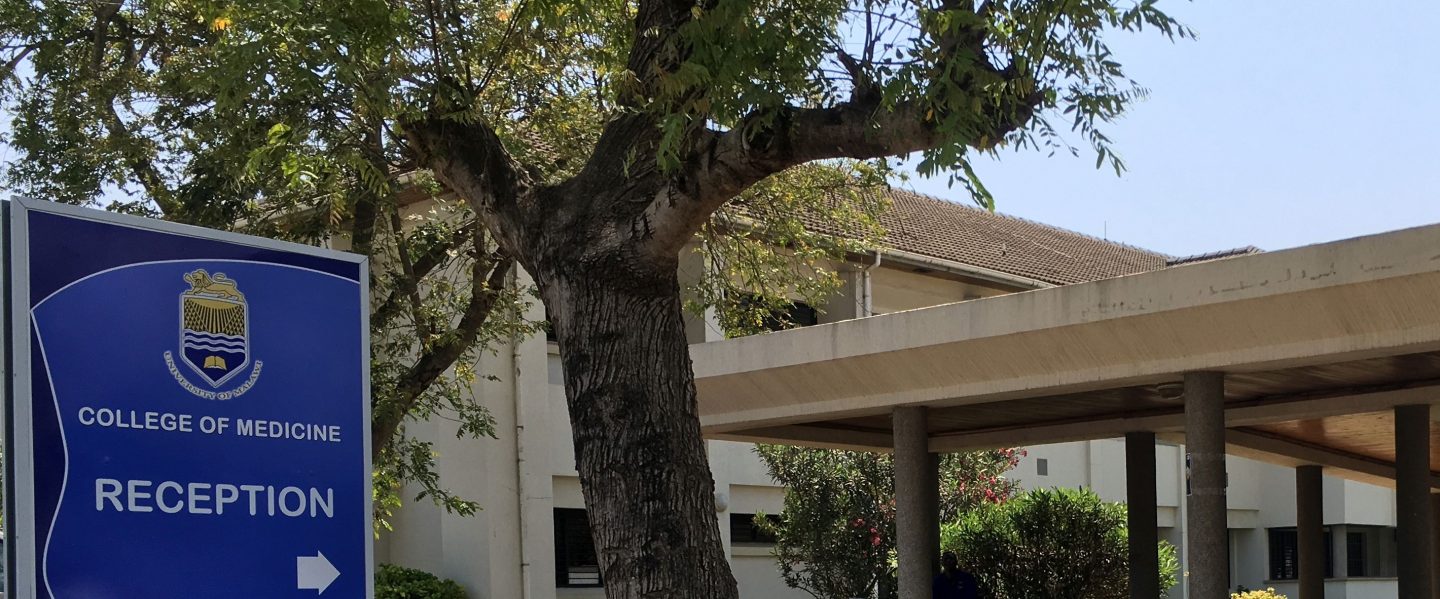

This is a guest post written by Grace Masiku, Hopeson Mataka, Nellie Mnyalira, Patrick Ndimbwa, Wezzie Nkhata and Anna Smith. It provides some personal reflections following their involvement in establishing a supervised toothbrushing programme at a school in Chilomoni, that was described in the previous blog post by Anna Smith.

Over two weeks, Year 5 dental students from Kamuzu University of Health Sciences volunteered in a supervised toothbrushing intervention at a school and feeding centre run by Beehive Centre for Social Enterprise in Chilomoni, alongside Anna Smith.
The programme combined supervised toothbrushing with oral health education, games, music and interactive activities. For the students, it was an opportunity for community engagement in the field of preventive dentistry outside the traditional clinical setting and to build meaningful relationships with the children.
In this post, each of the five volunteers provides a brief reflection of their experience.
Patrick Ndimbwa

For Patrick, the experience provided an opportunity to learn beyond the dental school environment:
I learnt things that as a dental student I didn’t know or understand initially. It was a great experience interacting with everyone during the two week programme
Nellie Mnyalira

For Nellie, building trust with the children was essential:
It was an entirely new experience for me and definitely pushed me out of my comfort zone. Building a relationship with the children through conversation was essential; they needed to trust me in order to engage and learn effectively.
She also reflected on how quickly the children learnt:
The children we met were incredibly adaptable. Because they learn so quickly, it shows they can pick up both good and bad habits easily. This made correcting misinformation and teaching the proper techniques rewarding.
Nellie also highlighted the children’s creativity and enthusiasm:
With the children’s eagerness to learn, attentiveness and beautiful ideas when it came to creating songs they were easy to work with. Most of all, it was also fun.
She added:
The intervention went so well, the children remembered everything they had been taught in those two weeks. And I am glad to have had such wonderful and amazing colleagues, we made a great team.
Grace Masiku

The intervention went beyond traditional oral health education. Songs, games and dancing became important ways of engaging the children.
Grace reflected on the energy of the children:
They were attentive, fun, and highly energetic. I hadn’t danced like that in a while, and it reminded me how much I need to get back into it!
For Grace, the experience was ultimately about connection:
Overall, I had a wonderful time teaching, laughing, and connecting with them. I am entirely confident that they now feel assured in their brushing techniques and are knowledgeable enough to share what they learned with those around them.
Hopeson Mataka

For Hopeson, the programme reinforced the importance of preventive oral health education.
It was a privilege to be part of the volunteer team for the outreach program. It was a great experience to interact with the children while contributing something meaningful to their lives.
Drawing on his clinical experience, Hopeson noted the importance of improving oral health knowledge and habits among children:
Based on my observations and the patients I have encountered during my clinical work so far, it is clear that many people in Malawi, including children, have poor oral hygiene practices due to a lack of dental knowledge.
For Hopeson, seeing the children apply what they had learnt was particularly rewarding:
It brought me great joy to see the children brushing their teeth properly within the first two to three days. I hope they will continue practising what they learned and grow with this knowledge, which will help them maintain good oral health.
Wezzie Mary Nkhata

For Wezzie, connecting with the children through dance and games became one of the highlights of the intervention.
My favorite part was connecting with the children through dance and games. My teammates even gave me a nickname: ‘The Dancing Dentist’ 😄
She found that this connection helped make oral health education more effective:
That connection made it so much easier to share important oral health messages.
The team saw changes in brushing technique within just a few days.
Within just two days, we saw real progress in how they brushed their teeth. Making it fun helped keep them motivated every day, and that was so rewarding for our team.
Providing the children with their own toothbrushes and toothpaste was another important part of the intervention.
Distribution of toothpaste and toothbrushes to the children made it even better! And we could see how happy and grateful they were to have their own brushing kit.
Wezzie believes that expanding this type of programme could have a wider impact:
I truly believe that if we expand this kind of programme across Malawi, we can greatly reduce dental caries in school children.
She also identified time as a key challenge:
Our only challenge was time. With a longer period, we could have supervised them for longer and measured even greater impact.
Reflecting on what she gained from the experience, Wezzie added:
This has exposed me and enhanced my skills and knowledge in public health. The future in Dental Public Health is definitely bright!!
Final comments from Anna Smith
I initially travelled to Malawi independently to begin pilot testing for this intervention. However working alongside BDS 5 student volunteers became an invaluable part of the project. They went far beyond volunteering, helping to co-design activities, translate materials and engage with the children. Their contribution was critical to the success of the pilot, and I am incredibly grateful. What started as working with colleagues quickly grew into friendship.
The two-week intervention gave the students an opportunity to experience community-based prevention, while giving the children practical knowledge and skills to support their oral health.
Through toothbrushing, games, songs, dancing and conversation, the children were encouraged to take an active role in their oral health while the student volunteers gained valuable experience in communication, community engagement and dental public health.
Across the students’ reflections, a common theme emerged: prevention can be both educational and enjoyable.

Well done Wezzie, Hopeson, Grace, Nellie, Patrick and Anna. Good to read about your reflections from the 2-week intervention, which provides very positive feedback. All your comments serve to reinforce what can be achieved when people really want to do something. There are those who just talk and those who actually do and you are all great doers!! You all did fantastically well and your enthusiasm and dedication is palpable. 😀😀😀👏👏👏