An historic milestone – Malawi graduates its first group of home-trained dentists

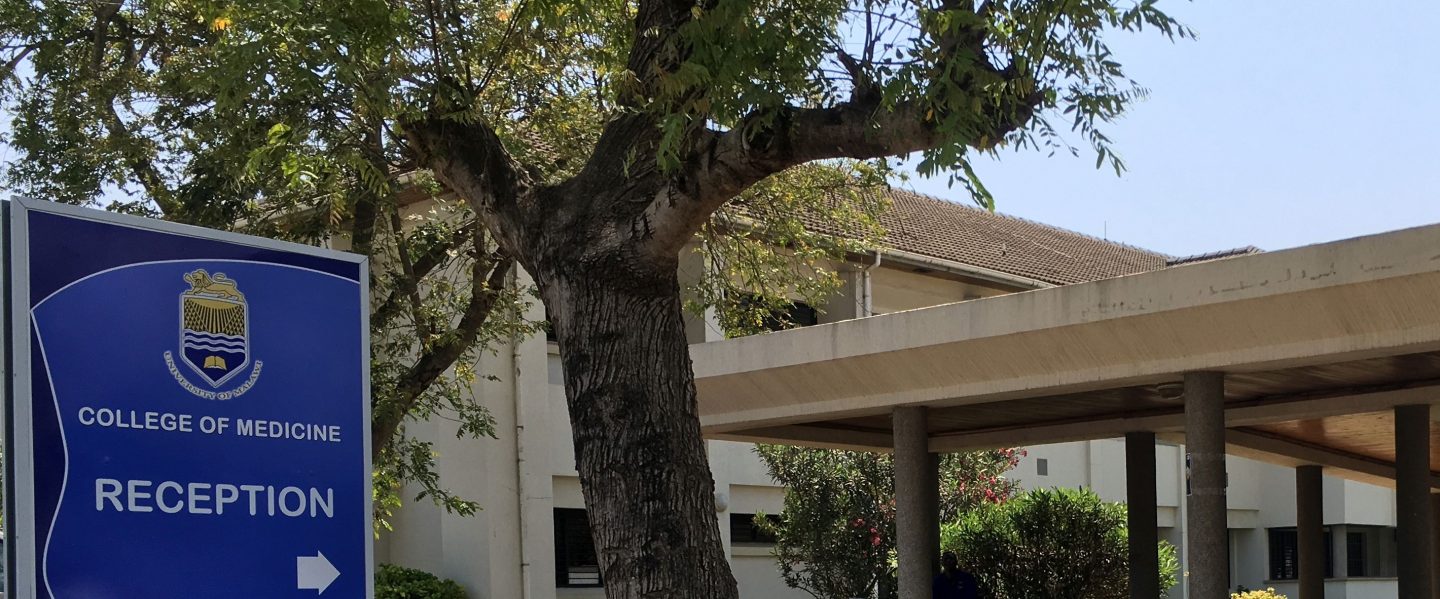
In 2016, I met Dr Mwapatsa Mipando, then Principal of the University of Malawi College of Medicine (COM), during a visit he was making with academic colleagues to the University of Glasgow (UofG). The purpose of the visit was to identify possible areas for biomedical research collaboration. It was an extremely successful visit, resulting in the establishment of a very strong partnership between COM and the UofG College of Medical, Veterinary & Life Sciences. On the biomedical front, the very successful Blantyre Blantyre Project was initiated, but Dr Mipando had also intimated the ambition of COM to set up a Bachelor of Dental Surgery degree programme, following two unsuccessful attempts in previous years.

During his stay in Glasgow, Dr Mipando and I agreed to meet at 8.00am one morning over a cup of coffee to discuss possibilities, and that marked the beginning of The MalDent Project. Concrete activities started in 2017 and culminated in the graduation of Malawi’s first home-trained dentists on 30th April 2025 – the basis of this blog post.

Final exams over but pre-graduation – smiles all round!

Shortly before the date of the graduation ceremony, Kamuzu University of Health Sciences (KUHeS – formerly the University of Malawi College of Medicine) released the following press statement which summarises succinctly the background to the inaugural BDS graduation and the many partners involved:

The press statement

It was a great privilege for me to have been invited by the Vice-Chancellor of KUHeS, Professor Macpherson Mallewa, to attend this graduation ceremony at which Malawi’s first home-trained dentists would receive their degrees. These would be conferred by the State President of the Republic of Malawi, Dr Lazarus McCarthy Chakwera, who is the Chancellor of the University of Malawi.

My ticket to witness the graduation of Malawi’s first home-trained dentists

The first cohort of BDS students had commenced their degree at the University of Malawi College of Medicine, before the establishment of KUHeS, so their graduation took place in the Great Hall of the University of Malawi in Zomba.

The Great Hall of the University of Malawi nestling among beautiful grounds in Zomba

Once we had parked the car, Peter and I made our way to the robing room to prepare for the ceremony. There we met several colleagues from the dental teaching staff:

L to R: Myself, Steve Kamiza, Tasneem Chikwatu, James Mchenga, Nathan Lungu, Shabana Yusuf, Peter Chimimba

At the appointed time, we joined a staff procession into the Great Hall and onto the stage. This was followed by the procession of Executive Deans, then the Council members and finally the Chancellor’s Procession. Music was provided by the beautiful singing of the Congregation Choir and the rousing tones of the Malawi Police Band.

Following the University of Malawi Anthem and a Congregation prayer there were speeches from Dr Christopher Guta, Chairperson of the University of Malawi Council, Professor Samson Sajidu, Vice-Chancellor of the University of Malawi, and His Excellency Dr Lazarus McCarthy Chakwera, President of the Republic of Malawi and Chancellor of the University of Malawi.

After these remarks were finished, the award of Certificates, Diplomas and Degrees began. Between each graduate a drum sounded and for candidates achieving First Class Honours or Distinctions, the audience rose to its feet, clapped and sounded horns. It was a very joyful occasion.

The moment we had all been waiting for arrived when Dr Wakisa Mulwafu, Executive Dean of the School of Medicine and Oral Health, announced the presentation of our pioneer group of BDS students to receive their degrees. The conferring of their degrees was prefaced with their recitation of the Medical Oath. You can listen to this historic moment in the following video:

The oath and conferring of degrees

As we emerged from the graduation, the security was tight on account of the President’s attendance at the graduation:

Tight security

As the new graduates began to pour out of the hall, it. rapidly became chaotic and we were uncertain whether we would be able to link up with the new young dentists for a photo.

Pouring out of the Great Hall

However, unknown to us at the time, the dental graduates had been ushered out of the Great Hall early and were having their photograph taken with the President:

Malawi’s first home-trained dental surgeons with the President of the Republic of Malawi and Chancellor of KUHeS and UNIMA, Dr Lazarus McCarthy Chakwera

They subsequently emerged and our photo opportunity arrived after all:

Proud dental teaching staff and Malawi’s new dental graduates

I was delighted to be able to capture a picture with Esther Khomba and Chifundo Banda, who had visited us in Glasgow for three weeks last year for an elective visit, generously funded by the HOPE Foundation of the Royal College of Physicians & Surgeons of Glasgow.

With Esther and Chifundo whose elective visit to Glasgow, courtesy of the RCPSG, had been part of their BDS journey

I have sat through many graduation ceremonies over the years in the UK but this was the first I had ever attended in Malawi and I was struck by the exuberance and joy displayed by all who were present. The next two video clips provide a glimpse of the atmosphere at a Malawian graduation, both inside the Great Hall as the graduates and guests are leaving …

… and outside, as the new graduates, families and friends emerge into bright sunshine:

It was a very happy and emotional event for all of us, and as Peter Chimimba and I made our way to the robing hall again to prepare for the drive back to Blantyre we had much to reflect upon. Once in the car, we decided to head to the Sunbird Ku Chawe Hotel on the Zomba Plateau for a light lunch. I had never visited this venue previously and really enjoyed the winding mountain road and spectacular views on the way to the hotel.

A view from the Sunbird Ku Chawe Hotel – what a wonderful spot for a celebratory lunch

That evening the Vice-Chancellor of KUHeS, Professor Macpherson Mallewa, had arranged a dinner for the new dental graduates and KUHeS staff at the Sunbird Mount Soche Hotel in Blantyre. Professor Mallewa opened the evening with a talk in which he reflected that he had been in the first cohort of MB BS graduates from KUHeS (then the University of Malawi College of Medicine) and felt a real empathy with this first group of BDS graduates.

Professor Macpherson Mallewa making his opening remarks

Professor Benjamin Kumwenda, who acted as Master of Ceremonies for the evening, invited some of us to say a few words and to reflect on the progress made so far in our efforts to improve oral health in Malawi.

Dr Peter Chimimba, who has played such a central role in The MalDent Project, delivering some reflections

I was delighted that Ruth Maluwa from the Malawi Scotland Partnership was able to attend, recognising the strong collaboration between our two countries that has been a key component of the success to date.

Ruth saying a few words on behalf of the Malawi Scotland Partnership

After an obligatory group photograph …

… Ruth and I had a photo taken with the newly qualified dentists, reflecting the previous and continuing collaborations between Malawi and Scotland to deliver the BDS degree at KUHeS:

In the first post I published on this blog on 23rd August 2018, entitled ‘The Journey begins’, I recognised the size of the task we had set ourselves to establish a Bachelor of Dental Surgery degree in Malawi from scratch, and used the following quotation:

“Alone we can do so little; together we can do so much”

Helen Keller

In achieving our ambition, we have worked with a multitude of partners who have contributed in many different ways to the realisation of the BDS degree at KUHeS:

Massive thanks are due to all of these organisations and to many individuals, without whom this fantastic group of young people would not have had the opportunity to train and graduate as dental surgeons in their home country. These new graduates, along with the 137 students now studying on the BDS programme, are the pioneers and leaders who will help The MalDent Project to achieve its mission of ‘Oral Health for All’ in Malawi.

The future …

Another important step – handover of the site of the new dental teaching facility / student hub to the contractor

The work stream to build the new clinical dental teaching facility and student hub on the Blantyre campus of Kamuzu University of Health Sciences took a further step forward on Friday 11th April 2025, when the site was handed over to the building contractor, Mango Tree Construction Company. The agenda for the event was as follows:

The delegates assembled initially in the ICT Board Room:

Prof Chisomo Msefula, Lead for the KUHeS SAVE Project, addressing the group

Dr Peter Chimimba, Malawi Lead for The MalDent project, provided the background and context to the building:

Peter addressing the delegates

In his presentation, Peter stressed how critical the new facility is to the ongoing viability of the Bachelor of Dental Surgery programme at Kamuzu University of Health Sciences and the added value it will bring to the university and the local community.

Peter making his point!

It was very appropriate that three of the BDS academic staff were present to witness the handover of the site:

L-R: Drs James Mchenga, Nathan Lungu and Tasneem Chikwatu from the Department of Oral Health Sciences

The Deputy Vice Chancellor was represented by the University Librarian, Mr Diston Chiweza, who made remarks on her behalf:

Mr Diston Chiweza addresses the delegates on behalf of the Deputy Vice Chancellor

The contracts were then officially exchanged and the site handed over:

Contracts exchanged

Following the formalities in the Board Room, the delegates left to visit the site of the new facility…

Heading out to the site

… with various discussions along the way …

James Mchenga and Peter Chimimba look on as Peter Creaser (architect) and Soobhas Sobnack (engineer) have a chat

… until the site was finally reached:

Viewing the site

A final photograph was taken at the demonstration wall that had been constructed to the specification produced by Leon Grobbelaar from John McAslan + Partners during his visit in 2024.

Handshake at the demonstration wall

Peter Chimimba, Mwapatsa Mipando and I had been very excited last year to see this demonstration wall as, like today’s site handover, it had represented a tangible step forward. It is perhaps reminiscent of the famous quote by the architect Louis Kahn (1901 – 1974):

Even a brick wants to be something more than it is

The following aerial view with a superimposed perimeter of the site (blue line) gives some idea of the scale of the new facility:

Finally, to really bring things to life, a white line has been drawn to demarcate the boundary before physical barriers are erected.

A meaningful thin white line

At last, it feels as though the building is becoming a reality!

Another Smileawi / MalDent Project / University of Glasgow collaboration – hand sanitiser for WaterAid Malawi

Regular readers will remember that in September 2022, the charity Smileawi and The MalDent Project team collaborated to send a 40 foot shipping container of Personal Protective Equipment (PPE) to Malawi. The gowns, masks and visors had been issued to Scottish dental practitioners for use during the COVID pandemic, but many practices had large volumes remaining once the COVID regulations were relaxed. The University of Glasgow had kindly allowed us to use their warehouse and yard in Govan as the site for the loading of the container and also provided a University van that we could use to collect PPE from practices and health centres across Scotland .

Fast forward to late 2024 and the University of Glasgow contacted us about a further vestige of the COVID pandemic that could be of potential value in Malawi. The University had purchased large quantities of hand sanitising products during the pandemic and was holding a significant residual stock of these items in the Govan warehouse. We were asked whether we had colleagues in Malawi who could make use of the hand sanitiser … we did!

As a result of our work to improve child oral health in Malawi, we had previously been introduced to Ms Maria Soko who works for the charity WaterAid in Malawi. Maria had spoken at the Child Oral Health Workshop in Mponela in May 2024 and is a member of the Ministry of Health / Ministry of Education Task Force that is currently developing a Child Oral Health Improvement Plan for Malawi. We sent Maria photographs of the products in storage at the University of Glasgow, together with quantities, and Maria confirmed that these products would be of great value to the work of WaterAid in Malawi.

The one remaining challenge was how to fund the transportation of the donated sanitiser to Malawi. Much to our delight, following discussion the University of Glasgow generously agreed to pay the shipping costs, and the project was underway!

The container was due to arrive at the Govan yard at 11.00am on Wednesday 16th April. The day before this, I visited the warehouse with Nigel and Vicky Milne of Smileawi to meet Davy Henderson, the University of Glasgow Stores Lead, to create a manifest of the materials that would be loaded.

Nigel and Vicky with Davy Henderson, the University of Glasgow Stores Lead

In total, there were 17 pallets of goods, including three different types of hand sanitiser together with dispenser units for fixation to walls.

Nigel and Vicky, counting boxes for the manifest

The following day, the container arrived at 8.30am, well before the scheduled 11.00am. The contract was for a three hour loading period (11.00am – 2.00pm), so the early arrival was a bonus as it gave us significant extra time.

Our container arrives early

Once the doors of the container were swung open …

The cavernous interior of the empty shipping container

… we were ready to start loading, with the help of Davy and the forklift truck …

The fork lift truck swings into action

We were delighted that our good friend Trevor Haye was available to lead the packing. Trevor had been a key player in the loading of the previous container with PPE mentioned earlier, and he also leads on the packing of the containers for The BananaBox Trust in Dundee. After a lifetime in the transport and logistics business, Trevor has an uncanny knack for packing a container tightly and efficiently.

Trevor enjoys a coffee before the packing begins. The six stacked pallets provided a handy set of steps!

Trevor mapped out the most efficient pattern for the packing, with the heavier boxes towards the bottom. It was like a game of ‘Tetris’.

Trevor and Nigel busy packing

As the boxes were stacked, further pallets were delivered by the University ofGlasgow team according to the instructions from Trevor:

Another delivery from the warehouse

Slowly the container was filling up …

Trevor ready for the next delivery

… and the final boxes were loaded directly from the forklift truck:

The trickiest part of the process – loading the final boxes

At last the final box was loaded and a happy team celebrated a job well done:

All packed and ready to go!

It was time to close the doors …

… and apply the hazard labels to each side of the container:

The final step!

Part of Water Aid’s Global Strategy relates to improving hygiene in healthcare facilities. We hope that this donation of hand sanitiser from the University of Glasgow will be of value to the WaterAid team in Malawi as they pursue this strand of their programme of work.

Another landmark – BDS Curriculum Review Stakeholder Meeting

It seems very little time since my initial visit to Malawi in September 2017 for the first curriculum conference to assess the feasibility of establishing a Bachelor of Dental Surgery degree programme at the University of Malawi College of Medicine (now Kamuzu University of Health Sciences [KUHeS]). The success of that meeting culminated in a second curriculum conference in 2018 and, ultimately, approval of the new BDS curriculum on 21st March 2018, with the first cohort of students enrolled in August 2018.

That first group of BDS students has now completed the course, signalling the requirement for a full curriculum review. The process to be followed is laid down by KUHeS procedures and begins with a stakeholder meeting. For the BDS curriculum, that meeting took place on 10th and 11th March 2025 at Chikho Hotel, Mponela.

Day 1: Chair – Dr Thandie Mwalukomo, Coordinator for Curriculum Activities & Strategic Direction, School of Medicine & Oral Health, KUHeS

Following an opening prayer and introductions of all present, Professor Wakisa Mulwafu, Executive Dean of Medicine at KUHeS, provided an overview of the programmes offered by the School of Medicine & Oral Health at KUHeS. He finished his presentation with some of the challenges presented by the BDS degree programme which the curriculum review should address.

Professor Wakisa Mulwafu opening proceedings

One of the main stakeholders for the BDS degree programme is the National Council for Higher Education (NCHE). Dr Ishmael Nyirenda represented the NCHE and delivered an extensive presentation covering the basis of accreditation, the relevant standards, tools, guidelines and templates used, together with the implications and effects of accreditation. In summary, the basis of accreditation (Section 28, NCHE Act) requires acceptable standards surrounding:

  • Physical, human, financial, teaching and learning resources
  • Management and operational procedures
  • Acceptable standards of academic life focusing on teaching, research, community service and expert service
Dr Nyirenda delivered a detailed presentation on the role of the National Council for Higher Education

Professional programmes, such as the BDS course, are accredited by NCHE after being approved by another of our main stakeholders, the Medical Council of Malawi (MCM). Dr David Zolowere, the Chief Executive and Registrar, of the MCM attended the stakeholder meeting and spoke next.

Dr Zolowere described the creation of the MCM through the Medical Practitioners and Dentists Act No. 17 of 1987, then spoke of the vision, mission and core values of the MCM and its functions:

Dr David Zolwere describing the functions of the Medical Council of Malawi

The MCM is a critical stakeholder for the BDS programme because it is a legal requirement that the course is approved by the Council. Subsequently, the MCM will only register practitioners who have trained under courses it has approved. The existing BDS curriculum received MCM approval in 2018, but it will now be necessary to share a copy of that original curriculum with the planned revisions shown in track changes, so that the Council can consider the next version.

The next speaker was Dr Nitta Chinyama, Deputy Director of Clinical & Rehabilitative Services at the Ministry of Health. There were some technical issues with the projection when Dr Chinyama began to speak and George Kafera, one of the BDS 5 students who had just passed Finals, leapt to the rescue – a role he would repeat on several occasions over the course of the two days!

George Kafera acting as technical expert

Dr Chinyama spoke about the relevance of the BDS degree programme to two key pillars of the Malawi Government Health Sector Strategic Plan III:

  • Health service delivery pillar: Increase equitable access to, and improve quality of, health care services.
  • Human resources pillar: Improve the availability of competent and motivated human resources for health, for quality health service delivery that is effective, efficient and equitable.

Dr Chinyama then moved on to speak about the high level of activity at a global level to improve access to oral health care for all, aiming for universal health coverage (UHC) for oral health for all individuals and communities by 2030. The six principles of this global oral health strategy are:

  • Public health approach to oral health
  • Integration of oral health into primary health care
  • Innovative workforce models to respond to population needs
  • People-centred oral health
  • Digital technologies for oral health
  • Oral health interventions across the life span

The role of the young dentists who will be graduating from KUHeS over the coming years will be key to achieving these local and global goals for oral health in Malawi.

Dr Nitta Chinyama describing the global effort to improve oral health care delivery

The final speaker before the coffee break was Dr Peter Chimimba, who has been such a central figure, not only in establishing the BDS degree programme, but also in creation of Malawi’s National Oral Health Policy, delivery of the National Child Oral Health Survey and currently as a member of the Task Force that has been established to develop a National Child Oral Health Improvement Plan. Nobody could be better placed than Peter to talk about the history of the BDS degree, which was first conceived 27 years ago, but finally left the blocks in 2017 and has now reached the stage in 2025 of graduating its first cohort of students.

Dr Peter Chimimba describing the history of the BDS programme at KUHeS

Before the coffee break, an official photo was taken of those attending the stakeholder meeting:

Smiling delegates, eager for coffee!

The first speaker after coffee was Dr James Mchenga, Acting Head of the Department of Oral Health Sciences, who provided an overview of the first five years of the BDS curriculum. As with any new course that starts from scratch, there are challenges in the early years. These have included staffing and physical infrastructure, both of which have been mitigated and for which long-term sustainable improvement plans exist.

Dr James Mchenga at the lectern, while two of Malawi’s new young dentists, George Kafera and Chifundo Banda, look on

Clearly, some of the most important feedback on the existing curriculum comes from the first group of students to successfully complete the BDS course. In the run-up to the stakeholder meeting, that group of students had completed a detailed questionnaire and the data were analysed for presentation to the delegates. Chifundo Banda, who had been the President of the Dental Student Society and George Kafera, who was the BDS 5 Class President, gave a joint presentation of the class feedback. The general consensus was that the curriculum was extremely engaging and that the staff were very approachable, but that elements of the administration and organisation of the course required attention. George finished his presentation by saying that despite challenges along the way, he and his classmates were nevertheless ‘globally competent and locally relevant’, the mantra adopted from the beginning of The MalDent Project when it was first used by Dr Mwapatsa Mipando!

I was due to speak next on progress with construction of the new clinical dental teaching facility and student hub for the Blantyre Campus of KUHeS. Unfortunately, repeated power cuts interfered with my presentation and I was unable to share the computer generated illustrations of the planned new facility. I have included one picture in this blog post to provide an impression for readers of the new building that is due to commence construction very soon:

An artist’s impression of the planned new clinical dental teaching facility and student hub

The final presentation of the morning was delivered by Dr Wellington Chikuni on behalf of the Ministry of Health. Wellington is a dental surgeon who works at the Queen Elizabeth Hospital Dental Department in Blantyre and is engaged in clinical teaching of BDS undergraduates. Wellington spoke about the interface of the BDS programme with Malawi’s National Oral Health Policy and touched again on some of the points raised by Dr Nitta Chinyama earlier in the morning. It is critical that the BDS curriculum includes a substantial component that relates directly to the national policy, a key consideration for the forthcoming review.

Dr Wellington Chikuni speaking to the National Oral Health Policy

After lunch, there were two sessions of small group work. The first was a SWOT analysis of the BDS programme and the second was a session addressing the challenges of the BDS programme. Once again, both George Kafera and Chifundo Banda played leading roles.

The day concluded with a general discussion led by Professor Wakisa Mulwafu.

Day 2: Chair – Dr James Mchenga, Acting Head, Department of Oral Health Sciences, KUHeS

The second day began with an excellent recap on the discussions during Day 1, delivered by Dr Peter Chimimba.

Dr Peter Chimimba reminding us about the content of Day 1

Peter’s recap session was followed by a presentation from Mr Emmanuel Chiphiko, who is based in the KUHeS Teaching & Learning Development Centre, on the KUHeS Curriculum Development Framework. This very technical presentation defined clearly the steps we will need to take as we complete the forthcoming BDS curriculum review.

Mr Emmanuel Chiphiko providing us with ‘the rules of engagement’ for curriculum review

Next up was an excellent presentation on the interface between the MB BS and the BDS curricula, delivered by Dr Lerato Mambulu, who is the MB BS Year 3 coordinator. The BDS and MB BS students are taught together in Years 1 and 2, but begin to diverge significantly in Year 3. Since the recent review of the MB BS Year 3 curriculum, there will be significant work to do when we review Year 3 of the BDS course.

Dr Lerato Mambulu at the lectern

The final session before the coffee break featured the return of Mr Emmanuel Chiphiko, who covered Intended Learning Outcomes and Bloom’s Taxonomy.

Bloom’s taxonomy – a well-known graphic to all educationalists

Immediately after coffee, we divided again into small groups to discuss ‘Assessing clinical competence and professionalism on the BDS degree programme’. Once again, George Kafera and Chifundo Banda, our two new alumni, showed great initiative in facilitating the group work and reporting back in the plenary session.

One of the elements of the BDS course that has proved particularly challenging is the research methodology component, which requires identification of a research question, writing a protocol, making a submission to the KUHeS Research Ethics Committee, collecting data and delivering a research report. This work is spread over Years 3 and 4. Dr Loti Nyirenda, from the School of Global and Public Health, oversees this module and gave some very clear, practical suggestions on modifications to its delivery that would facilitate its completion by the BDS students in a timely fashion.

Dr Loti Nyirenda speaking on the research methodology component of the BDS curriculum

The final session of the meeting on the last afternoon included one presentation on opportunities for outreach and community engagement for BDS students …

Dr James Mchenga beginning his presentation on outreach and community opportunities for BDS students

… and a heated discussion about multiple entry and exit targets for the BDS degree programme. The formal proceedings closed with a prayer.

The meeting concluded with a photograph of George Kafera and Chifundo Banda, our two alumni, with the BDS teaching staff who were present at the meeting. It was a very happy ending to a positive and fruitful BDS curriculum stakeholder meeting.

The dental team (L to R): Wellington, James, Mirriam, George, Nathan, Peter, Chifundo, Wiston, Jessie & Tasneem

The hard work now begins. Once the notes from the stakeholder meeting are made available, an extended departmental meeting, held over several days, will be required to draft the suggested changes to the BDS curriculum for presentation to the School of Medicine & Oral Health. This will be followed by scrutiny from two further committees before final presentation to KUHeS Senate for approval.

There’s a lot to do, but the review process offers a great opportunity for further evolution and enhancement of what all present at the stakeholder meeting agreed is fundamentally a very sound curriculum.

A big day: the Deputy Minister of Health opens the refurbished Chilomoni Health Centre.

Regular readers of the blog will be familiar with the joint working that has emerged over the last year between The MalDent Project and the charity AMECA. In a previous post, we explained the nature of AMECA’s most recent project at Chilomoni Health Centre, that has included refurbishment of the Maternity and Outpatient Departments, establishment of a Physiotherapy Unit and the construction of a Dental Clinic. If you would like to read more about the work that has been completed by AMECA at Chilomoni Health Centre, you can read an in-depth description in AMECA’s excellent recently published newsletter here.

Over the first two weeks of March, there was significant activity to bring the works and fit-out to a conclusion, as excitement mounted for the official opening which was scheduled for Friday 14th March.

The evening before the official opening, a dinner was organised at the Sunbird Mount Soche Hotel by Dr Gift Kawalazira, Blantyre’s District Health Officer. The Deputy Minister for Health, Honourable Noah Chimpeni MP, was to join us for the opening ceremony, but unfortunately he was unable to reach Blantyre in time for the dinner. We nevertheless had a very enjoyable, informal evening which ended with some brief impromptu speeches:

We had been slightly worried about the weather for the opening event, as earlier in the week the south of Malawi had experienced heavy rain during the passage of Cyclone Jude. However, we need not have worried as Friday 14th March dawned dry and bright, staying that way throughout the day.

We were fortunate that St James Chilomoni Catholic Church is close to Chilomoni Health Centre and we were allowed to use the extensive car park for those attending the event.

The beautiful St. James Chilomoni Catholic Parish Church

Between the cathedral and health centre there is a large area of flat ground, which would be used for the speeches later in the afternoon. The tents that were erected would have provided protection from any rain, but in the event provided welcome shade from the sun for those attending:

The improvements that have been wrought by AMECA at Chilomoni Health Centre are outstanding. Much of this post will focus on the dental clinic, because of the relevance to The MalDent Project. However, AMECA must be hugely congratulated on the entirety of what has been achieved at Chilomoni Health Centre in recent months, covering maternity, outpatients and physiotherapy as well as the dental facility.

This photo shows the three main characters involved in the transition from a small, non-functional dental surgery in the original out patient department, to the spacious two-surgery clinic that has been developed by AMECA:

Peter, Ruthie and Wisdom, who have put so much time, effort and energy into setting up the Dental Clinic

It had been Wisdom Maiza, the dental therapist at Chilomoni Health Centre, who spoke originally to Ruthie about the appalling state of his original surgery in the outpatient department. This conversation set in train the collaboration between Ruthie, Peter Chimimba, Wisdom and I, along with all of AMECA’s collaborators in Malawi, to deliver a state-of-the art dental clinic.

A notable feature of all the refurbished facilities at Chilomoni Health Centre is the beautiful hand-painted art work on the walls. All of these paintings are designed and applied by Young, a gifted local artist.

Young, beside some of his handiwork

Before the official opening, there was an opportunity for local people and friends of AMECA to view all the facilities that have been refurbished at Chilomoni Health Centre. This included the dental clinic, for which Wisdom acted as Chief Guide!

Ruthie provides some background before Wisdom sets off on the tour

An invitation to the opening event had been issued to members of the Bachelor of Dental Surgery teaching staff based at the Blantyre Campus of Kamuzu University of Health Sciences and the Queen Elizabeth Hospital Dental Department, all of whom were excited to see the new facility. In time, it is hoped that the dental clinic at Chilomoni Health Centre will provide an opportunity for outreach teaching of senior BDS students.

The nursing staff based at Chilomoni Health Centre also came to inspect the new dental clinic and their dance around the chair suggests that they were suitably impressed:

The nurses liked the new Dental Clinic!

The imminent arrival of the Deputy Health Minister was heralded by the delivery of a red carpet and balloons strapped to the back of a motorcycle:

Arrival of the red carpet and balloons – the Deputy Minister is on his way

Suddenly the singing increased in volume and the Deputy Minister appeared:

The arrival of the Deputy Health Minister, Honorable Noah Chimpeni MP

The Minister was directed first to the refurbished and re-equipped Maternity Wing:

First stop – the refurbished Maternity wing

From Maternity he was ushered to the Outpatient Department ….

Heading to the refurbished Out Patient Department

… then to the Physiotherapy Unit, before visiting us at the Dental Clinic:

The delegation heads towards the new dental clinic

The Minister spoke briefly with dental team members before being led into the two-surgery clinic.

The Deputy Minister greets Dr James Mchenga, Acting Head of the BDS programme at KUHeS

Once again, Wisdom provided an excellent overview of the facility and described the difference it will make for both staff and patients.

Wisdom provided a guided tour of the new dental clinic for the Deputy Minister and other guests

On the way out of the clinic, the Minister enjoyed some further discussion with Ruthie and Trinity:

Ruthie chatting with the Deputy Minister and Trinity, the in-charge, as they leave the Dental Clinic

Once the Minister had been shown around the health centre, we all moved to the tents on the flat area of ground adjacent to the cathedral. En route, there was time for a quick dental selfie taken by Welington Chikuni, one of the dentists based at the Queen Elizabeth Hospital, who provides clinical teaching for the BDS students and has responsibility for overseeing dental interns there.

A chance for a dental selfie

When we arrived at the area for the speeches, many local villagers had gathered:

Local villagers seated on the bank to listen to the speeches

Dr. Peter Chimimba delivered one of the early speeches …

Dr Peter Chimimba at the microphone

… followed later by Ruthie …

Ruthie providing background and thanks to the team involved in the refurbishment

… the Principal Secretary Administration for Health, Mr James Manyetera …

Principal Secretary Administration for Health, Mr James Manyetera

… and various other local dignitaries, concluding with a speech by the Deputy Minister …

The Deputy Health Minister, Honourable Noah Chimpeni MP

Interspersed with the speeches were rousing shows by local dancers:

Local dancers celebrating the re-opening of Chilomoni Health Centre

When the speeches had concluded, members of the national press were keen to interview the Deputy Minister …

The press corps interviewing the Deputy Minister

… and, of course, Ruthie:

Ruthie providing the press corps with her insights

The run-up to the opening had been very busy for Ruthie and her team. I was heading back to the UK the following day, and once the event had concluded I enjoyed some snacks and a drink with Peter and our mutual friend Nelson Nyoloka, before heading home to pack.

A welcome beer and snacks to celebrate the opening – courtesy of Peter!

In conclusion, I would like to congratulate Ruthie and all of the AMECA Trustees for an amazing transformation at Chilomoni Health Centre. Special mention is also due to the architect, Mr. Jan Sonke, and the contractor, Mr. Mbewe, whose skills and diligence made the project a successful reality.

The significance of the dental clinic cannot be over-stated. Once fully operational, it will be the only dental facility of its type at health centre level in Malawi. We urgently need additional facilities of this type in Malawi to provide suitable work-places for the new dentists now being trained at Kamuzu University of Health Sciences. Chilomoni Dental Clinic provides an exemplar for replication in other district hospitals and health centres across the country.

We are still raising money for some of the final items of dental equipment at Chilomoni and if you would like to contribute you can do so here. Thank you

The MalDent Project team enjoys hosting KidsOR in Malawi

In November 2024, I was honoured to be invited as one of two keynote speakers to the Third Global Citizenship event organised by the University of Dundee and NHS Tayside, with sponsorship from Global Citizens Tayside and Kids Operating Room (KidsOR):

This annual event is a great opportunity for both undergraduate and postgraduate students at the University of Dundee to showcase their global citizenship activities and to compete for prizes. The evening was a joyous celebration of the engagement of so many students in transformative projects.

My fellow keynote speaker was Dr David Cunningham, CEO of the Scottish charity KidsOR. David delivered an inspirational talk which demonstrated the massive impact of the state of the art surgical infrastructure delivered by KidsOR, which allows paediatric surgeons to deliver high quality care for children in low resource environments. Now operating in over 40 countries, the global impact of the charity is massive.

David and I had opportunity for some informal discussion during the evening about our respective activities. We touched on the fact that in many low resource settings, including Malawi, there is a desperate shortage of high quality, well-equipped, functional dental surgeries. As a result, dental therapists and dentists struggle to deliver care for children and adults alike, because they are unable to use the full range of skills within their scope of practice. This results in many unnecessary referrals to central hospitals for relatively minor procedures, causing additional costs and inconvenience to patients. Furthermore, the already busy central hospital departments become overwhelmed.

David’s wife Claudia graduated as a dentist from the University of Dundee and is now Head of Dentistry at the University of Central Lancashire. David and I engaged in some further discussions after the global citizenship event and early this year he informed me that he would be in Malawi on 10th and 11th February to participate in a regional meeting of Ministers of Health in Lilongwe. He planned to bring Claudia with him to allow her to assess the dental situation on the ground and asked whether The MalDent Project team would be able to organise a suitable itinerary for her. Peter Chimimba and I began planning and arranged a programme that included both Lilongwe and Blantyre.

Day 1: Lilongwe

On Monday 10th February, Peter and I collected Claudia from her hotel in Lilongwe and headed to Kamuzu Central Hospital (KCH) Dental Department. We met initially in the office of Dr Jessie Mlotha-Namarika, the Senior Dental Surgeon at KCH, who is also the Course Coordinator for BDS 3. Dr Wiston Mukiwa also attended who, like Jessie, is a part-time lecturer on the BDS programme. Following introductions, Claudia was taken on a tour of the clinical facilities and then we headed to the conference room, where five of the Final Year BDS students who live in Lilongwe had kindly agreed to join us and were waiting. These students had all sat their final examinations and were awaiting the results. We enjoyed some further discussion before leaving Claudia alone with the students so that she could glean their views without any staff members present!

Claudia with five of the Final Year BDS students

At the end of the morning session we had a group photograph …

Claudia with the full team

… before Peter and I took Claudia to the Sunbird Capital Hotel for lunch.

We returned to KCH at about 3pm to meet David, who was keen to view the paediatric operating theatre at KCH – one of the first that KidsOR had installed. Following his flying visit we had time for a group photo before heading to our respective hotels.

L to R; Myself, Peter, Claudia, and David in the grounds of Kamuzu Central Hospital

Day 2: Blantyre and Chilomoni

Early on the morning of Tuesday 11th February, Peter and I collected Claudia from her hotel and headed to Kamuzu International Airport, where we caught the 08.10 flight to Chileka Airport, Blantyre.

On arrival, we headed directly to the Blantyre Campus of Kamuzu University of Health Sciences, where we met Dr James Mchenga, Acting Head of the BDS degree programme, Dr Nathan Lungu, Lecturer and Dr Tasneem Chikwatu, Assistant Lecturer. After initial discussions we went across to the Dental Department at the Queen Elizabeth Hospital, where the BDS 5 students had undertaken their Integrated Dental Care programme over the past year. Here we met Wellington Chikuni, who will be overseeing the internship programme for the successful BDS 5 students who are allocated to the QEH Dental Department over the next year.

L to R: Peter, Claudia, Nathan, Tasneem, Wellington and James outside the QEH Dental Department

Our final stop was at Chilomoni Health Centre, where the charity AMECA is undertaking a major renovation of the infrastructure, including the establishment of a two chair dental surgery. Claudia was introduced to Ruthie Markus, the CEO of AMECA, who gave her a guided tour of the work underway.

Ruthie, Peter and Claudia outside the refurbished Maternity Unit at Chilomoni Health Centre

The visit to Chilomoni concluded with a visit to the ongoing work on the dental clinic which, once completed, will be the first facility of its type at health centre level.

Peter, Claudia and I in one of the dental surgeries under construction

After bidding farewell to Ruthie and her team, Peter, Claudia and I had a light lunch in the city centre before returning to Chileka Airport for Claudia to catch her flight back to Lilongwe.

It had been a whirlwind visit by Claudia which has hopefully provided a real-life sense of the achievements to date but also the significant challenges that lie ahead. It has been partnerships that have helped us to this point and it would be wonderful if there were an opportunity for KidsOR and The MalDent Project to establish an element of collaboration moving forward.

The art of ART (Atraumatic Restorative Treatment) – meeting its inventor in Blantyre

I arrived back in Blantyre on 2nd February for the first of four blocks of six weeks each that I will be spending at Kamuzu University of Health Sciences (KUHeS) during 2025 as a Visiting Professor in the Department of Oral Health Sciences. One of the joys of the journey to Malawi is watching the African sunrise and this time I had a window seat on the Emirates Airbus A380 from Dubai to Johannesburg. It is impossible to capture the real beauty of the colours in a photograph, but this was the best of several attempts:

Sunrise over Africa

The story to be related in this blog began back in December 2024, when I received an e-mail from someone I had never previously met, called Jo Frencken:

The substance of Jo’s e-mail is self-explanatory. Jo had found my e-mail address through reading our MalDent Project blog and was keen to re-connect with Peter Chimimba, my long-term friend and colleague, and The Maldent Project lead in Malawi. I forwarded Jo’s e-mail to Peter and contact was restored!

Jo graduated DDS from the University of Nijmegen, the Netherlands, in 1975. He had worked as a Dental Officer at St Luke’s Hospital in Milosa, Malawi, between January 1977 and January 1980, which was where he had met Peter. In 1981 he completed an MSc in Dental Public Health at the University of London then moved to the University of Dar es Salaam, Tanzania, as a Lecturer in Preventive and Community Dentistry from January 1982-1986. He returned to the University of Nijmegen between 1986 and 1988 to complete his PhD, then from November 1988 – January 1992 was a Senior Researcher in the Department of Community Dental Health & Epidemiology, Netherlands Institute for Preventive Health Care in Leiden. In a further return to Africa, Jo spent January 1992 – July 1997 as Consultant in Dental Public Health at the Ministry of Health & Child Welfare, Zimbabwe, where he was also Acting Chief Dental Officer. Jo spent the remainder of his career in a variety of senior academic posts in the Netherlands until his retirement from academic dentistry in 2015.

Subsequently, Jo informed Peter that he would be visiting Malawi in late January / early February. By coincidence, his time in Blantyre coincided with the start of my own visit – and that was how I came to meet the inventor of Atraumatic Restorative Treatment (ART).

On Thursday 6th February, Jo spent the morning at the Blantyre Campus of KUHeS with Peter and I. We were joined by our junior teaching staff colleagues, Nathan Lungu and Tasneem Chikwatu. We provided Jo with a summary of the various components of The MalDent Project, our progress to date and aspirations for the future. Subsequently, Jo spoke about some of his own work and academic interests, especially in the field of minimal intervention dentistry and atraumatic restorative treatment. It was during his time delivering dental care in low-resource settings in Africa that he had developed the concept of ART, and it was such a privilege for us to hear from the originator himself about this technique which has become so well known in dentistry and is of such direct relevance to Malawi.

Sharing ideas in the Board Room

Jo had kindly brought a number of books with him which he donated to the Department:

Nathan, Peter and Tasneem receiving the books donated by Jo

Following a fascinating morning, Jo, Nathan and I enjoyed lunch together before dropping Jo back at his hotel

Later in the day, Peter and I were able to meet with Jo at his hotel to discuss how he might become involved in The MalDent Project. With his wealth of experience delivering clinical service and dental education in Africa, together with an extensive research record (214 peer reviewed journal articles, co-author of seven scientific books and 16 book chapters), we could not have wished for a more experienced adviser and collaborator. During his career he had also held senior positions in both the FDI (World Dental Federation) and WHO, adding further to his credentials for collaborating with us. We agreed that we would develop a proposal, incorporating training opportunities for the teaching staff as well as support for undergraduate training, that Jo could utilise in discussions with his many contacts and attempt to seek additional support for our work moving forwards. Before Peter and I left, Jo kindly presented us with copies of one of his books entitled ‘The art and science of Minimal Intervention Dentistry and Atraumatic Restorative Treatment’.

Old friends re-united – Peter receiving his copy of one of Jo’s many books

Jo left Blantyre on 7th February for a few days visiting his old haunts in Malawi, but we had opportunity to meet him once again on 11th February, before he travelled back to the Netherlands. On this occasion we were able to introduce him to Dr Mwapatsa Mipando who, in his former role as Principal of the University of Malawi College of Medicine, had been the initiator of The MalDent Project.

Jo, Peter and Mwapatsa

Our work with Jo is just beginning – another exciting chapter opens in The MalDent Project story!

Malawi represented at the WHO Global Oral Health Meeting – Thailand

The WHO Global Oral Health meeting was held in Bangkok, Thailand, from 26th – 29th November 2024. This large-scale meeting was hosted by the Government of Thailand.

The specific objectives of the meeting were:

  • To promote the implementation of the Global Oral Health Action Plan 2023-2030 and negotiate a joint Bangkok Declaration on oral health.
  • To develop national roadmaps that will accelerate the implementation of the Global Oral Health Action Plan 2023-2030.
  • To integrate oral health into primary health care and universal health coverage packages.
  • To discuss six strategic objectives, 100 actions, 11 global targets, and monitoring of the framework of Global Oral Health Action 2023-2030.

Approximately 300 individuals attended the meeting. Member states were invited to send up to two delegates, and ultimately representatives from 98 member states were present in person. 

Photo 1: The delegates assembled

The Borrow Foundation provided a grant to the WHO to enable the 45 countries classed as ‘least developed’ to travel to the meeting and 36 countries, including Malawi, were able to attend. It was, therefore, tremendous news for The MalDent Project that Dr Innocent Lanjesi, National Oral Health Coordinator and Dr Jessie Mlotha-Namarika, Chief Dental Surgeon at Kamuzu Central Hospital, were able to travel to Bangkok to represent Malawi:

Photo 2: Lorna with Innocent and Jessie

The Borrow Foundation was represented by Professor Andrew Rugg-Gunn, Nigel Borrow and Lorna Macpherson: 

Photo 3: Nigel Borrow, Lorna Macpherson and Andrew Rugg-Gunn representing The Borrow Foundation

The meeting also attracted delegates from UN agencies, international organizations, philanthropic foundations, civil society organizations, and other stakeholders dedicated to advancing oral health, non-communicable diseases, and universal health coverage programmes.

The first three days of the meeting considered driving change in relation to the six strategic objectives of the Global Oral Health Action Plan:

  • Oral health governance, leadership, and finance
  • Oral health promotion and oral disease prevention
  • Health workforce
  • Oral health care – ensuring universal health care for oral health  
  • Oral health information systems
  • Oral health research agendas

Two topics were covered each day. In the morning, keynote presentations and case studies were presented from across the world, followed by panel discussions from Member State representatives outlining their experiences, including challenges and opportunities for advancing the strategic objectives under discussion.  

Dr Jessie Mlotha-Namarika participated in a panel discussion on workforce, outlining the issues and recent developments in Malawi:

Photo 4: Jessie at the microphone describing progress in Malawi

Planetary health was also discussed and the role for oral health care in building climate resilient health systems and in phasing down the use of dental amalgam was covered.

In the afternoon sessions, Member State representatives were divided into groups, reflecting the six WHO Regions, to discuss the morning session and to work on developing national roadmaps to take forward the strategic objectives: 

Photo 5: Jessie and Innocent working on the national roadmap

This was followed by a series of side events from 5pm to 6pm. Topics included noma, sugar control, school oral health programmes, oral health interventions for the ageing population and shaping a contemporary oral health workforce.

Photo 6: Lorna speaking at a school oral health programmes side event

Jessie contributed to a side-event that covered oral health workforce:

Photo 7: Speakers at a side event on shaping a contemporary oral health workforce within a national strategic plan 

There were good opportunities for social events and informal discussions. The Borrow Foundation hosted an evening meal with Drs Kofi Nyarko and Yuka Makino (WHO/AFRO) and Member State representatives from the African countries associated with the Foundation.

Photo 8: Jessie and Innocent with Dr Juliet Nabbanja Katumba (Uganda) and Mr Nigel Borrow (The Borrow Foundation)

On the final morning of the meeting, three key activities were delivered:

  1. A high-level session with presentations from regional directors and ministers of health from several countries, declaring their commitment to advancing the Global Oral Health Action Plan and integrating oral health into their national NCD and UHC strategies.  
  2. The potential to form a Global Coalition on Oral Health, to assist member states take their oral health strategies forward, was proposed by the WHO and representatives from ‘non state actors’ described ways in which their organisations could collaborate and help promote the implementation of the Global Oral Health Action Plan. Groups participating in the panel discussion included the IADR, FDI, International Dental Manufacturers, UNICEF, the NCD alliance and charities such as The Borrow Foundation.
  3. The Bangkok Declaration was adopted. This Declaration outlines collective commitments from member states to accelerate the implementation of the Global Oral Health Action Plan. It seeks to guarantee oral health as a fundamental human right and recognizes that improving access to affordable oral health care cannot be achieved without integrating it into primary health care and universal health coverage packages.
Photo 9: Nigel Borrow describing the potential role of charities in Global Coalition on Oral Health

The Bangkok Declaration will inform the Director General’s report for the 4th UN high-level meeting on NCDs due to take place in New York in 2025, to ensure better recognition and integration of oral diseases in the future global NCD agenda.  

Following the conclusion of this successful global meeting, delegates have returned to their home countries armed with new knowledge and a range of activities to pursue in ways that are locally relevant and applicable to their individual nations. Taken in concert, these actions at country level will contribute to taking forward the global oral health agenda.

AMECA and The MalDent Project launch a fundraising campaign for Chilomoni Dental Clinic

Regular followers of the blog will be aware of the partnership between the charity AMECA and The MalDent Project to establish an exemplar dental clinic at Chilomoni Health Centre, just outside Blantyre. The development of the dental clinic is one component of a much larger programme of work by AMECA at Chilomoni Health Centre which also includes:

  • A new physiotherapy clinic
  • A complete refurbishment of the maternity unit
  • Replacement of the roof and a refurbishment of the outpatient department

The physiotherapy clinic, beautifully decorated with hand-painted colourful murals by a local artist, is already completed and in use:

The following two photos show early stages of the construction work on the maternity unit, which has been making excellent progress:

The replacement of the roof of the outpatient department is also underway, ahead of the refurbishment work required inside:

The origin of the work to provide a functional dental clinic is described in an earlier post. What began as an initial request from Wisdom, the dental therapist, to assist with installation of an existing dental chair into a sub-optimal space has transformed into a much larger project to establish a two chair dental clinic that can act as an exemplar for other healthcare facilities in Malawi.

As a reminder, this was the original dental surgery with its un-installed dental chair and leaking ceiling:

A much larger structure was subsequently identified with sufficient floor space to develop a two-surgery dental clinic. Dr Gift Kawalazira, District Health Officer for Blantyre, gave his approval for the space to be re-utilised for this new purpose.

The establishment of this exemplar dental clinic at Chilomoni Health Centre will:

  1. Deliver the first fully equipped dental clinic in a Malawian Health Centre, integrated with other co-located primary care facilities.
  2. Provide a model for demonstration to the Ministry of Health and other key stakeholders, who could replicate the core components in other District Hospitals and Health Centres across Malawi.
  3. Improve the working conditions for Wisdom Maize and his colleagues delivering dental care within Blantyre District.
  4. Increase access to high quality dental treatment for the 63,000 Malawians living in the catchment area of Chilomoni Health Centre.
  5. Deliver the potential for outreach teaching of BDS Year 5 students from Kamuzu University of Health Sciences, since it is located very close to Blantyre. This model is widely used in the UK to provide a ‘stepping stone’ for students from clinical practice in the Dental School to a more realistic primary care setting.
  6. Provide a facility for collecting accurate oral health data.

Construction work

AMECA has generously agreed to fund the construction work required to convert the space, at a cost of £15,000. That work is currently in progress as shown in the following video and photos:

Brick laying underway

The outlines of some of the new spaces that are being formed are illustrated by this initial course of bricks:

First course of bricks defining room outlines

This photograph shows the very significant changes to the existing structure to convert it into a functional, two surgery dental clinic:

Major re-configuration of the space

The contractor, Mr Mbewe, produces items such as door frames, window frames and security doors at his own premises then transports them to the site:

Doors and door frames under construction at the construction company premises

Once the construction work is completed, the facility will be decorated and will then be ready for installation of equipment. A later blog post will provide an illustrated description of the facility at that stage.

The Chilomoni AMECA / MalDent Project Dental Clinic Campaign

The dental chair that lay un-used in the previous surgery is brand new and a second dental chair is also available for installation. In addition, Henry Schein Dental has donated a new autoclave for the decontamination room in the facility.

However, funding is required for additional equipment including a compressor, suction motor, ultrasonic cleaner, X-ray units, handpieces, scalers and hand instruments. We have, therefore, launched a fund-raising campaign for the purchase of these items, which are required to allow the clinic to become fully operational.

If you would like to contribute to the campaign and make a donation that will help us to equip the new Dental Clinic at Chilomoni Health Centre you can do so here

Many thanks in advance to those who decide to contribute to our fund-raising. Your donations will help us to make a further significant step towards our goal of ‘Oral Health for All‘ in Malawi.

A return visit by John McAslan + Partners and another visit to Malawi University of Science & Technology

Regular readers of the blog will recall that Peter Lee, Head of the Edinburgh Studio of John McAslan + Partners (JMP), visited Malawi in February this year. We had a busy week of meetings and visits, including the signing of the contract between JMP and Kamuzu University of Health Sciences (KUHeS) for the next phase of design work on the planned dental teaching facility and student hub to be built on the Blantyre Campus.

Since then, a massive amount of work has been undertaken by JMP, together with local Malawian partners, to produce the dossier of materials required for submission to the Project Implementation Unit (PIU), which acts as the intermediary between the Ministry of Education and the World Bank. The PIU has the main responsibility for project implementation, coordination and monitoring of projects – like this KUHeS building – that are funded through the Skills for a Vibrant Economy (SAVE) programme of the World Bank. The plans have also been submitted to Blantyre City Council for approval.

On Sunday 6th October, another of the JMP architects who is closely involved with our project, Leon Grobbelaar, arrived in Blantyre for a week of on-site work. The main ambition was to review the design with the local teams and contractors to validate it and confirm that it is all fully deliverable to the required standard.

Leon’s work commenced on the Monday morning by meeting with key members of KUHeS staff engaged in the project. It was confirmed that the dossier of documents and drawings produced by JMP and recently forwarded to KUHeS had now been submitted to the PIU. Leon intimated that he could speak directly with members of the PIU if this would be helpful and Chisomo Msefula, who is now the KUHeS academic link with the PIU, passed on that offer.

Leon’s first face-to-face meeting with the KUHeS team

Leon then presented the various elements of the tender documentation to the team, and explained the key aspects of the final design. This was extremely helpful as the paperwork ran to hundreds of pages, much of which was highly technical. The amount of detail was extraordinary and very impressive.

Leon describing the site plan

The visuals of the exterior of the building were especially exciting for the lay audience present:

Showing a view of the entrance to the building

The exterior of the building is exposed brickwork and Leon enquired whether a small sample wall could be constructed for him to view before he left Blantyre on the Friday. You can read about the outcome of that request later in this post.

Following our meeting in the Board Room we moved to the proposed site for the building:

Leon, armed with his camera, together with KUHeS team members, out on the site

We were subsequently joined by Soobhas Sobnack, the engineer on the team, who has been involved in the construction of about 80% of the existing buildings on the campus, so he brings with him a wealth of local knowledge.

Leon and Soobhas discussing the exact placement of the building footprint on the chosen site

Soobhas was concerned that the site of the building identified on the plans would incur significant drainage problems on its southern perimeter and that by moving the building slightly north-east, these could be largely eliminated, also reducing the overall cost of construction.

The marshy ground which concerned Soobhas is visible on the left of this photo

As part of our walk around the site we identified the location for the proposed demonstration wall that Leon had requested at the initial meeting. This was marked out by producing a shallow trench – the first time any soil has been moved during our many discussions over the building design!

Marking the site for construction of the sample wall

After the site meeting, Soobhas took Leon and I to see the new CREATOR Building, constructed for the Malawi Liverpool Wellcome Trust. It is a fantastic building which is now nearing completion:

The new Malawi Liverpool Wellcome Trust CREATOR Building

Leon commented on the regularity of the bricklaying which was first class and a valuable benchmark for our planned new building on the KUHeS campus:

On the Monday evening, Leon, Peter Chimimba, Chisomo Msefula and I met for dinner in Vincent’s Restaurant at the Sunbird Mountain Soche Hotel. It was a very convivial evening which gave Peter and I an excellent opportunity to provide Leon and Chisomo with the back-story of the MalDent Project from its inception.

On Tuesday 8th October, Leon and I visited the recently opened St John Paul II Catholic College, which is part of the Beehive Social Enterprise. Our visit was organised and hosted by Jess Baily, who was the architect for the project. Since completion of this building Jess has recently been engaged by John McAslan + Partners on a part-time freelance basis.

Leon was keen to learn from Jess about any of the challenges that had been encountered during the design and construction of the St John Paul II Catholic College and to discuss in detail the materials employed, design features and sources of the various components of the building. As a lay person I was fascinated by the detailed technical discussions between Jess and Leon. Our visit lasted about an hour during which time we gained a significant amount of information relevant to our planned new building at KUHeS.

Leon and Jess outside the St John Paul II Catholic College

We enjoyed a guided tour around all of the facilities, during which Leon took multiple photos. It was a very vibrant building with large numbers of students in attendance. Both Jess and Leon described the thrill for an architect of seeing a completed building which they have designed being put to good use.

Following our tour of the College, Jess took us to visit some building suppliers in Blantyre. Our first stop was at the Universal Trading Company. This was a very large premises with multiple entrances:

Heading into Universal Trading Company to investigate locally available building products

Entrance 3 housed a massive array of pipes of different dimensions, angle iron, mesh and related metal items. Leon’s camera was red-hot!

Pipes galore!

In another part of the warehouse, Leon was able to view sanitary ware, taps, door handles and related fittings:

Taps and handles!

After ironmongery we moved to another store to view tiles:

By now it was lunchtime so we headed to Caffe Grazia for a snack. Jess then dropped me back at KUHeS before she and Leon visited one last supplier.

As described above, during our first meeting with Leon on the Monday, he had requested that a 1m x 1m demonstration wall be constructed near the planned site for the new building. Following the visits we had made to brick and SSB production facilities in February with Peter Lee, the design team had agreed that they would specify bricks made by the Malawian company Terrastone. Leon contacted Patrick Calisse at MOD Architects who spoke with Terrastone. We were delighted to hear later on the Monday that Terrastone had agreed to donate bricks and construct the wall according to the technical specification provided by Leon.

On the Tuesday, the bricks were delivered together with a wooden former that was placed into the recess dug for the foundation. Cement would be poured to allow the brick building to commence on the Wednesday.

On the Wednesday morning the bricklaying got underway on the cement foundation which had set overnight:

Wall construction underway

By lunchtime the wall was built and ready for pointing …

… thanks to these three bricklayers and their foreman from Terrastone:

At 12 noon that Wednesday I was picked up at the KUHeS campus by my friend Mwapatsa Mipando and we drove to Malawi University of Science & Technology (MUST). Mwapatsa has recently retired from KUHeS and is now a member of academic staff at MUST. I had visited this university in 2019 and on arrival I was as impressed with the campus and its buildings as I had been previously.

The main reason for our visit was to discuss the feasibility of setting up a small plant to produce affordable fluoridated toothpaste. The high cost of fluoridated toothpaste in Malawi was identified during the recent workshop in Mponela as a major barrier to our ambition to improve child dental health via supervised toothbrushing programmes in Early Childhood Development Centres and primary schools. MUST’s vision and mission have a major focus on entrepreneurship, including provision of links between academia and industry. We have already been in discussion with colleagues in the Institute of Pharmacy & Biomedical Sciences at Strathclyde University, who are also keen to collaborate.

We met in the University Technology and Innovation Garage…

… where we enjoyed a very positive discussion with Professor Dalison Mkwambisi, who is Professor of Environment & Development, and Director of MUST Institute of Industrial Research & Innovation, along with some of his team. Prof Mkwambisi showed great interest in our proposal and agreed that it could fit well with MUST objectives. We will now proceed with producing a concept paper to take the idea forward.

Mwapatsa and I with Prof Mkwambisi and his team in the Technology & Innovation Garage

We drove back from MUST to Blantyre and enjoyed lunch at La Caverna. At Mwapatsa’s suggestion, we then returned to the KUHeS campus where he introduced me to a friend and colleague of his, Dr Luckson Dullie. Dr Dullie trained in medicine at the University of Malawi College of Medicine (now KUHeS) and is currently the Chief Leadership Development & Engagement Officer for the organisation Partners in Health. He has been a pioneer in the development of Family Medicine in Malawi, and those interested in reading more of his ground-breaking work, including his role in developing HIV and NCD (non communicable disease) management protocols in Neno, can do so here.

Whilst we had been drafting Malawi’s National Oral Health Policy we had heard about the NCD demonstration project at Neno, a district in the Southern Region of Malawi. One of those involved, an American physician called Dr Todd Ruderman, had joined the seventeenth on-line meeting we held during the policy writing process and described his work on NCDs and PEN Plus in Malawi. We remain keen to identify whether the ongoing work in Neno would provide an existing platform in which could we pilot integration of oral disease prevention, building on the principle of common risk factors. Dr Dullie has agreed to link me with the key players so that we can instigate some initial discussion.

With Dr Mwapatsa Mipando and Dr Luckson Dullie

After our meeting with Dr Dullie, and as we were driving out of the campus, we passed the trial brick wall, which was now being pointed by two of Terrastone’s staff members. As instructed by Leon, the horizontal jointing was recessed and the vertical jointing flush, using a mortar that was stained to provide a red colour that matched the bricks. Mwapatsa and I stopped to view progress and to speak to the two bricklayers. It may seem a fairly trivial development to many readers, but for those of us who have been involved in the design work since 2019 that small demonstration wall represents a very significant milestone.

Pointing the wall

Since my recent return to Scotland, Leon has kindly sent me this image of the finished product – in Leon’s words, “a totem to the future”!

With a view across to the KUHeS Sports Complex, the completed sample wall

Mwapatsa gave me a lift home from KUHeS. On arrival, we visited Ruthie in her house and had a drink together on the khonde. Ruthie had been putting the finishing touches to the next newsletter for her charity AMECA and she shared many of the photographs from the ongoing work at Chilomoni Health Centre, including the new dental clinic, with Mwapatsa.

Ruthie and Mwapatsa discussing all the ongoing developments funded by AMECA at Chilomoni Health Centre

This was my final evening in Blantyre before leaving for Scotland the next day. It had been a varied and exciting three weeks of activity during which I had also made a number of new friends. The MalDent Project has a long way to go but with small steps, like the demonstration wall, we’re making progress.